根据使用条件选择工程塑料
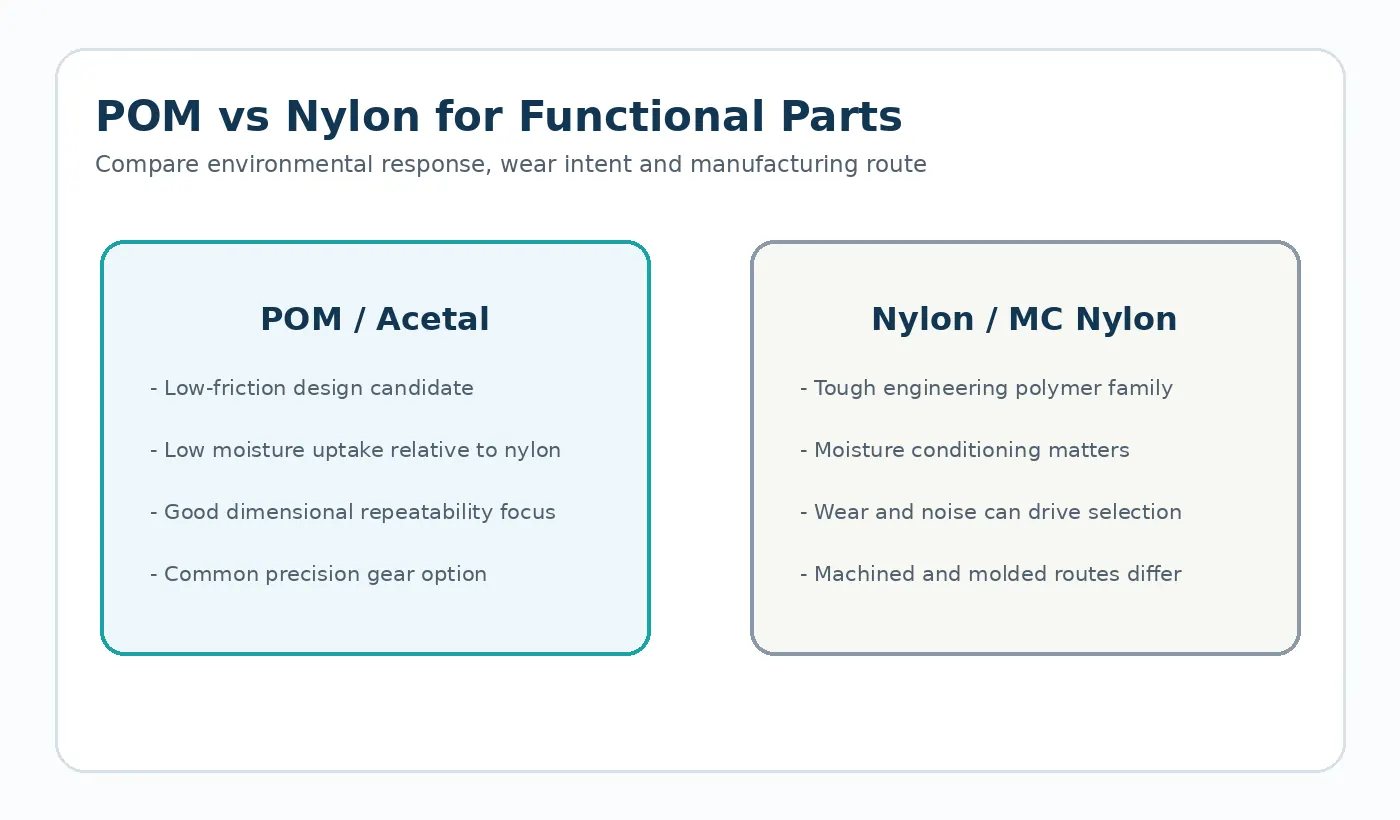
POM/聚甲醛和尼龙是齿轮和功能性机械部件的常用材料,但它们的性能并不完全相同。湿度响应、摩擦和磨损、刚度、温度、化学腐蚀以及制造工艺等因素都会影响材料的选择。
对于增强型钢材,增加刚度可能很有用,同时还应考虑与配合部件的磨损、各向异性和加工工艺等因素。因此,材料的选择应与几何形状和磨损副一起考虑。
值得解答的实质性问题
| 问题 | 为什么这很重要 |
|---|---|
| 该部件会接触到水分或水吗? | 有些聚合物会随着水分含量的变化而改变尺寸和力学性能。 |
| 交配材料是什么? | 磨损对的整体性能可能比单独考虑单个部件的性能更重要。 |
| 合理的温度范围是多少? | 刚度、蠕变和尺寸会随温度变化。 |
| 该零件是模压成型的还是机加工的? | 不同制造工艺所能提供的材料形态、收缩率和可实现的特性各不相同。 |
齿轮和功能部件中的POM/聚甲醛
POM(聚甲醛)因其低吸湿性、尺寸稳定性和良好的滑动性能而被广泛应用。不同等级的POM在分子结构、添加剂和增强材料方面仍存在差异。填充或润滑等级的POM与未填充等级相比,其收缩率、刚度和耐磨性可能会有所不同,因此在确定材料等级时,应明确标注具体要求。
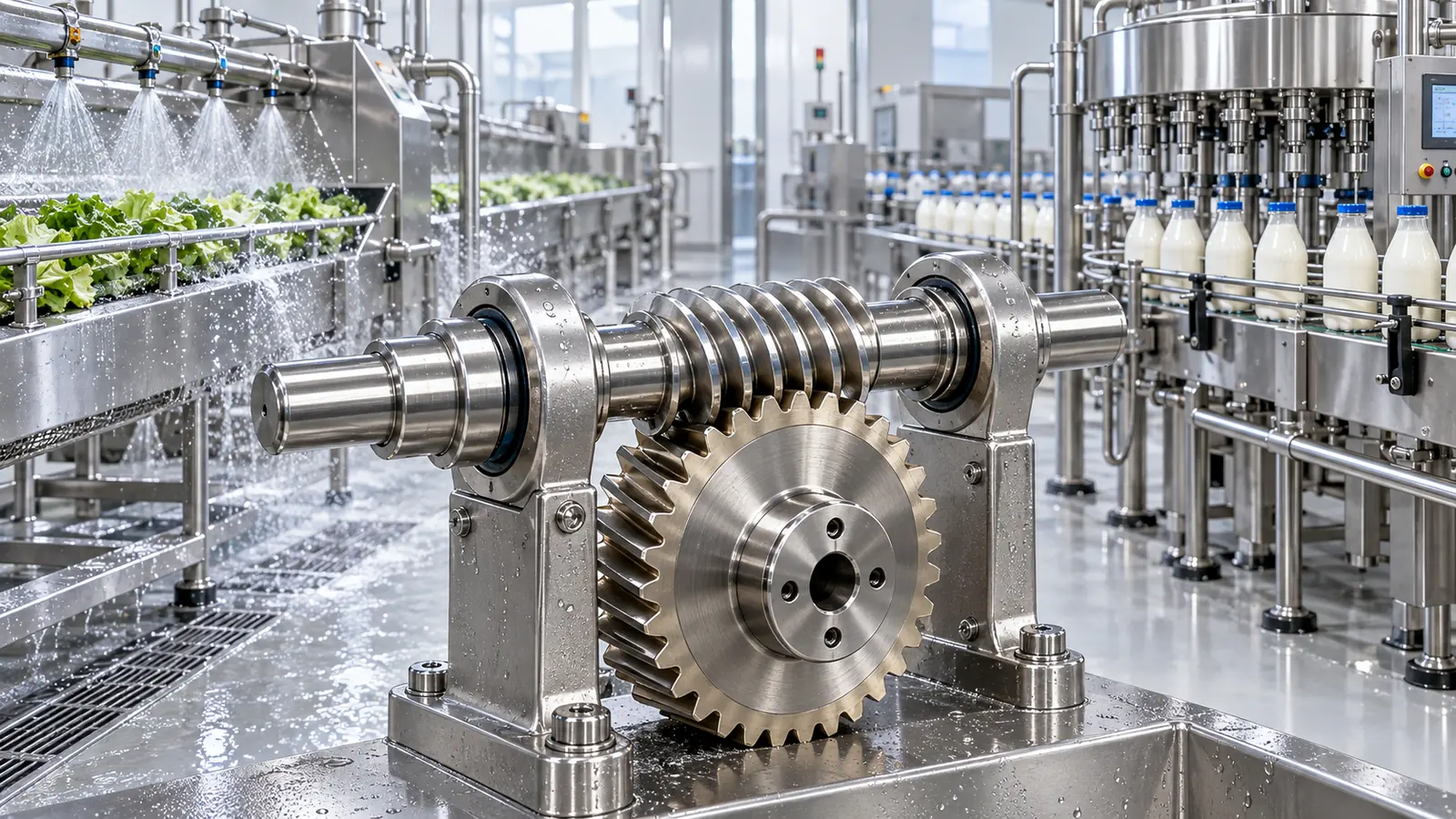
在齿轮应用中,应考虑配合材料和润滑剂的状况。磨损是由一对表面共同作用产生的,而不是由单一聚合物单独造成的。
尼龙和MC尼龙
尼龙系列材料具有良好的韧性和耐磨性能,铸造/MC尼龙常被加工成大型齿轮或齿条。吸湿性是其工程性能的一部分,会影响尺寸、刚度和齿隙。
如果尼龙部件对尺寸要求较高,则需明确其预期工作湿度和最终检验条件。这一点对于长齿条、大孔径部件和紧密啮合的齿轮尤为重要。
当增强塑料进入候选名单时
玻璃纤维增强可以提高某些牌号钢材的刚度和耐热性能,但纤维取向会使收缩率与方向相关,而且较硬的表面可能会磨损配合部件。因此,增强并非必然带来性能提升。
对于壳体,需检查其平面度、插入载荷和流体流动方向。对于运动接口,需将增强材料与实际接触的轴、齿轮或导轨进行比较。
供应商可以评估的物料需求
- 工作温度范围和附近热源
- 潮湿、水、清洁剂、油或化学品暴露
- 负载、速度、冲击和占空比
- 配合材料和润滑条件
- 尺寸稳定性或磨损优先级
- 如适用,需满足强制性法规或颜色要求。
Specify a grade when the grade matters
“POM” or “nylon” identifies a material family, not a complete production specification. Copolymer versus homopolymer structure, reinforcement, lubricant additives, UV packages and other grade differences can change stiffness, wear, shrinkage and processing behavior. If interchangeability depends on a specific grade, put the exact designation on the controlled drawing.
If substitution is allowed, write the functional boundaries instead: temperature, moisture, chemical exposure, wear pair, color, regulatory requirements and dimensional-stability needs. That gives engineering room to evaluate an alternative without silently changing the requirement.
Choose the polymer from the failure mode and environment
POM/acetal and nylon families are both common in engineering mechanisms, but a resin name alone does not predict the behavior of the final component. Moisture, temperature, fillers, lubrication, mating material, duty cycle and section geometry all influence stiffness, friction, wear and dimensional stability. If a grade is mandatory, specify the exact grade; if it is open, state the performance problem the material has to solve.
| Decision | Questions to answer |
|---|---|
| Dimensional stability | What temperature and moisture range will the part see, and in what state must the critical dimensions be met? |
| Wear and friction | What is the mating material, surface condition, speed, load and lubrication regime? |
| Structural stiffness | Is deflection or tooth bending more important than ultimate strength, and are fibre-filled grades compatible with the geometry? |
| Chemical exposure | Which cleaners, oils, fuels or process chemicals contact the part, at what concentration and duration? |
| Manufacturing route | Will the part be molded, machined from stock, or molded with secondary machining, and does the grade support that route? |
For a material substitution, compare the complete operating condition rather than one datasheet value. A replacement that looks stronger at room temperature can still create trouble if it changes moisture response, thermal expansion, bearing fit, abrasion against the mate or mold shrinkage.