Select engineering plastics by service conditions
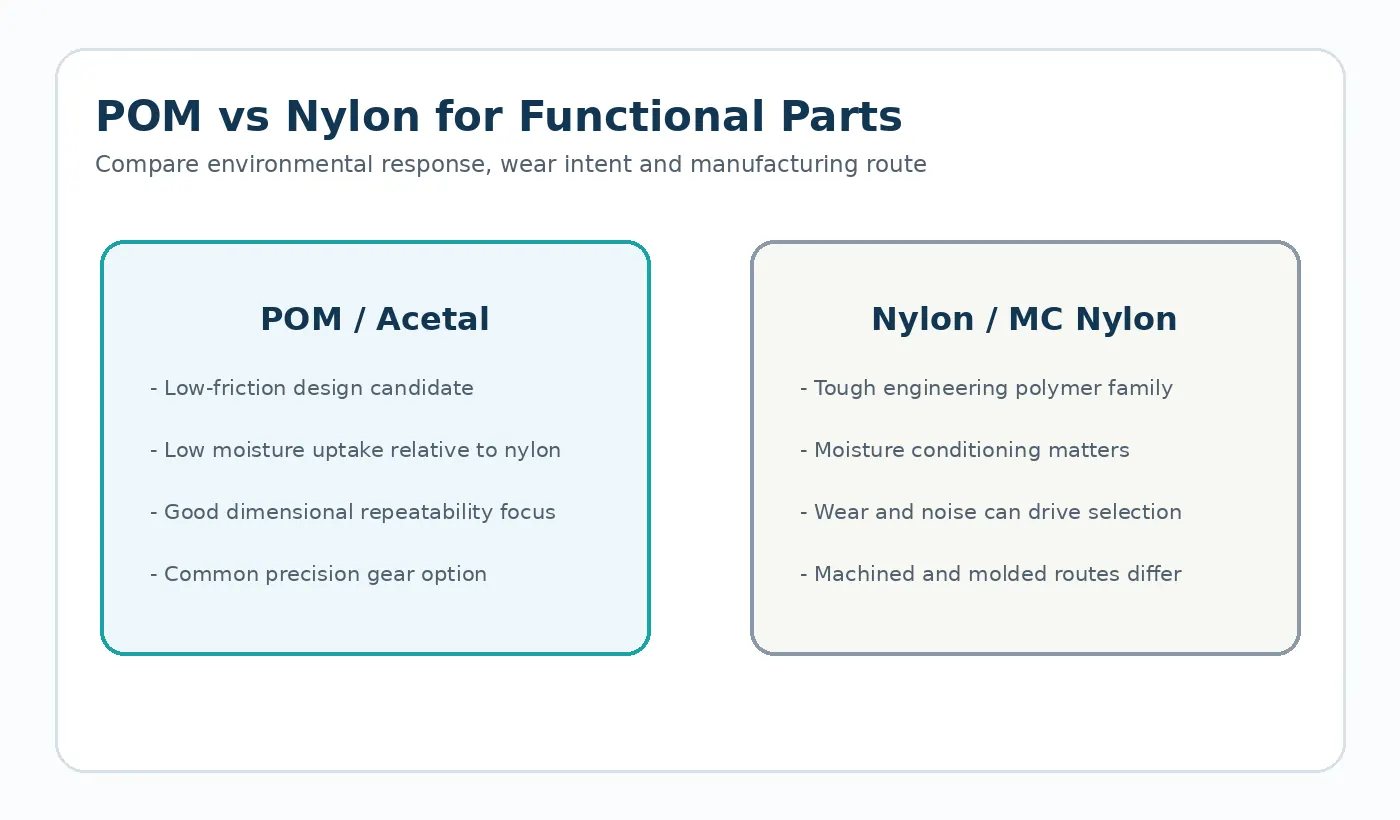
POM/acetal and nylon families are common choices for gears and functional machine components, but their behavior is not interchangeable. Moisture response, friction and wear, stiffness, temperature, chemical exposure and manufacturing method can all change the preferred material.
For reinforced grades, added stiffness may be useful while abrasion against a mating component, anisotropy and processing considerations also deserve review. Material selection should therefore be made together with the geometry and wear pair.
Material questions worth answering
| Question | Why it matters |
|---|---|
| Will the part see moisture or water? | Some polymers change dimensions and mechanical behavior as moisture content changes. |
| What is the mating material? | The wear pair can be more important than the properties of one component considered alone. |
| What temperature range is realistic? | Stiffness, creep and dimensions can shift with temperature. |
| Is the part molded or machined? | Available material form, shrinkage and achievable features differ by manufacturing route. |
POM/acetal in gears and functional parts
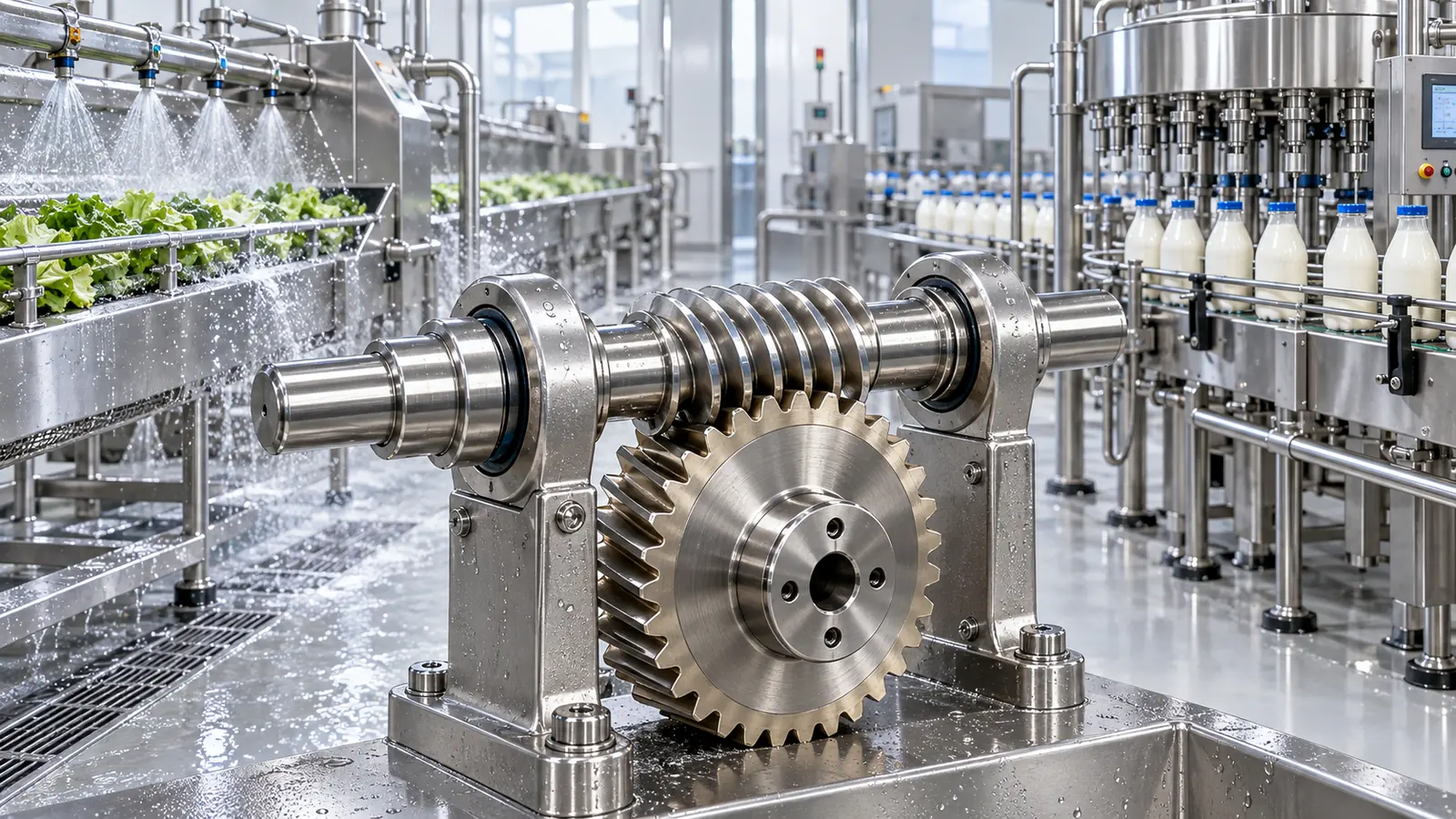
POM is widely considered where low moisture uptake, dimensional stability and sliding behavior are useful. Exact grades still differ in molecular structure, additives and reinforcement. A filled or lubricated grade can change shrinkage, stiffness and wear compared with an unfilled grade, so the material callout should be specific when the grade is locked.
In gear applications, include the mating material and lubricant condition. Wear is generated by a pair of surfaces, not by one polymer in isolation.
Nylon and MC nylon
Nylon families can provide toughness and useful wear properties, and cast/MC nylon is often machined into larger gears or racks. Moisture absorption is part of the engineering behavior and can influence dimensions, stiffness and backlash.
If a nylon component is dimensionally sensitive, define the expected service humidity and the condition used for final inspection. This is especially important for long racks, large bores and close gear meshes.
When reinforced plastics enter the shortlist
Glass-fibre reinforcement can raise stiffness and heat capability in some grades, but fibre orientation can make shrinkage direction-dependent and the harder surface may be abrasive to a mating part. Reinforcement is therefore not an automatic upgrade.
For housings, review flatness, insert loads and flow direction. For moving interfaces, compare the reinforced material against the actual shaft, gear or guide that it contacts.
A material request that suppliers can evaluate
- Operating temperature range and nearby heat sources
- Moisture, water, detergents, oils or chemical exposure
- Load, speed, impact and duty cycle
- Mating materials and lubrication condition
- Dimensional-stability or wear priorities
- Mandatory regulatory or colour requirements where applicable