Bắt đầu từ cơ chế
Voids are internal molding defects that can appear in thick gear hubs or other heavy sections when packing and cooling are not balanced.
Thick sections cool and solidify differently from thin sections. Geometry, gate location, resin behavior and process settings all affect whether internal shrinkage is compensated.
A void near the center of a thick hub may have little visual evidence on the surface, yet it can reduce the effective section carrying torque or compromise a press fit. Cored hubs, ribs or revised gate strategy can reduce the thick mass, but those changes should be checked against shaft retention and torque transfer. The right response is geometric and process-oriented, not simply “increase packing pressure.”
Các thông tin cần chốt trước khi báo giá
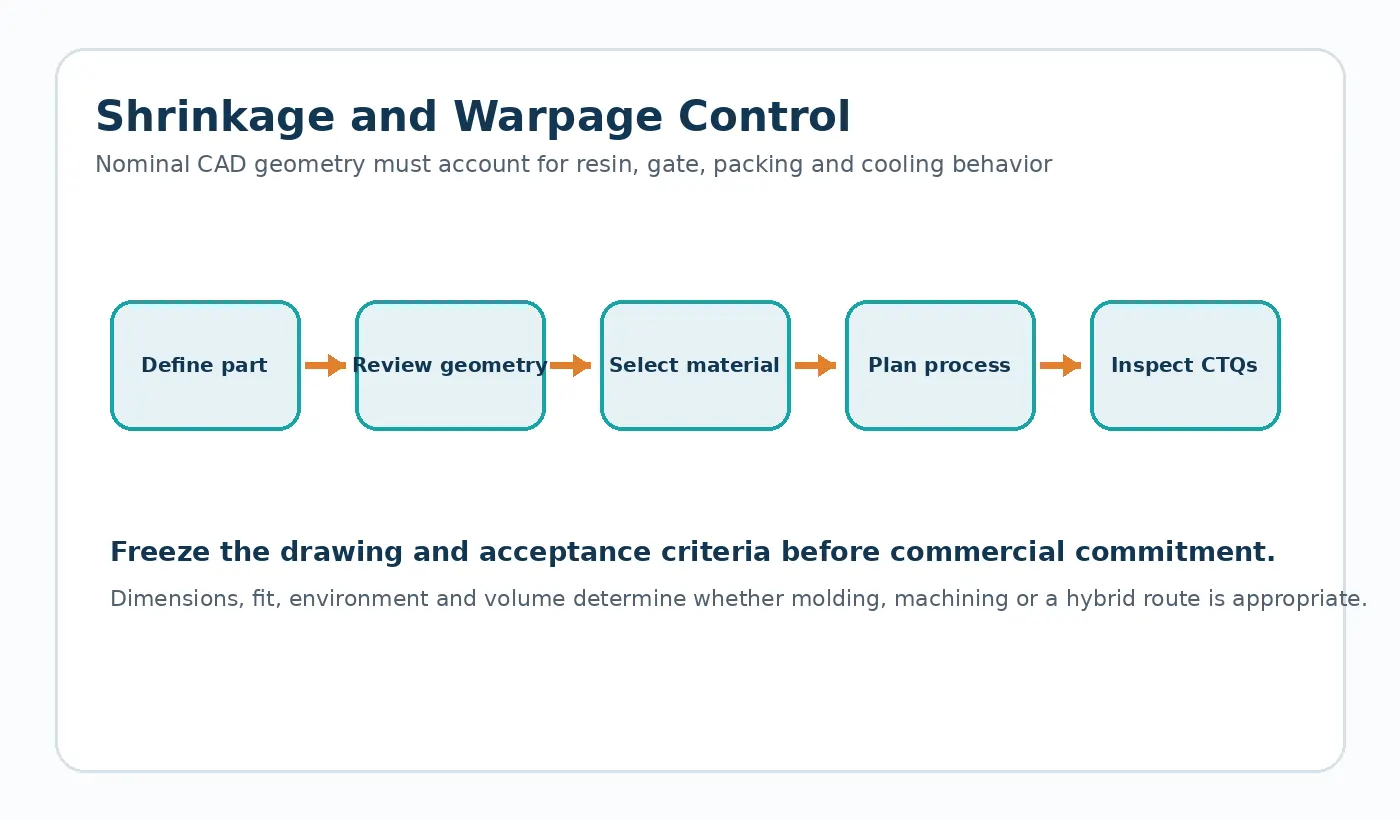
Review hub thickness, web transitions, gate location, resin and the functional load path through the gear.
Hãy đưa những thông tin đầu vào này vào bản vẽ được kiểm soát, bản đặc tả kỹ thuật hoặc tài liệu đính kèm yêu cầu báo giá (RFQ) nếu có thể. Việc tách chúng ra khỏi các cuộc trao đổi không chính thức sẽ giúp việc so sánh nhà cung cấp và chỉnh sửa sau này dễ quản lý hơn.
Điều gì có thể bác bỏ giả định đó?
A cosmetically acceptable surface does not guarantee that a thick hub is free of internal defects.
Chiến lược xác minh
For critical sections, choose an appropriate sectioning or non-destructive method during process validation when internal integrity affects function.
For Voids in Injection Molded Gears, close the DFM loop by updating the controlled CAD/drawing and sample plan. A recommendation that never reaches the released revision cannot be inspected consistently in production.
Danh sách kiểm tra mua sắm
Before requesting a price for voids in injection molded gears, identify the current drawing revision, production quantity, material constraint and the feature that most strongly affects function. Ask the supplier to flag any deviation from those inputs in the quotation so technical alternatives stay visible.
Practical design review for this decision
Internal voids and sink are process/geometry symptoms rather than defects that can be solved by inspection alone. Review thick masses, abrupt wall transitions, packing access, gate location and cooling balance. If a critical section cannot be redesigned, make the internal-quality requirement and verification method explicit.
Record the assumptions on the drawing or RFQ so the supplier can confirm them before quoting. When a value is unknown, identify it as an open engineering item rather than copying a generic catalogue number that may not match the assembly.
Verification worksheet
- Local wall thickness and mass concentration
- Gate / flow path to the thick region
- Packing and cooling history
- Section criticality to strength or fit
- Approved sectioning / NDT method when justified
- Tool-correction record after sampling
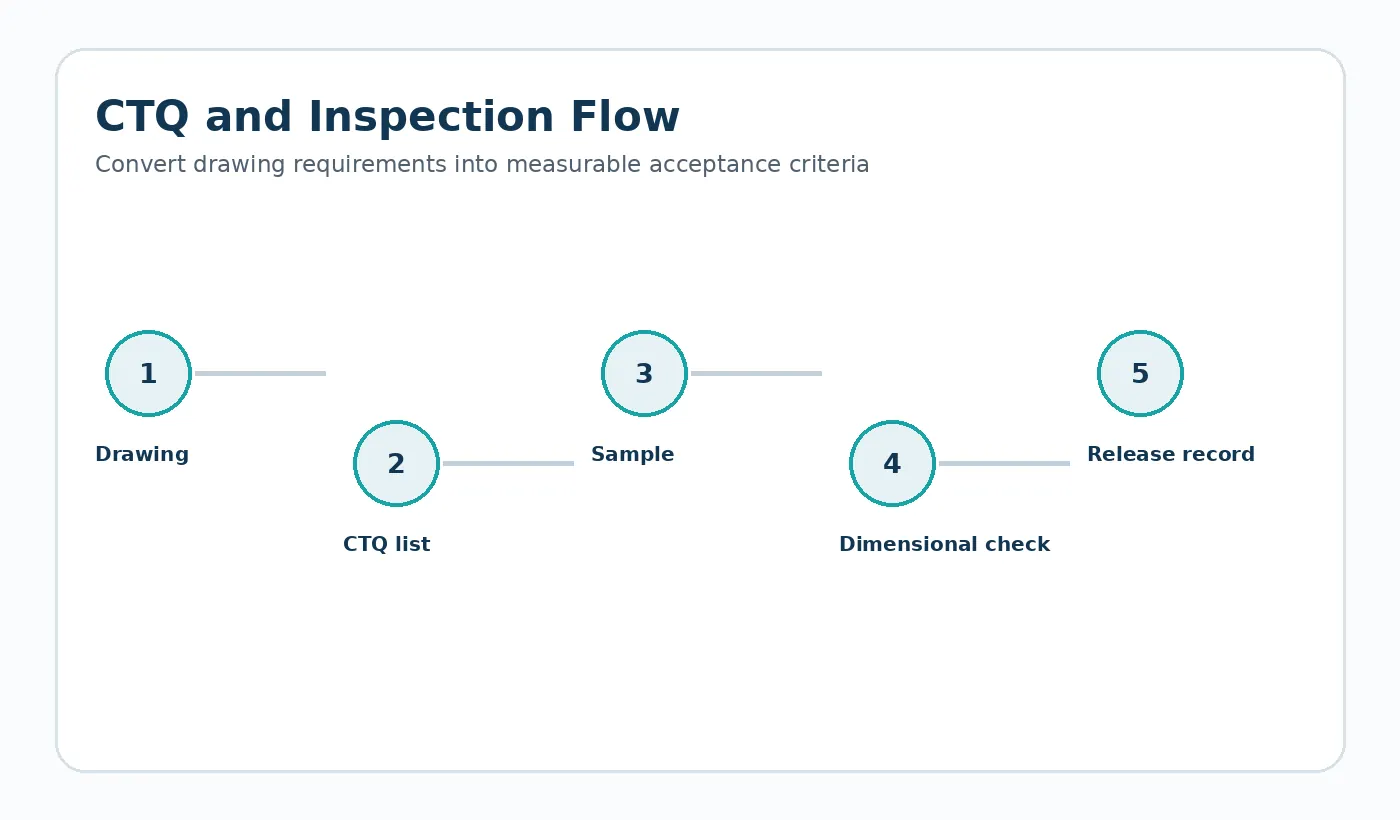
Use the first sample to close these points with both dimensional evidence and the relevant functional check. Any accepted deviation should be captured in the controlled revision before repeat production.