Start from the mechanism
Voids are internal molding defects that can appear in thick gear hubs or other heavy sections when packing and cooling are not balanced.
Thick sections cool and solidify differently from thin sections. Geometry, gate location, resin behavior and process settings all affect whether internal shrinkage is compensated.
A void near the center of a thick hub may have little visual evidence on the surface, yet it can reduce the effective section carrying torque or compromise a press fit. Cored hubs, ribs or revised gate strategy can reduce the thick mass, but those changes should be checked against shaft retention and torque transfer. The right response is geometric and process-oriented, not simply “increase packing pressure.”
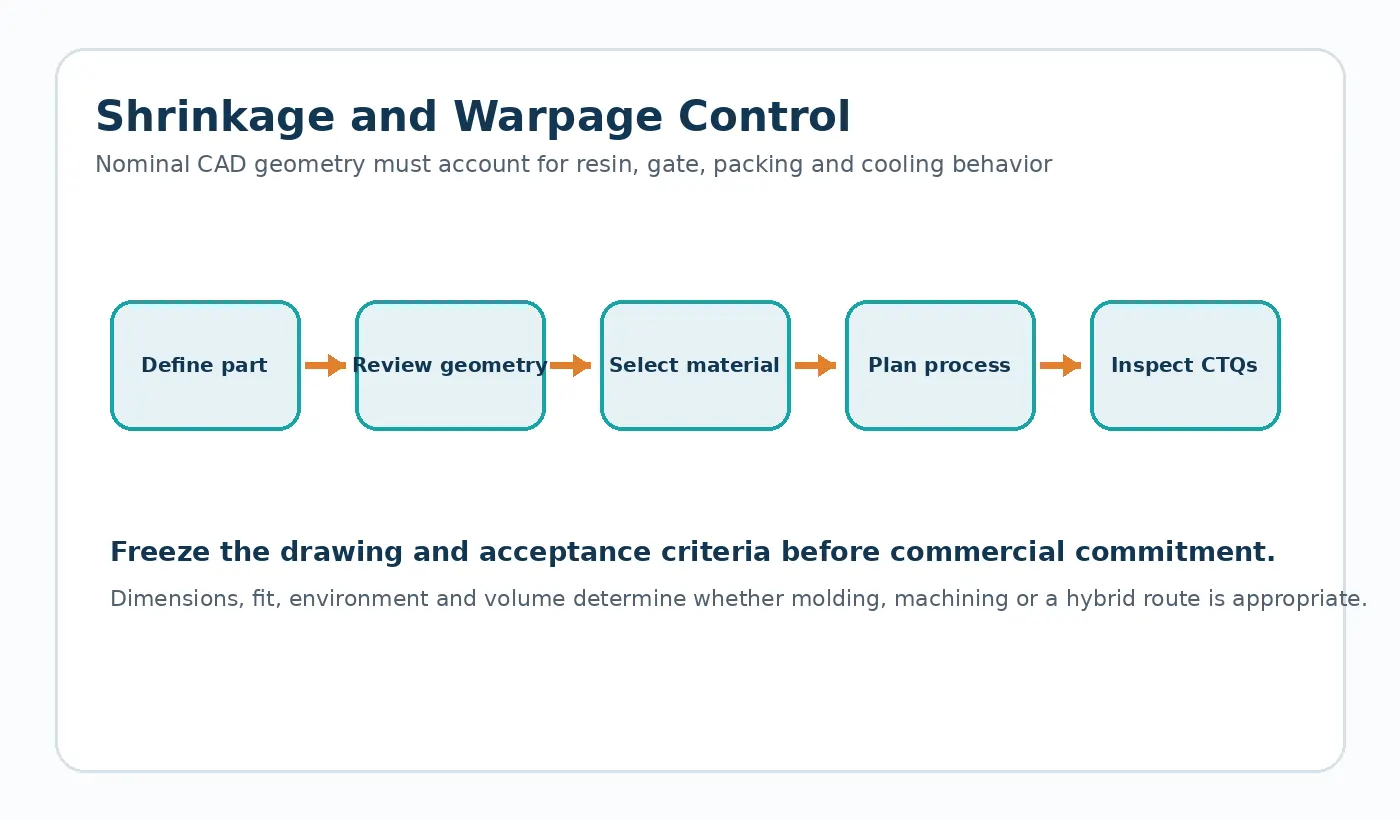
Inputs to freeze before quotation
Review hub thickness, web transitions, gate location, resin and the functional load path through the gear.
ان پٹ کو کنٹرولڈ ڈرائنگ، تفصیلات یا RFQ منسلکہ پر جہاں ممکن ہو رکھیں۔ انہیں غیر رسمی پیغام کے دھاگوں سے دور رکھنے سے سپلائر کا موازنہ اور بعد میں نظرثانی کا انتظام کرنا آسان ہو جاتا ہے۔
What can invalidate the assumption
A cosmetically acceptable surface does not guarantee that a thick hub is free of internal defects.
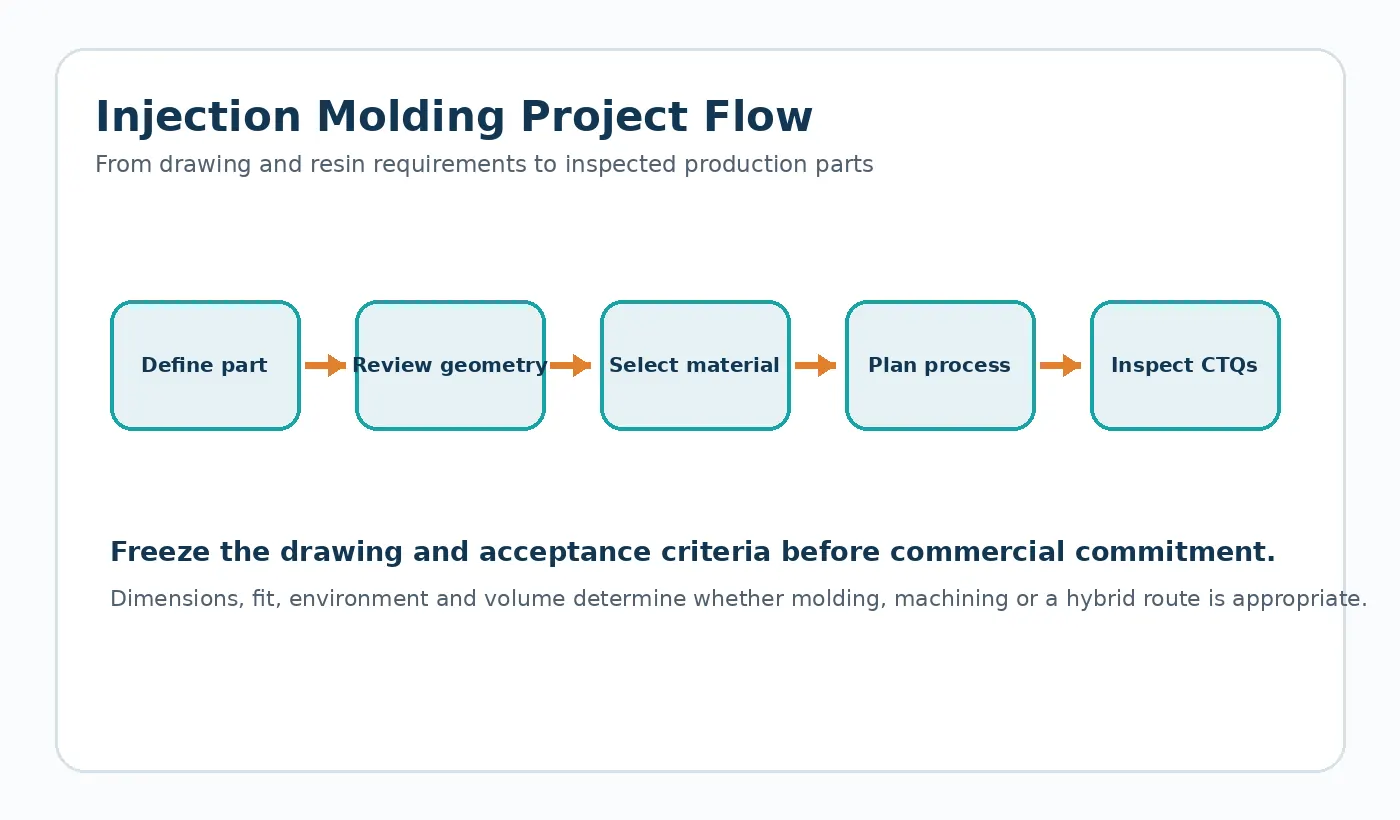
Verification strategy
For critical sections, choose an appropriate sectioning or non-destructive method during process validation when internal integrity affects function.
For Voids in Injection Molded Gears, close the DFM loop by updating the controlled CAD/drawing and sample plan. A recommendation that never reaches the released revision cannot be inspected consistently in production.
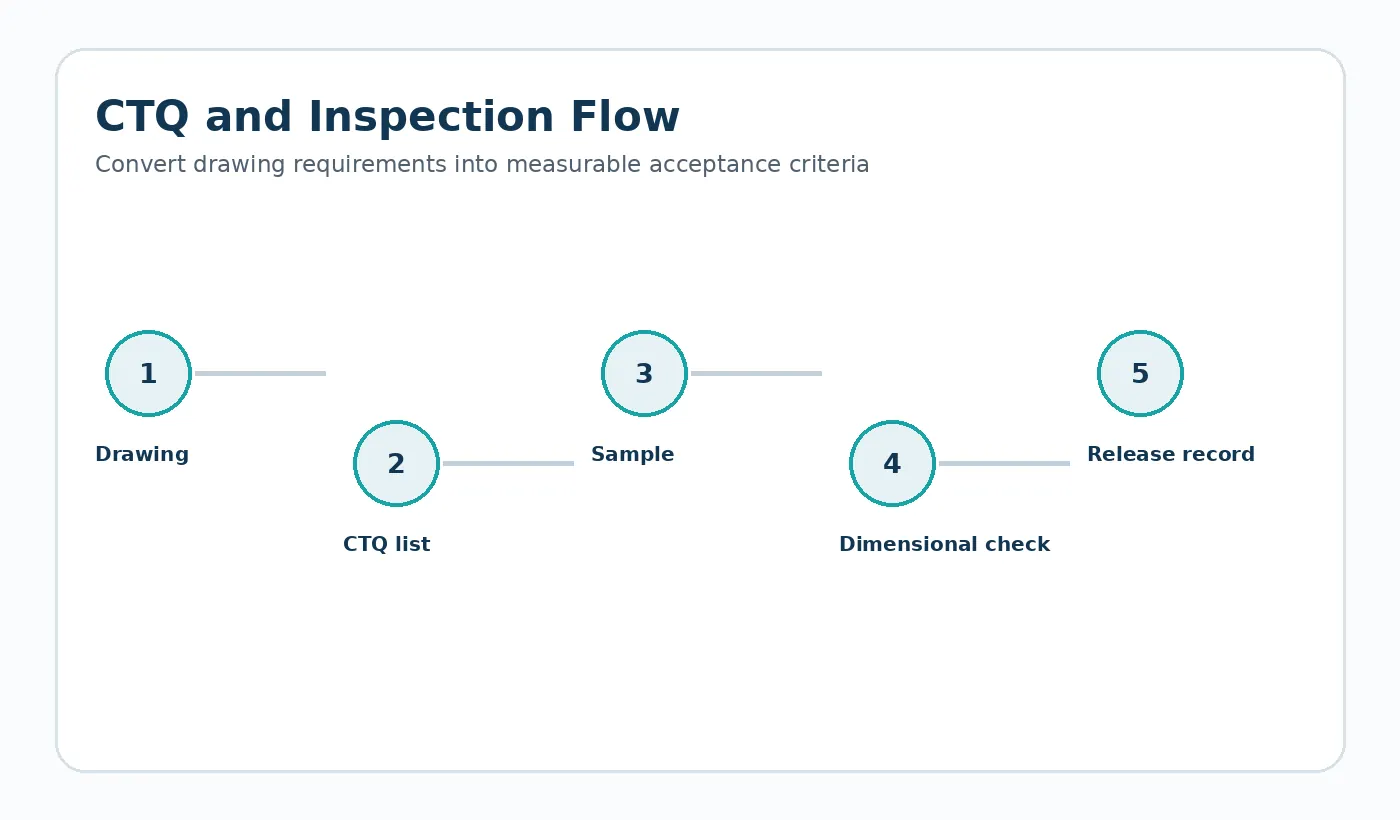
Procurement checklist
Before requesting a price for voids in injection molded gears, identify the current drawing revision, production quantity, material constraint and the feature that most strongly affects function. Ask the supplier to flag any deviation from those inputs in the quotation so technical alternatives stay visible.
اس فیصلے کے لیے عملی ڈیزائن کا جائزہ
Internal voids and sink are process/geometry symptoms rather than defects that can be solved by inspection alone. Review thick masses, abrupt wall transitions, packing access, gate location and cooling balance. If a critical section cannot be redesigned, make the internal-quality requirement and verification method explicit.
مفروضوں کو ڈرائنگ یا RFQ پر ریکارڈ کریں تاکہ سپلائر حوالہ دینے سے پہلے ان کی تصدیق کر سکے۔ جب کوئی قدر معلوم نہ ہو، تو اسے ایک عام کیٹلاگ نمبر کاپی کرنے کے بجائے ایک اوپن انجینئرنگ آئٹم کے طور پر شناخت کریں جو اسمبلی سے مماثل نہ ہو۔
تصدیقی ورک شیٹ
- Local wall thickness and mass concentration
- Gate / flow path to the thick region
- Packing and cooling history
- Section criticality to strength or fit
- Approved sectioning / NDT method when justified
- Tool-correction record after sampling
جہتی ثبوت اور متعلقہ فنکشنل چیک دونوں کے ساتھ ان پوائنٹس کو بند کرنے کے لیے پہلا نمونہ استعمال کریں۔ کسی بھی قبول شدہ انحراف کو دوبارہ پیداوار سے پہلے کنٹرول شدہ نظرثانی میں پکڑا جانا چاہئے۔