Begär en offert

Injection Molded Parts Engineering Blog

Technical articles for selecting, specifying and buying functional plastic parts without turning every decision into a generic checklist.

Technical articles for plastic component decisions

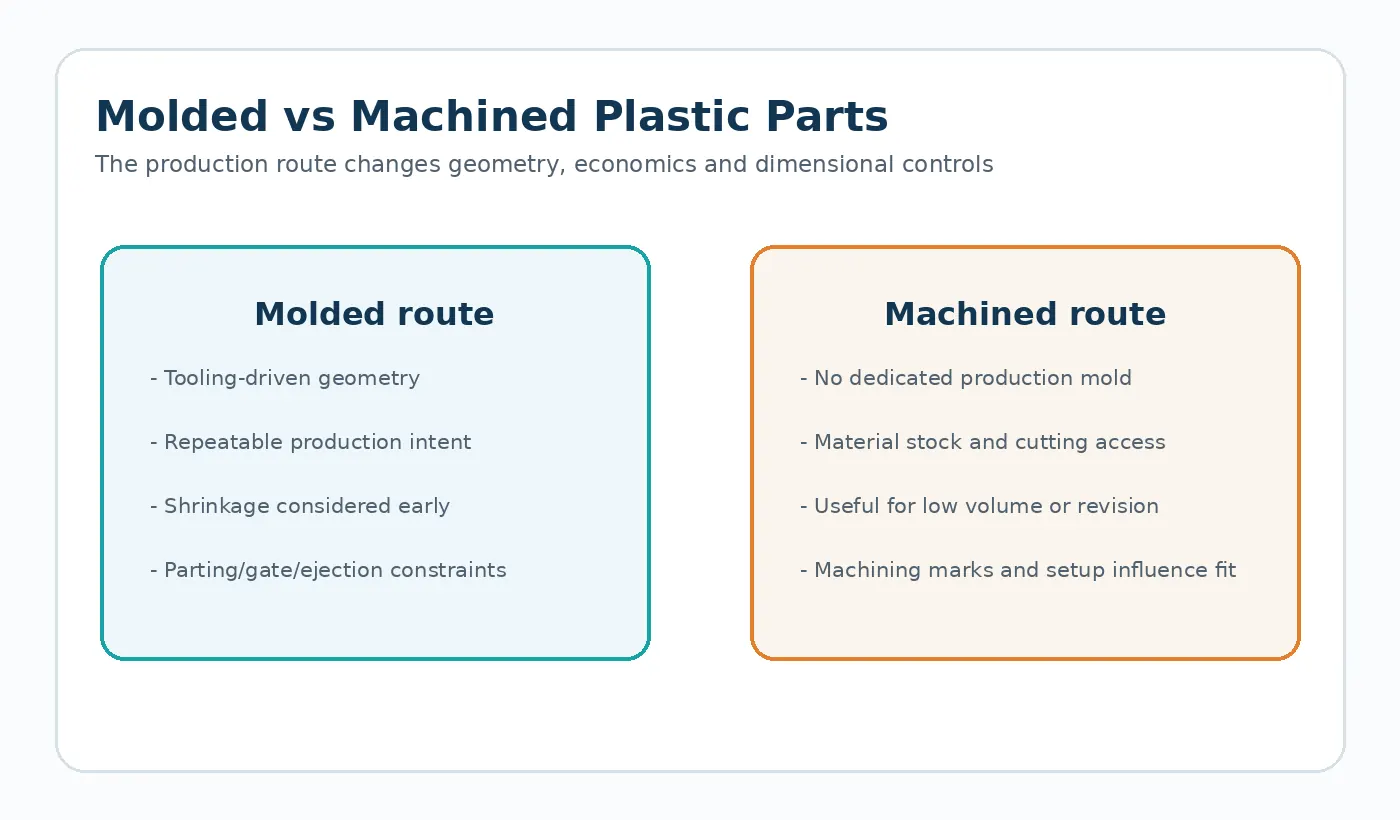
The article library focuses on questions that appear during design, supplier selection and production release: molding versus machining, resin choice, plastic gear geometry, tolerance strategy, sprocket selection, DFM and RFQ preparation.

Use an article to understand the decision variables, then return to the relevant product page when you are ready to define a project.
Engineering article library for plastic components

Technical articles built around real design decisions

The library focuses on questions that influence geometry, material, process and inspection. Articles are written as engineering guidance rather than as substitutes for a project drawing. When a topic includes material or tolerance behavior, apply it to the actual grade, part size, environment and mating assembly before release.

For a new project, start with the product family, then use the relevant material or DFM guide to refine the RFQ. For a replacement part, use the failure-mode articles to document what must change without losing interchangeability.

How to use the technical library

Articles are grouped around moldability, plastic gearing, materials, inspection and application decisions. They are not substitutes for the released drawing or a supplier-specific material datasheet. Use them to prepare questions, compare design routes and identify which assumptions need to be closed before tooling or repeat production.

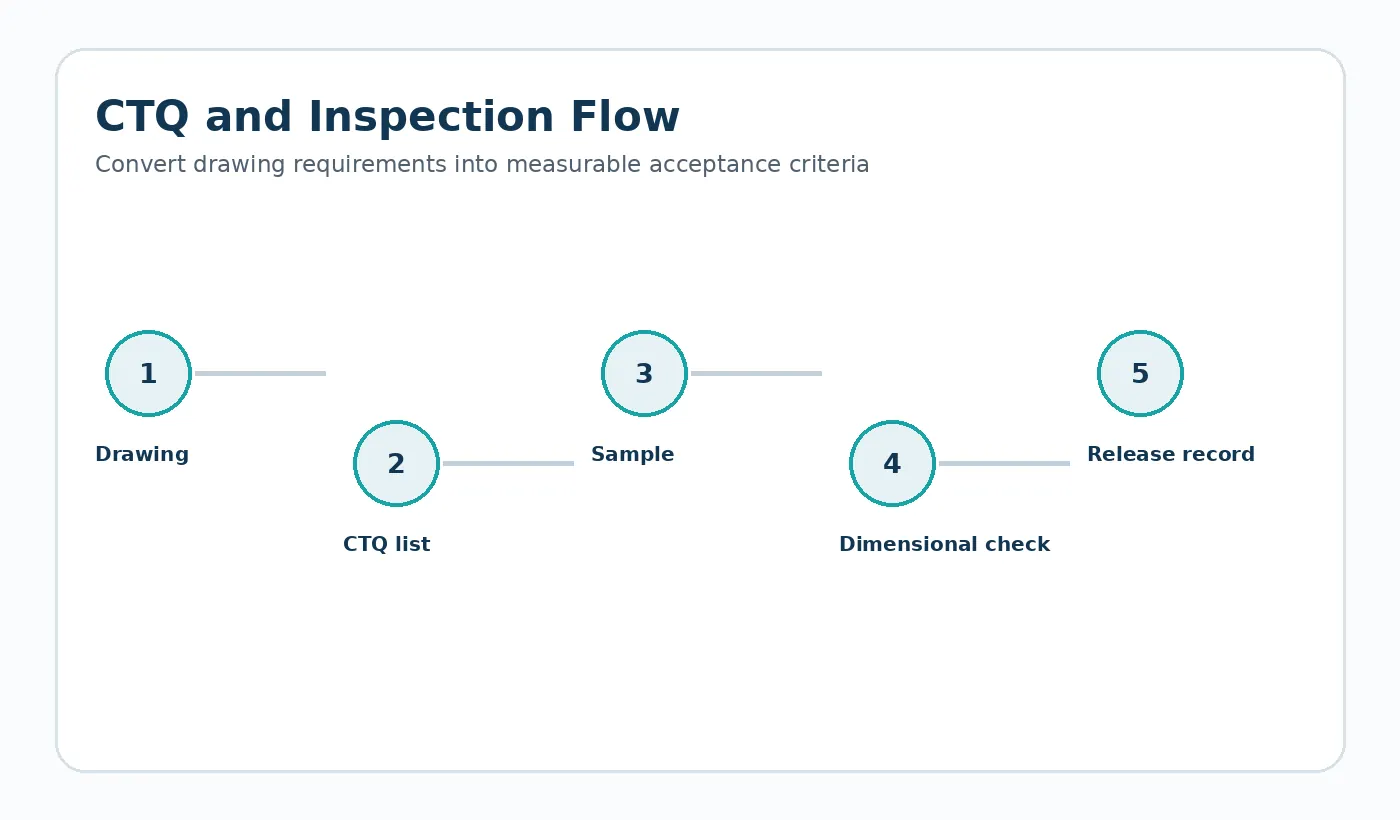
For a live project, carry the relevant decisions into the RFQ: drawing revision, service conditions, mating geometry, critical-to-function dimensions and the sample or inspection method that will be used for approval.

Use the technical library to resolve a project question

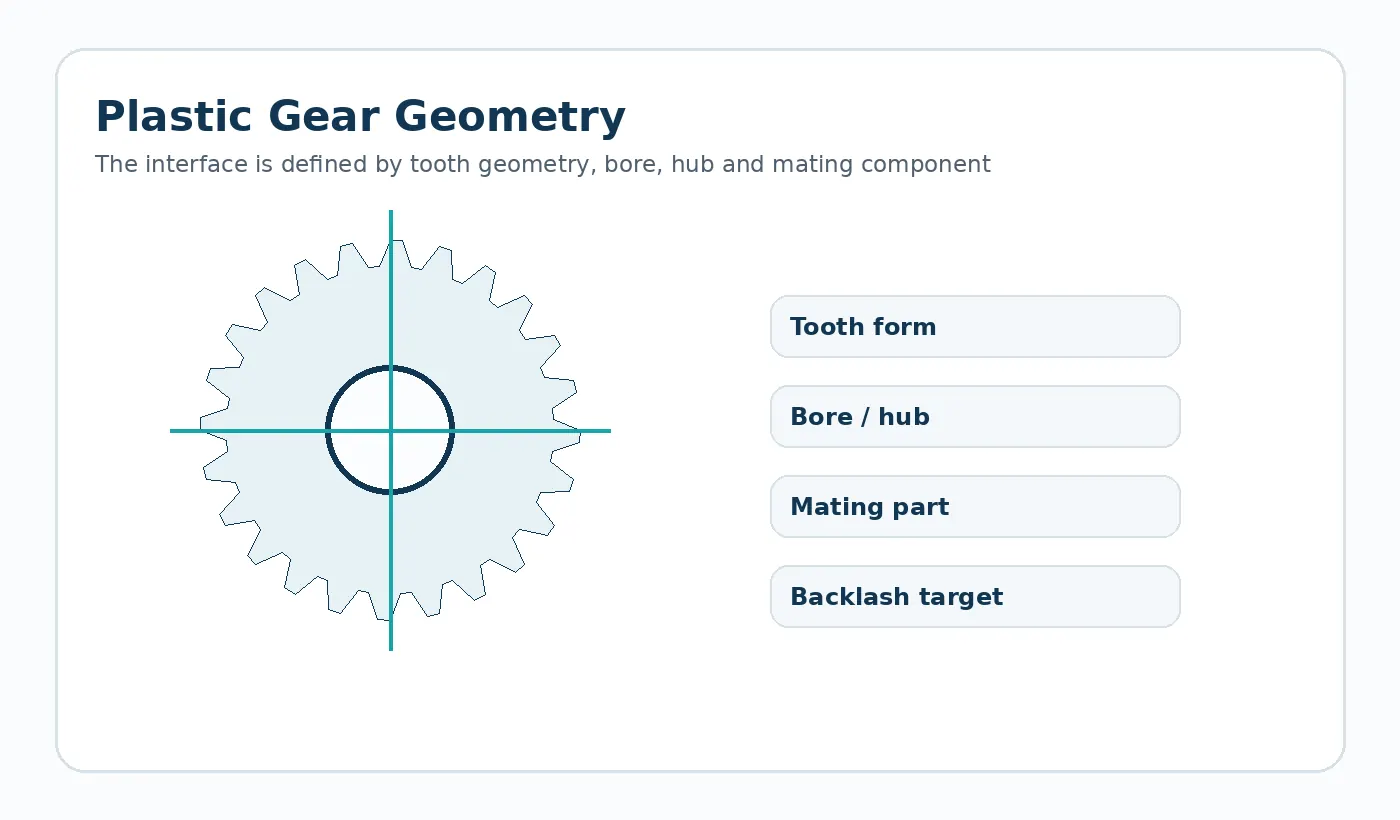
The articles are grouped around practical decisions: how a polymer behaves in a gear or rack, how molding geometry affects repeatability, how to define a chain or gear interface, and how inspection should follow the functional datum chain. They are intended to support a drawing review rather than replace the project drawing.

For an active RFQ, move from the relevant article to the matching product family and send the current application data. General rules are useful for screening options, but material grade, tolerances and acceptance criteria still need to be confirmed against the actual part.
Latest Technical Articles

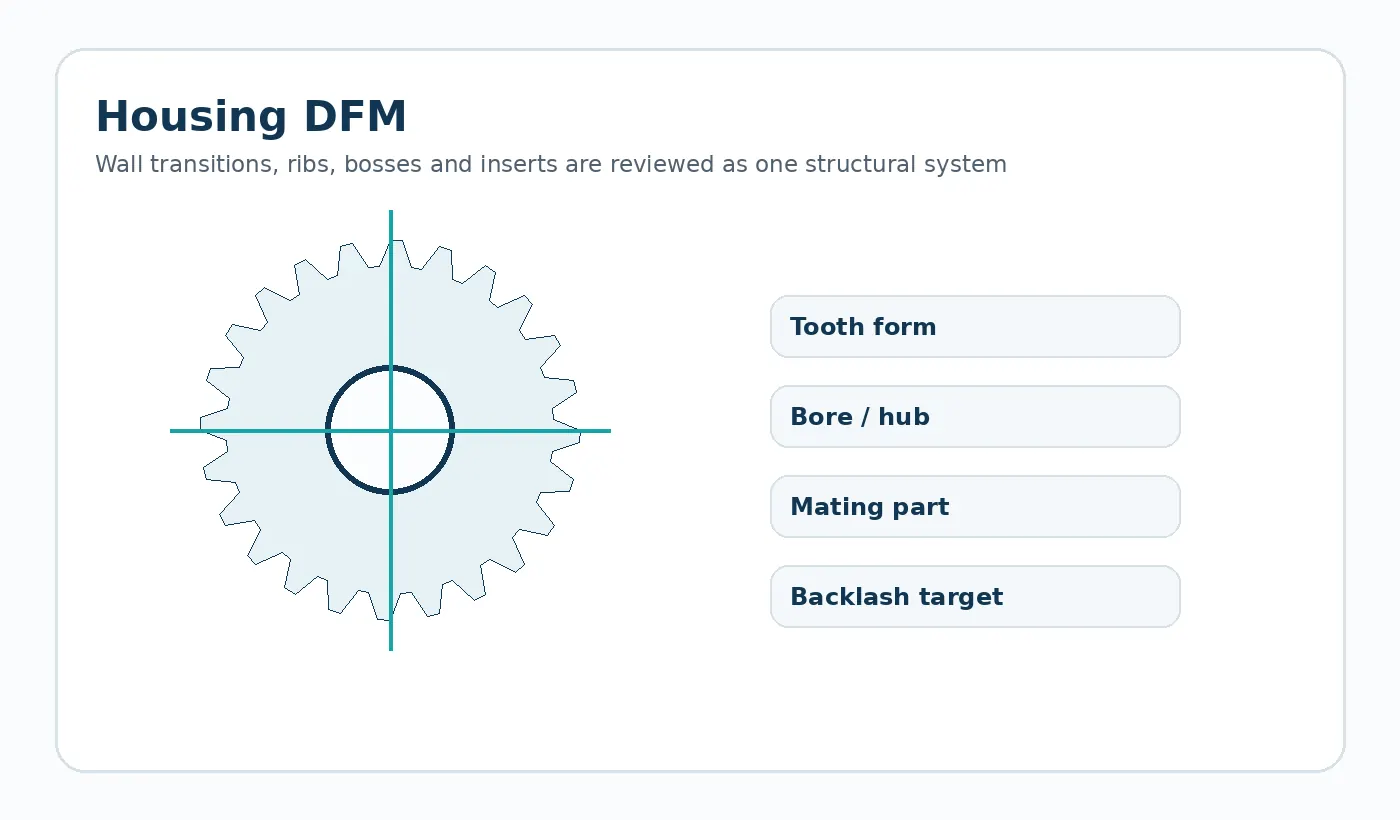
Injection Molding DFM Checklist
Engineering guide

Injection Molding DFM Checklist

Frame the problem correctly A DFM review should expose geometry that affects tooling, filling, cooling, ejection and inspection before steel is committed. The goal is…

Read guide
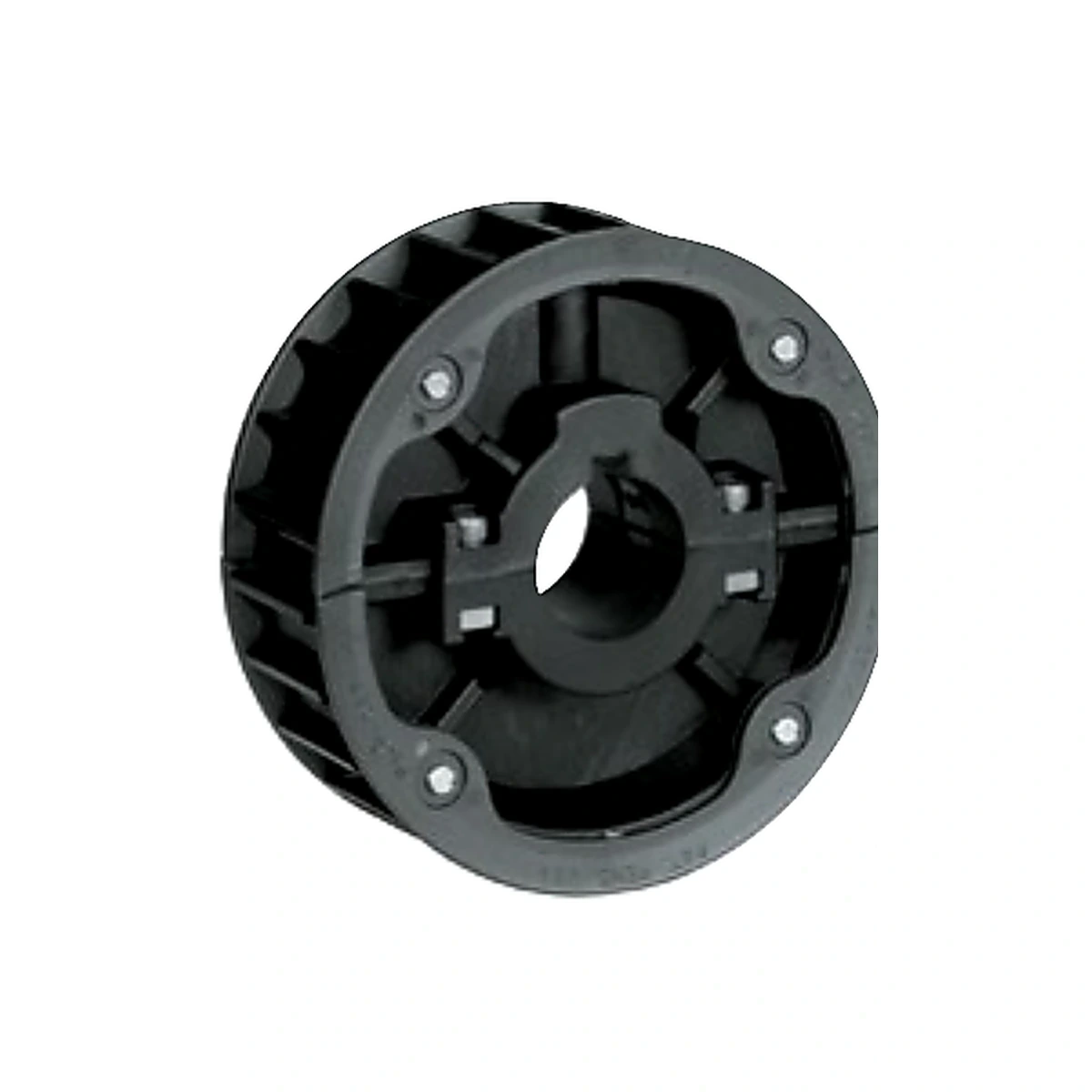
Plastic Drive Components for Conveyors
Engineering guide

Plastic Drive Components for Conveyors

Engineering context Conveyor drive components see continuous alignment, contamination and wear conditions that should be defined before material selection. Plastic sprockets, gears and guides may…

Read guide
Plastic Sprocket Selection Guide
Engineering guide

Plastic Sprocket Selection Guide

Decision first Plastic sprocket selection starts with the exact chain geometry. Chain series, strand count, tooth count and shaft connection define the sprocket before material…

Read guide
Plastic Spur Gear Design Inputs
Engineering guide

Plastic Spur Gear Design Inputs

What changes the engineering choice A spur gear RFQ should define the complete working mesh, not only outside diameter and tooth count. Module/DP, pressure angle,…

Read guide
Plastic Helical Gear Design Inputs
Engineering guide

Plastic Helical Gear Design Inputs

Decision first Helical gear drawings must make the helix convention unambiguous. Helix angle, hand and the normal/transverse system affect mating compatibility. Helical gears also generate…

Read guide
MC Nylon Gear Selection Guide
Engineering guide

MC Nylon Gear Selection Guide

Engineering context MC nylon is often considered for larger machined gears, but dimensional conditioning and the operating environment need explicit review. Cast nylon stock can…

Read guide
POM Gear Selection Guide
Engineering guide

POM Gear Selection Guide

Start from the mechanism POM gear selection should start with service conditions and mating geometry, then narrow to a resin grade and process. POM grades…

Read guide
Plastic Bevel Gear Design Inputs
Engineering guide

Plastic Bevel Gear Design Inputs

What changes the engineering choice Bevel gear design begins with the pair geometry and the intersecting shaft layout. Ratio, shaft angle, pitch-cone geometry, face width…

Read guide
Plastic vs Metal Gears
Engineering guide

Plastic vs Metal Gears

Decision first Plastic and metal gears solve different design priorities; neither is automatically superior. Engineering plastics can reduce mass, resist corrosion and run with different…

Read guide
Moisture Effects on Nylon Gears
Engineering guide

Moisture Effects on Nylon Gears

Frame the problem correctly Nylon gears should be dimensioned with moisture conditioning in mind. Nylon absorbs moisture from the environment; this can change dimensions and…

Read guide
Temperature Effects on Plastic Gears
Engineering guide

Temperature Effects on Plastic Gears

What changes the engineering choice Temperature changes both the dimensions and mechanical response of polymer gears. As temperature shifts, stiffness, creep tendency and thermal expansion…

Read guide
Plastic Gear Backlash Guide
Engineering guide

Plastic Gear Backlash Guide

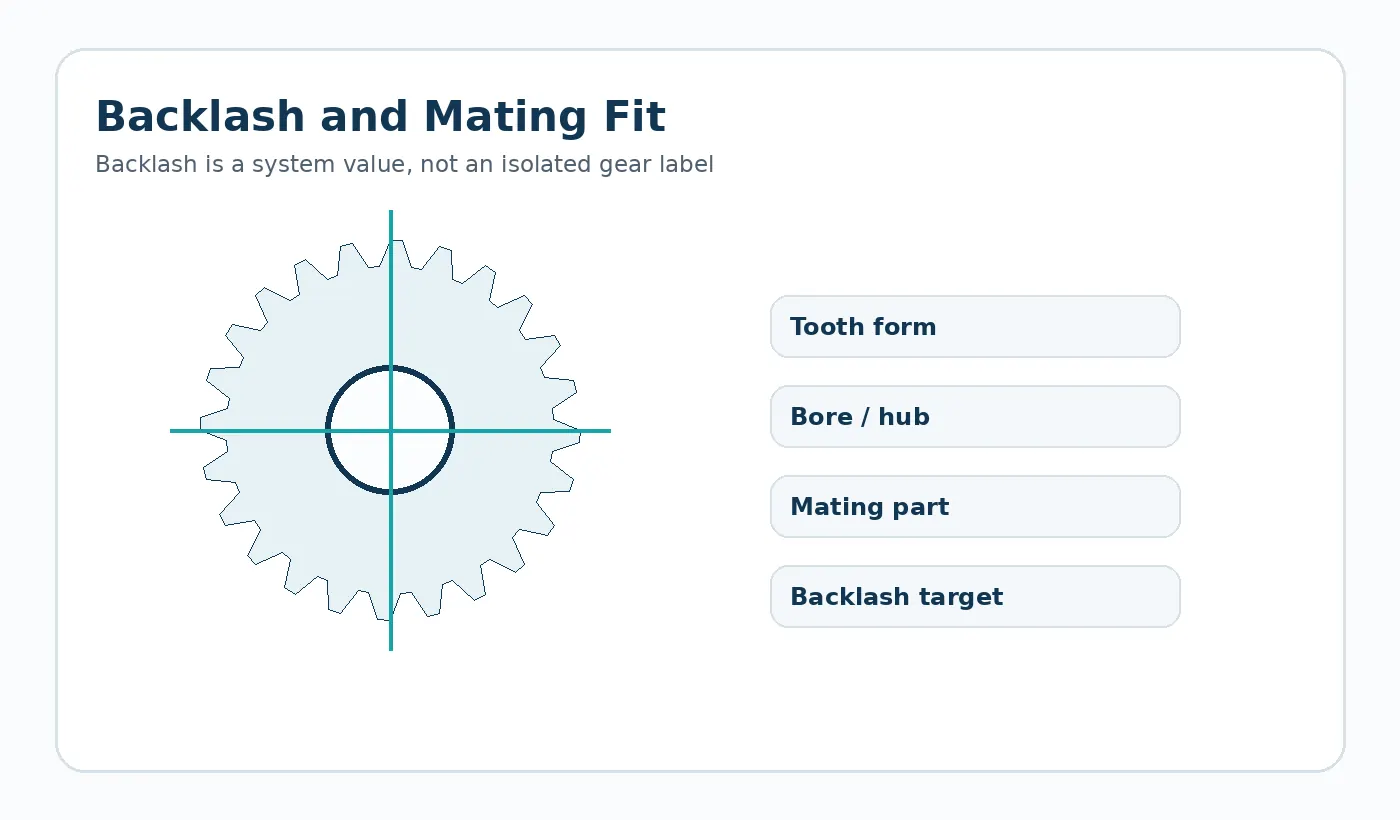
Decision first Backlash is a system clearance, not a standalone gear dimension. It changes with tooth geometry, center distance, bore/shaft location and material dimensions. Plastic…

Read guide
Injection Molded Gear Tolerances
Engineering guide

Injection Molded Gear Tolerances

Start from the mechanism A useful gear tolerance plan focuses on the characteristics that control the mesh and mounting relationship. Bore-to-tooth runout, tooth-to-tooth variation, overall…

Read guide
POM vs Nylon for Plastic Gears
Engineering guide

POM vs Nylon for Plastic Gears

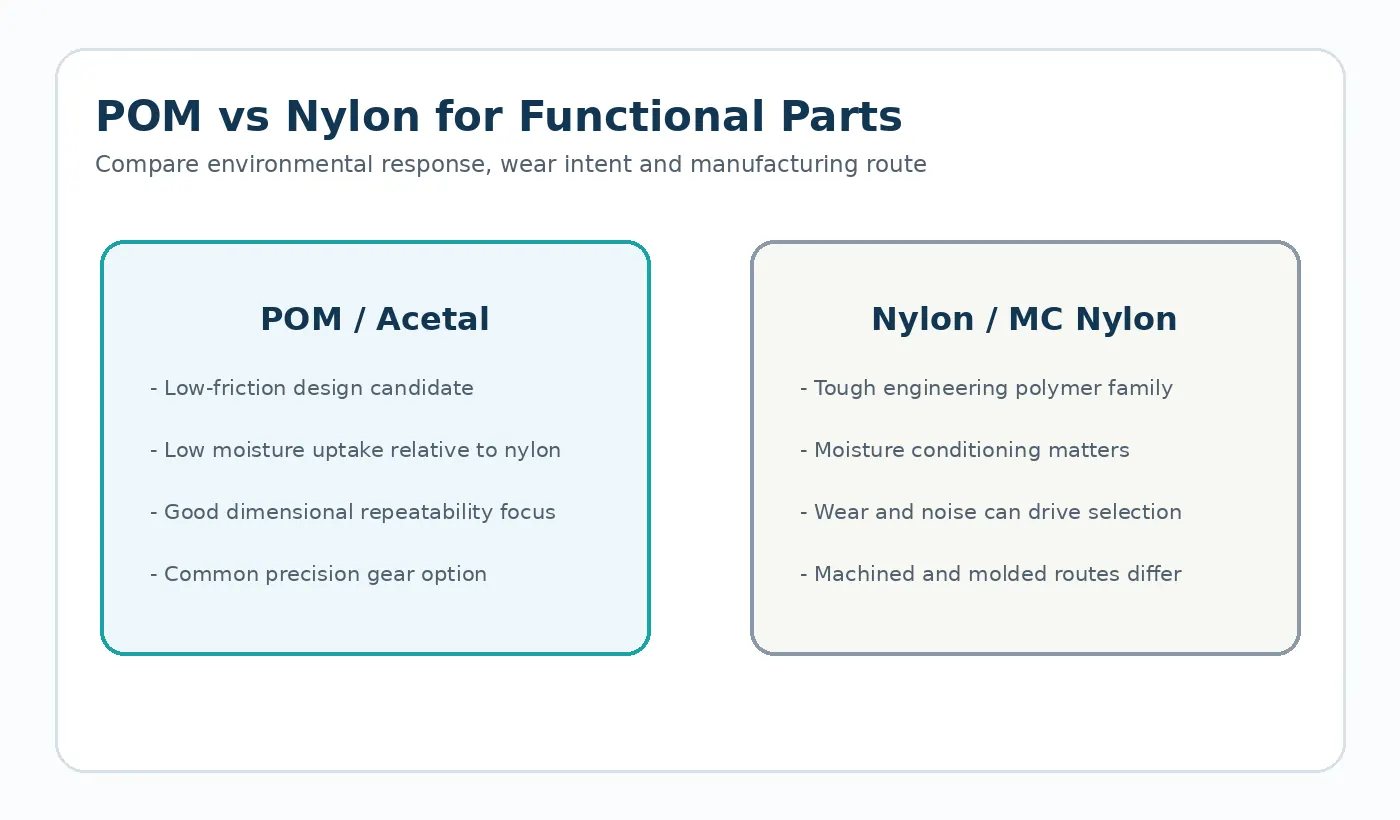
Frame the problem correctly POM and nylon are both common gear materials, but moisture response, stiffness, toughness and wear pairing differ. POM is often favored…

Read guide