Engineering context
Material selection should begin with the part’s load, environment and interface rather than with a familiar polymer name.
Stiffness, creep, impact, moisture, temperature, chemicals, wear, flame/electrical requirements and processability can all matter. The chosen grade must also be available in the intended manufacturing process.
Material selection becomes much clearer when requirements are ranked. A housing might need dimensional stability first, chemical resistance second and impact performance third; another part reverses that order. This ranking helps reject materials that fail a must-have requirement before comparing secondary advantages. For wear components, always evaluate the mating material and lubricant because the pair determines the tribological behavior.
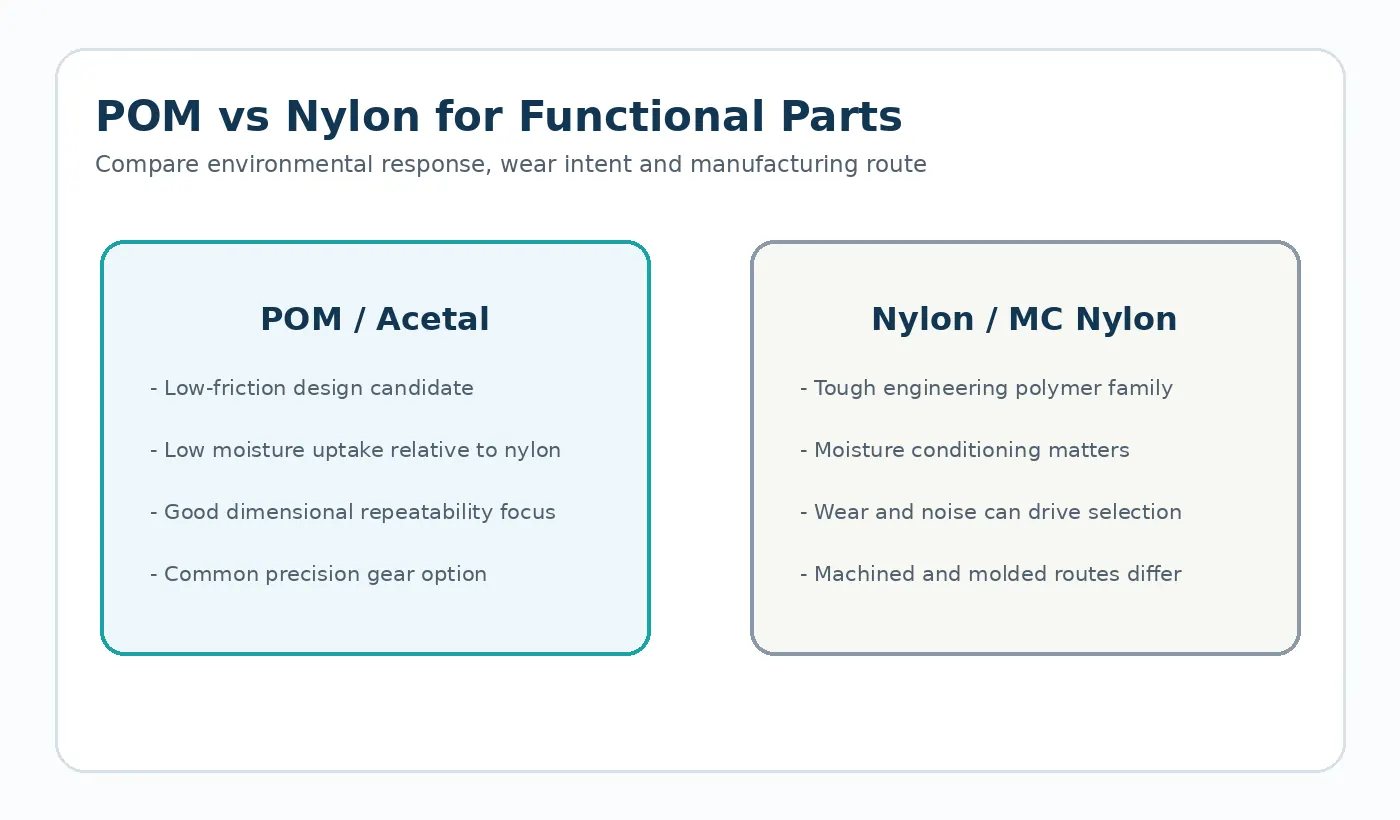
What the drawing needs to communicate
Build a short list from service conditions, then compare exact grades and the mating materials used in the assembly.
Lägg in dessa indata på den kontrollerade ritningen, specifikationen eller offertförfrågan där det är möjligt. Att hålla dem borta från informella meddelandetrådar gör det lättare att hantera leverantörsjämförelser och senare revideringar.
Risk review
Choosing from a single headline property can trade one failure mode for another.

Sample acceptance
Use prototypes or molded samples to validate the interfaces that are most sensitive to the selected material.
For Material Selection for Functional Injection Molded Parts, record the exact material grade and conditioning/environment used during validation. Material names alone are too broad for a repeat-production acceptance record.
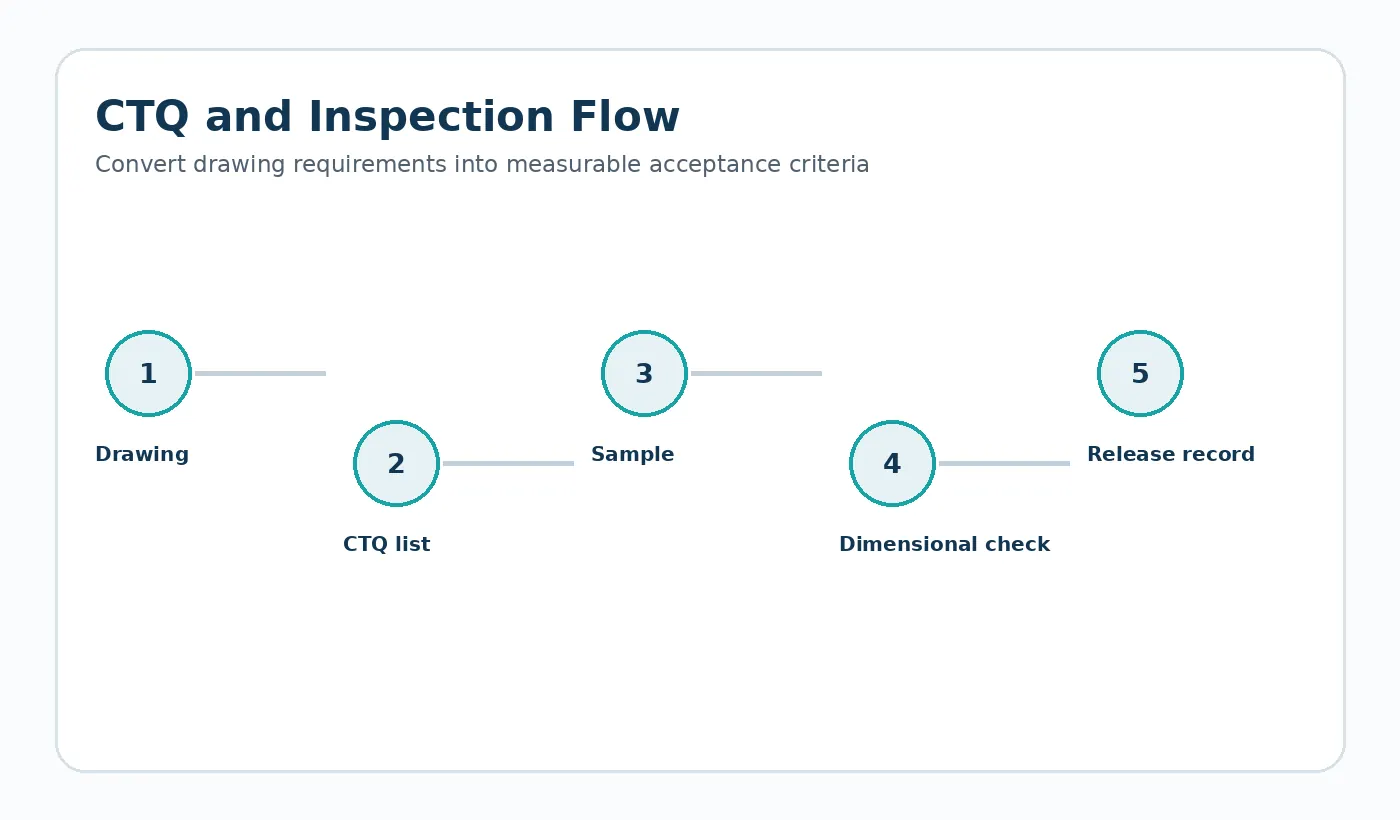
From design review to RFQ
Before requesting a price for material selection for functional injection molded parts, identify the current drawing revision, production quantity, material constraint and the feature that most strongly affects function. Ask the supplier to flag any deviation from those inputs in the quotation so technical alternatives stay visible.