Decision first
Choosing molding or machining is an economic and engineering decision, not a rule based only on quantity.
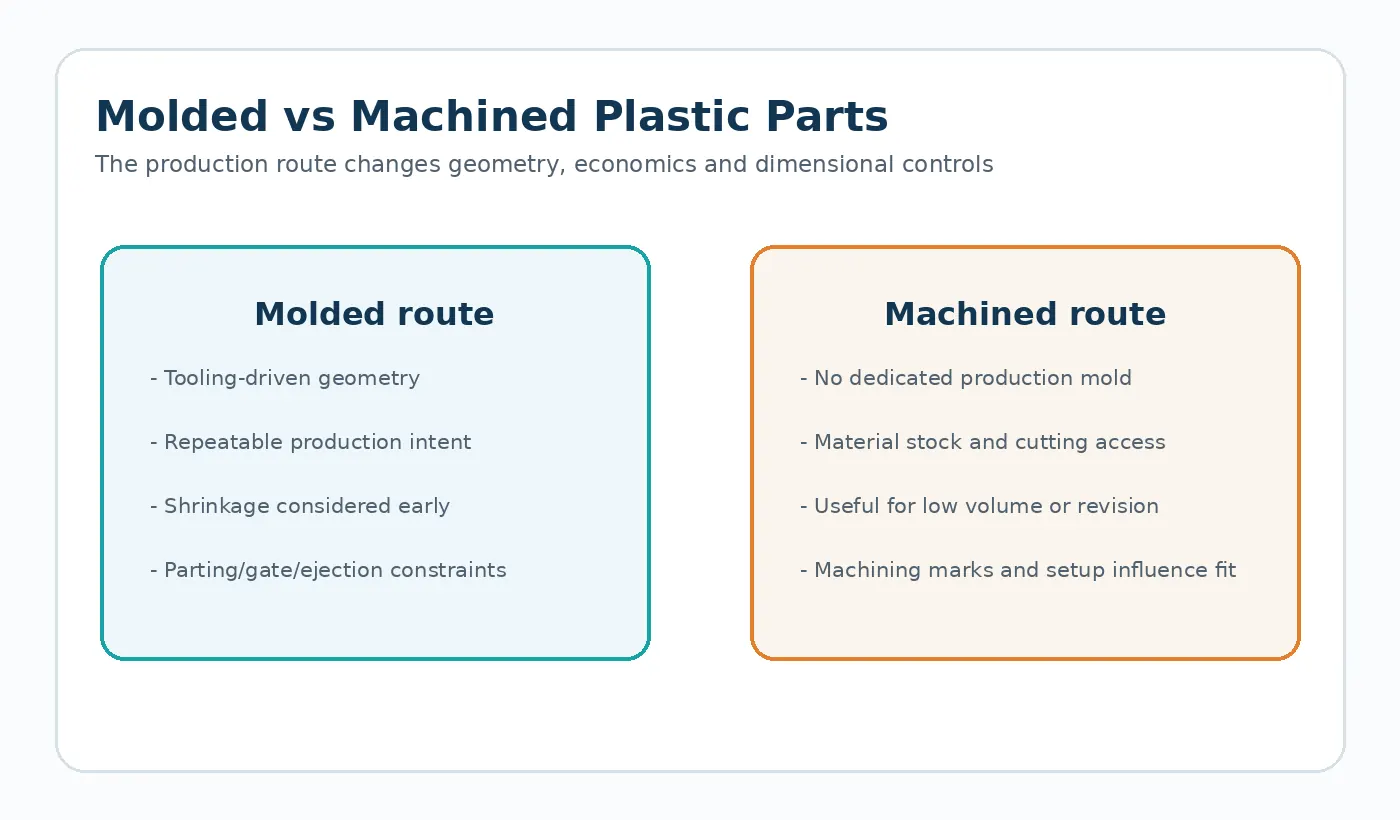
Molding concentrates cost and risk in tooling but can repeat complex geometry efficiently once the design is stable. Machining avoids dedicated cavity tooling and is useful for prototypes, lower volumes, large stock shapes or materials that are readily available as plate/rod.
A practical comparison often starts with the first 50–500 parts but should not stop there. Ask what those parts are intended to prove. If they are checking enclosure fit, a machined or printed prototype may be enough. If they are validating snap behavior, shrinkage-sensitive interfaces or a molded surface, the learning objective may require the production resin and process. Also consider future revisions: cutting a tool before interfaces are stable can turn a small CAD edit into a tooling change.
Design inputs that change the answer
Compare design maturity, annual volume, part envelope, wall geometry, tolerance scheme, material form and expected revision frequency. A machined prototype can answer assembly questions, but it will not reproduce every feature of the final molded process.
尽可能将这些信息添加到受控图纸、规格说明或询价附件中。避免在非正式的沟通渠道中发布这些信息,有助于供应商比较和后续修改的管理。
Failure mode worth screening
The wrong route is often selected when a prototype material/process is treated as proof of final production behavior.
Validation in the real assembly
Use separate acceptance plans for prototype learning and final-process validation.
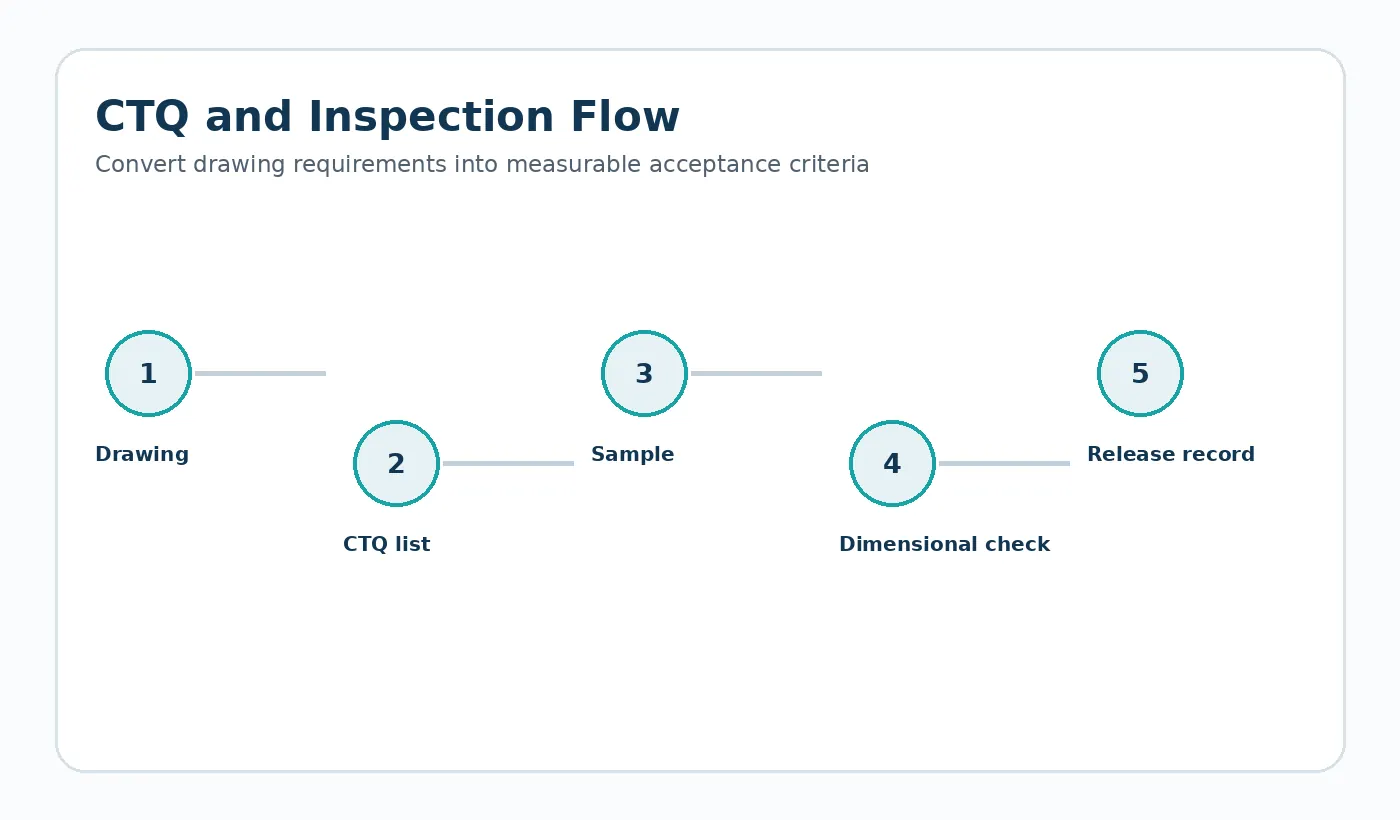
For Injection Molded vs Machined Plastic Parts, close the DFM loop by updating the controlled CAD/drawing and sample plan. A recommendation that never reaches the released revision cannot be inspected consistently in production.
RFQ handoff
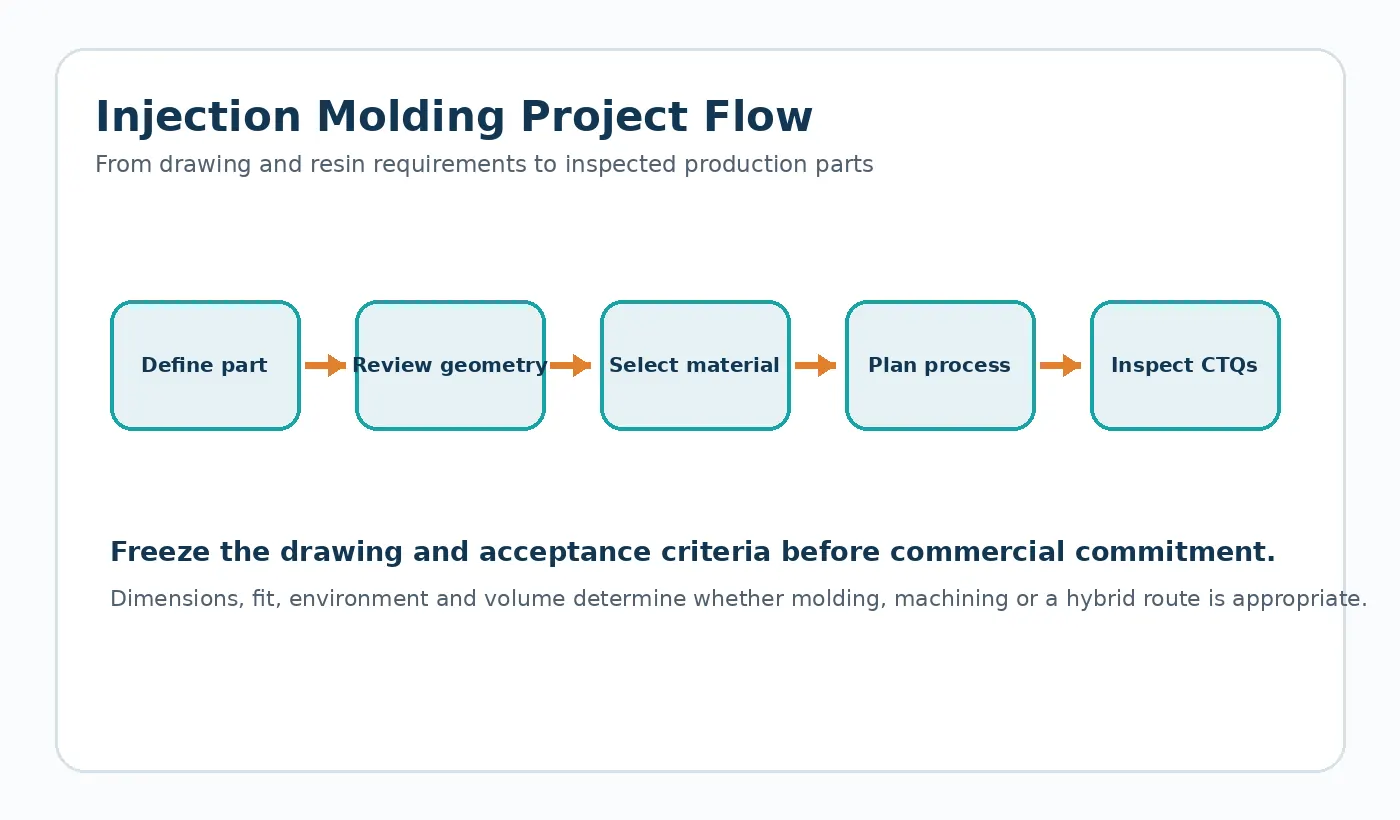
Before requesting a price for injection molded vs machined plastic parts, identify the current drawing revision, production quantity, material constraint and the feature that most strongly affects function. Ask the supplier to flag any deviation from those inputs in the quotation so technical alternatives stay visible.
针对此决策的实用设计审查
Compare annual quantity, revision maturity, feature access, surface/finish requirements and tolerance strategy before choosing the process. Molding can integrate features and repeat high volumes, while machining can be faster to change and practical for larger stock shapes or lower volumes. Secondary machining can also be used on a molded datum when the economics and tolerance stack justify it.
将假设条件记录在图纸或询价单中,以便供应商在报价前进行确认。如果某个数值未知,应将其标识为待定工程项目,而不是直接复制可能与实际装配不符的通用产品目录编号。
验证工作表
- Annual demand and batch size
- Expected design changes
- Features that require tool access or slides
- Datums that may need secondary machining
- Material form / exact grade constraints
- First-article and change-control plan
使用第一个样品,通过尺寸验证和相关的功能检查来确认这些要点。任何可接受的偏差都应在重复生产前的受控修订中记录下来。