Engineering context
A moldable gear is more than a tooth form placed on a hub. The web, hub, gate, wall transitions and ejection strategy influence the finished tooth geometry.
Uniform sections and balanced geometry help cooling, while abrupt thick-to-thin transitions can create sink or differential shrinkage. Tooth tips and roots also need to release from the tool without damage.
Gear teeth themselves may be thin while the hub is relatively heavy. That thickness contrast is a classic source of uneven cooling. A webbed or cored hub can sometimes improve molding balance, but the redesign must still carry torque from the bore to the teeth. DFM should therefore connect flow and cooling recommendations to the mechanical load path instead of treating them as separate objectives.
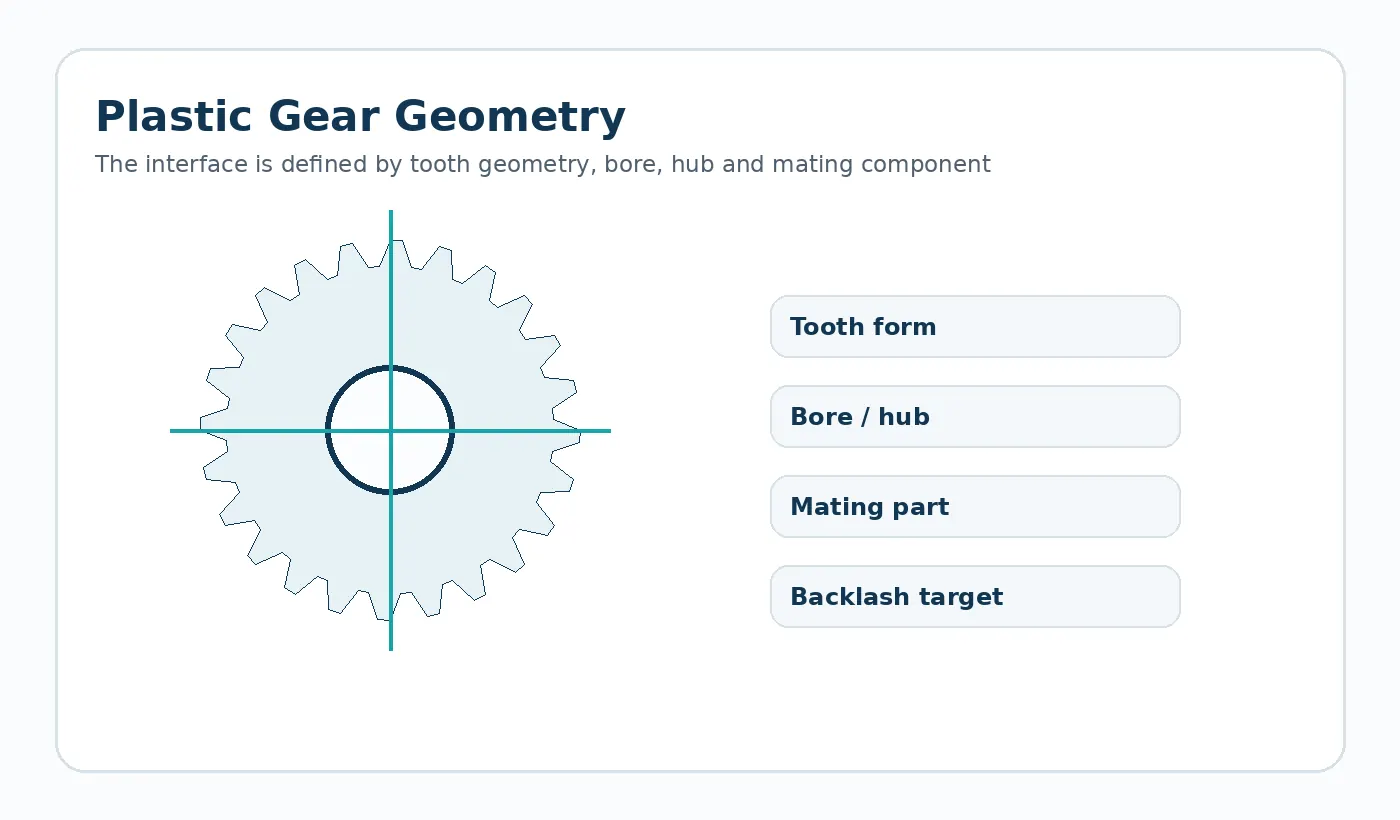
What the drawing needs to communicate
Review tooth geometry together with hub diameter, web thickness, bore features, gate location, parting line and the expected shrinkage of the selected resin.
W miarę możliwości umieszczaj te dane wejściowe na rysunku kontrolnym, specyfikacji lub załączniku do zapytania ofertowego (RFQ). Nie umieszczaj ich w nieformalnych wątkach wiadomości, co ułatwia zarządzanie porównaniami dostawców i późniejszymi poprawkami.
Risk review
Late changes to hub or wall geometry can move the process window after the gear tooth design was already frozen.
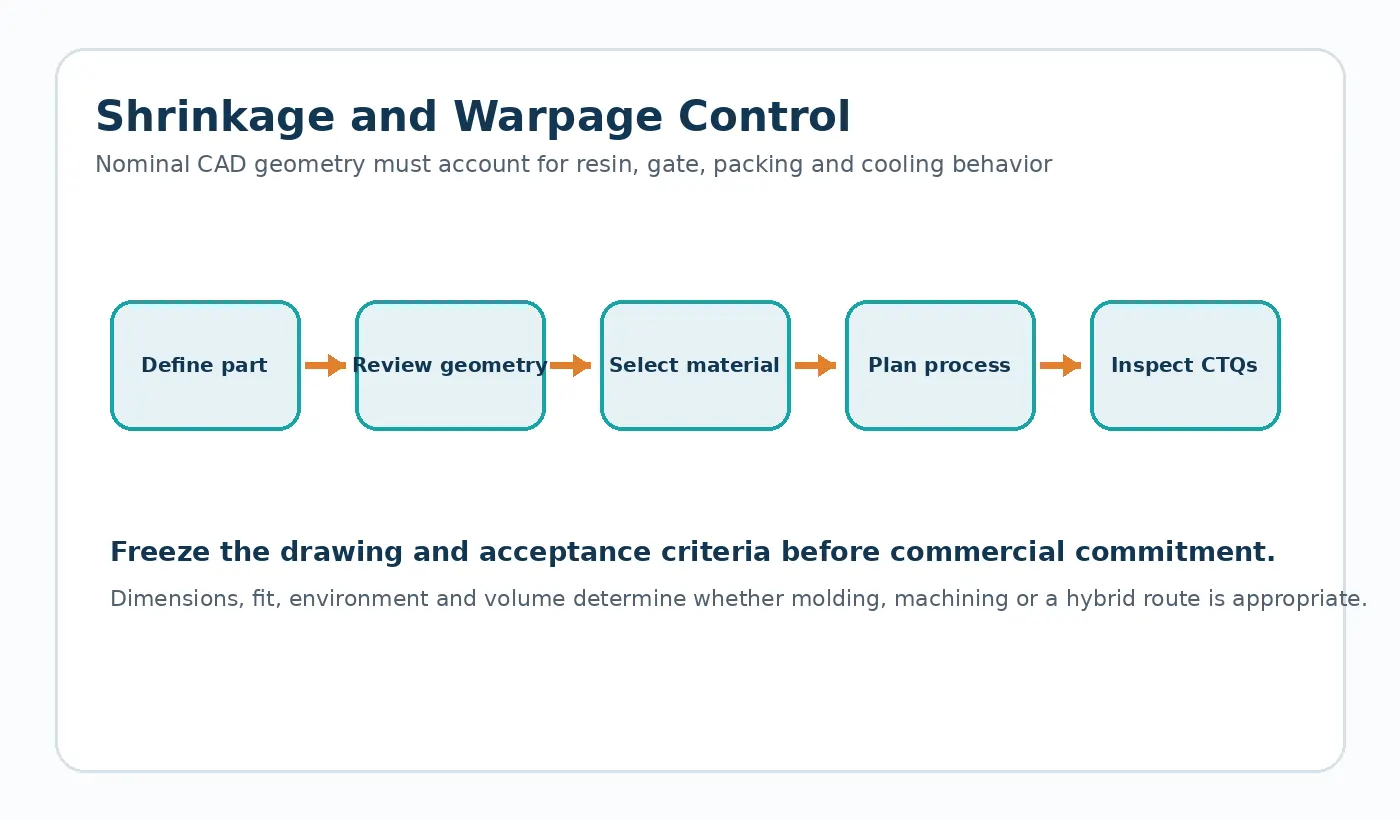
Sample acceptance
Inspect first samples for both gear characteristics and molded-part effects such as runout or distortion.
For Plastic Gear Design for Injection Molding, close the DFM loop by updating the controlled CAD/drawing and sample plan. A recommendation that never reaches the released revision cannot be inspected consistently in production.
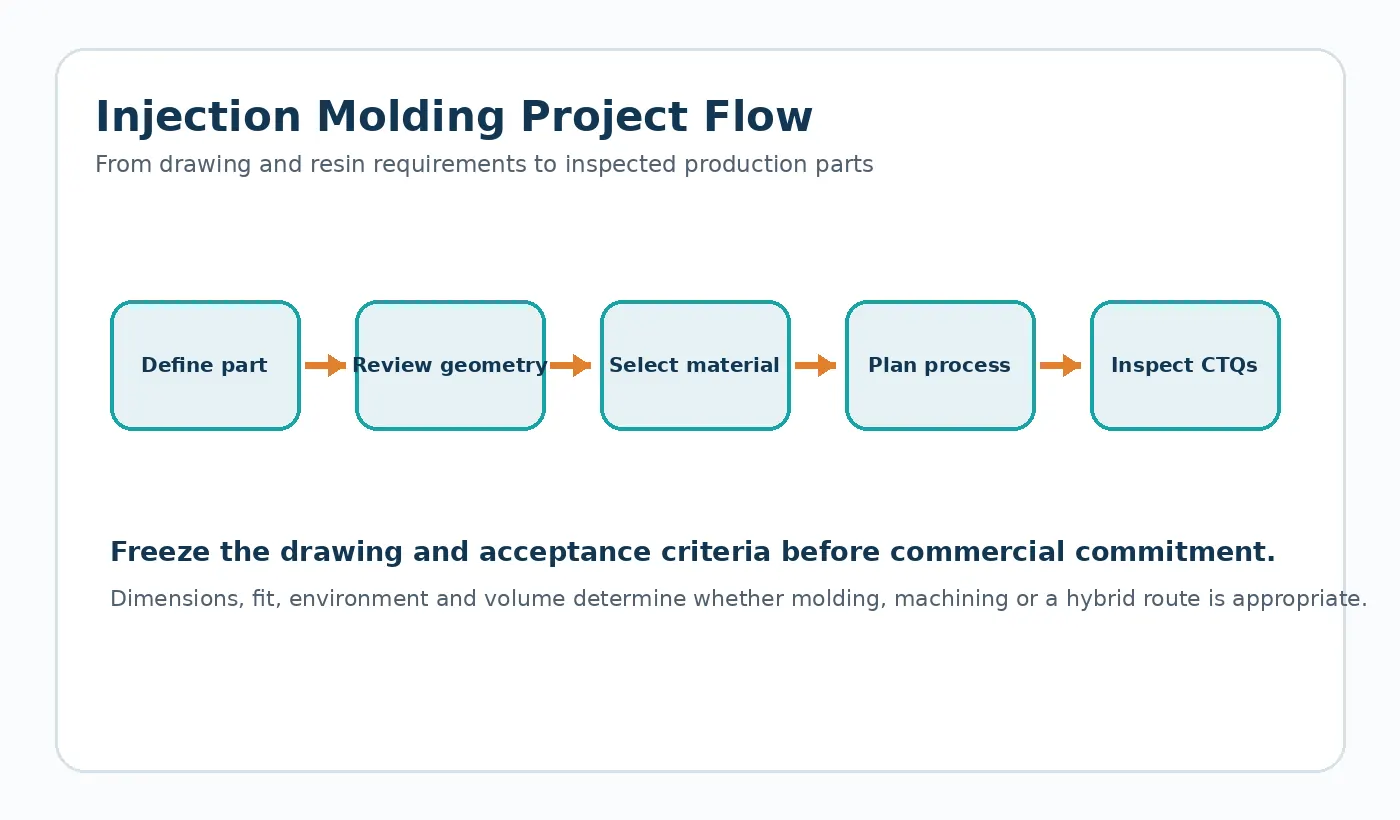
From design review to RFQ
Before requesting a price for plastic gear design for injection molding, identify the current drawing revision, production quantity, material constraint and the feature that most strongly affects function. Ask the supplier to flag any deviation from those inputs in the quotation so technical alternatives stay visible.
Praktyczny przegląd projektu dla tej decyzji
Material selection should connect the polymer to the function and manufacturing route. Review temperature, moisture, chemicals, stiffness, wear pair, dimensional stability and exact grade requirements. A material that performs well in isolation can still be a poor choice when the mating surface or inspection condition is different.
Zapisz założenia na rysunku lub w zapytaniu ofertowym (RFQ), aby dostawca mógł je potwierdzić przed złożeniem oferty. Jeśli wartość jest nieznana, oznacz ją jako element inżynieryjny, zamiast kopiować ogólny numer katalogowy, który może nie pasować do zestawu.
Arkusz weryfikacyjny
- Service temperature
- Moisture / chemical exposure
- Load and stiffness need
- Wear pair / lubrication
- Dimensional-stability priority
- Exact grade or approved substitution limits
Użyj pierwszej próbki, aby zamknąć te punkty, zarówno pod względem wymiarowym, jak i odpowiedniej kontroli funkcjonalnej. Wszelkie akceptowane odchylenia powinny zostać odnotowane podczas kontroli przed powtórną produkcją.