Beschrijving
MC nylon machined gear family
MC nylon is commonly considered for larger machined gears and wear components. Its moisture response and temperature-dependent dimensions should be part of the fit and backlash calculation.
Large MC nylon gears may be bored and keyed like metal gears, but the polymer responds differently to clamping and environmental conditioning. Hub dimensions, keyway stress concentration and shaft fit should be chosen with the lower modulus and moisture response in mind.
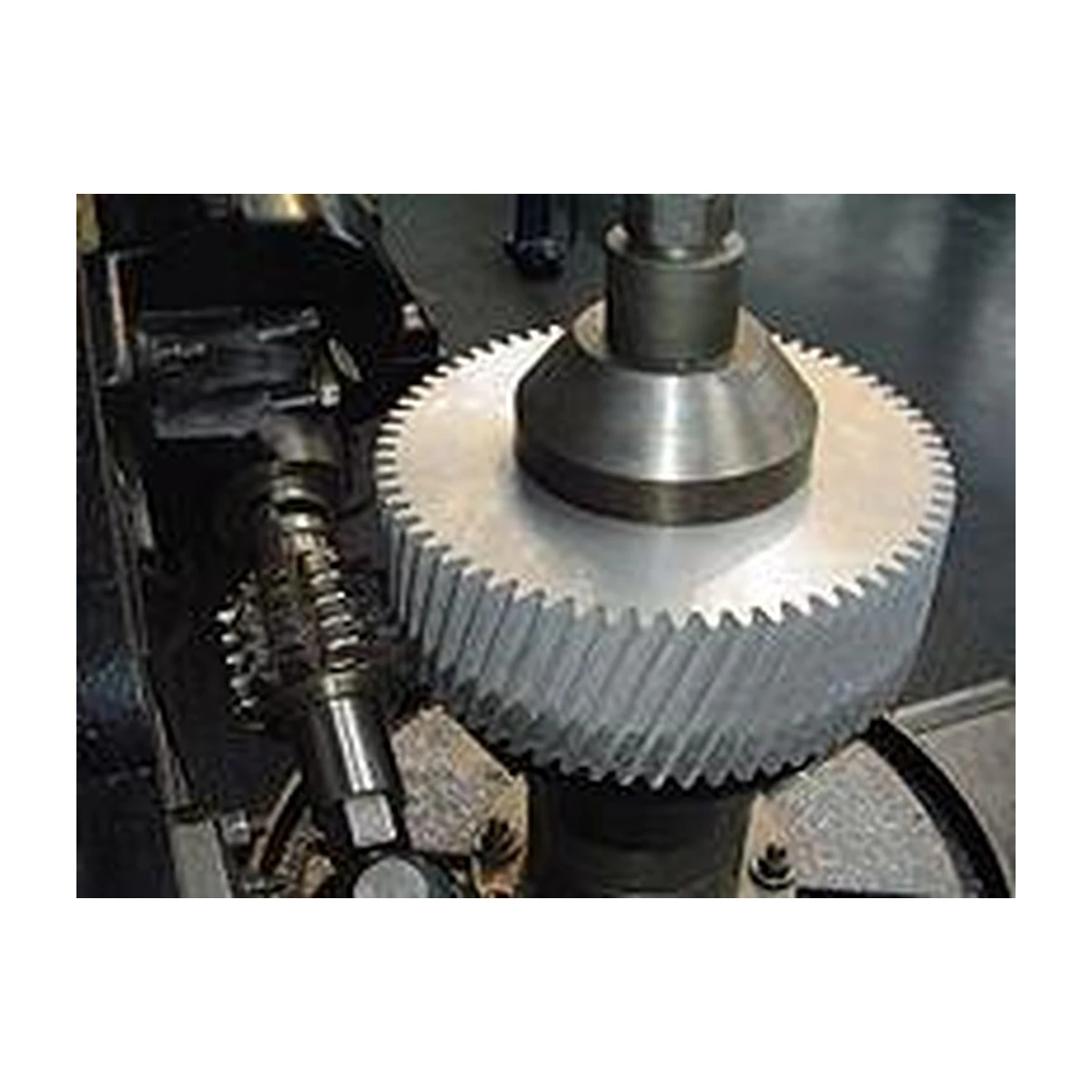
How to read the manufacturing photograph
The main image shows a physical engineering-plastic gear in a machining setup. It supports the documented machined MC-nylon route, but it is not a dimensional definition of this product. Final material grade, tooth geometry, bore/keyway, hub and conditioning state follow the released drawing and agreed inspection plan.
Geometry and interface inputs for MC Nylon Gears
- MC nylon grade or material requirement
- Gear type, module/DP and tooth count
- Bore, keyway and hub dimensions
- Mating material and lubrication
- Moisture, temperature and load conditions
Geometry reference: Custom machined gear geometry defined by drawing, including tooth form, face width, bore, hub and any keyway or fastening interface
Choosing the production route
Machining from cast nylon stock can support large diameters and lower production quantities without dedicated molding tooling. The stock condition, machining sequence and final conditioning state influence dimensions.
Packaged process reference: Machined configurations are documented; molding requires separate confirmation
Material direction: MC Nylon / nylon family
Application-specific design review
Moisture uptake and local clamping stress can change dimensions or runout. Thin sections may also distort during machining.
Typical use: Industrial machinery, conveyors and larger low-to-moderate speed gear applications where the selected nylon grade fits the duty. The final material and tolerance plan should be checked against the load path, mating components and environment in that assembly.
First sample and inspection focus
Specify the conditioning state and inspection temperature where fit is sensitive. Check bore, runout and tooth characteristics from the functional mounting datum.
Quotation decision: Humidity and conditioning, bore fit, mating material, load, speed, lubrication and allowable dimensional movement are important selection inputs.

What to send for a MC Nylon Gears quotation
Send the latest drawing or CAD model together with production quantity and the application conditions that affect fit, wear or dimensional stability. If the part replaces an existing component, identify the features that must remain interchangeable and any known field issue the new part is intended to solve.
- Controlled drawing revision and 3D model when available
- Mating-part or transmission geometry
- Material requirement or service environment
- Sample quantity, production batch and expected annual demand
- Critical dimensions and functional acceptance method
Engineering specification to freeze before manufacture
A production drawing should convert the application into measurable inputs. The table below is the minimum review set for this product family; add any assembly-specific datum, finish or acceptance requirement that changes function.
| Definition | What the supplier needs |
|---|---|
| MC Nylon / nylon grade | Show the value, tolerance or functional requirement on the latest drawing. |
| Gear tooth geometry | Show the value, tolerance or functional requirement on the latest drawing. |
| Mating gear and material | Show the value, tolerance or functional requirement on the latest drawing. |
| Bore / hub fit | Show the value, tolerance or functional requirement on the latest drawing. |
| Humidity / conditioning state | Show the value, tolerance or functional requirement on the latest drawing. |
| Torque, speed and duty | Show the value, tolerance or functional requirement on the latest drawing. |
| Lubrication condition | Show the value, tolerance or functional requirement on the latest drawing. |
| Allowable dimensional change | Show the value, tolerance or functional requirement on the latest drawing. |
Failure modes to prevent during design review
Common risks for this geometry include grade substitution without rechecking shrinkage or dimensions; service moisture/temperature outside the approval condition; wear-pair assumptions based on one material only. These are best addressed before the first sample by reviewing the complete mating interface, not by tightening every drawing tolerance.
Use tolerances selectively. Dimensions that establish the tooth mesh, chain engagement, shaft fit or assembly datum deserve explicit measurement methods; non-critical molded surfaces can often use a more practical general tolerance.
First-article and production acceptance
Agree the inspection condition, datums and measuring method before sampling. The first-article report should cover the drawing CTQs and then be paired with a functional check in the real assembly or a representative fixture. For gears and sprockets, that can include mesh or chain engagement, runout and bore relationship; for custom molded parts it can include fit, fastening and loaded features.
Production control should follow the same CTQs rather than replacing them with a long list of easy-to-measure cosmetic dimensions. If a bore, tooth, insert or mounting surface is secondary-machined, make clear which operation establishes the final datum.
MC Nylon Gears FAQ
What should I send for quotation?
Send the latest 2D drawing and, where available, a 3D model. Add mating-part information, order quantity, service conditions and the features that control fit or motion. A sample is useful for replacement parts with uncertain legacy geometry.
How should the material be specified?
For POM or nylon projects, material family alone is not enough. Confirm the actual grade when it is mandatory, and state moisture, temperature, lubricant and mating material so dimensional and wear behavior can be reviewed.
How is the first sample approved?
Define the CTQs, inspection state and functional test before the sample is produced. Approval should confirm both measurable geometry and the behavior of the part in its intended interface.
Engineering decision brief for MC Nylon Gears
Define the geometry
Custom machined gear geometry defined by drawing, including tooth form, face width, bore, hub and any keyway or fastening interface. The quotation should use the drawing revision and mating interface as the controlling definition rather than an image alone.
Choose material by duty
MC Nylon / nylon family Material selection should be checked against load, speed, temperature, moisture or chemicals, lubrication and the required dimensional condition.
Freeze the production route
Machined configurations are documented; molding requires separate confirmation The route should be fixed only after quantity, tolerances, surface requirements and change risk are understood.
Agree acceptance
Humidity and conditioning, bore fit, mating material, load, speed, lubrication and allowable dimensional movement are important selection inputs. First-article checks should therefore focus on the dimensions and functional interfaces that control the assembly.
Typical application context: Conveyors, packaging machinery, material handling, automation and general low-noise transmission.