Engineering resources for design and sourcing decisions
These guides cover the practical decisions behind functional plastic components: material behavior, molding and machining routes, gear geometry, tolerance planning, inspection and RFQ preparation.
Use them to frame a design review or supplier discussion. Final dimensions, resin grades and acceptance criteria still belong on the project drawing and specification.
Where to begin
Design for molding
Review walls, draft, ribs, bosses, gates, parting and shrinkage-sensitive features before tooling.
Plastic gearing
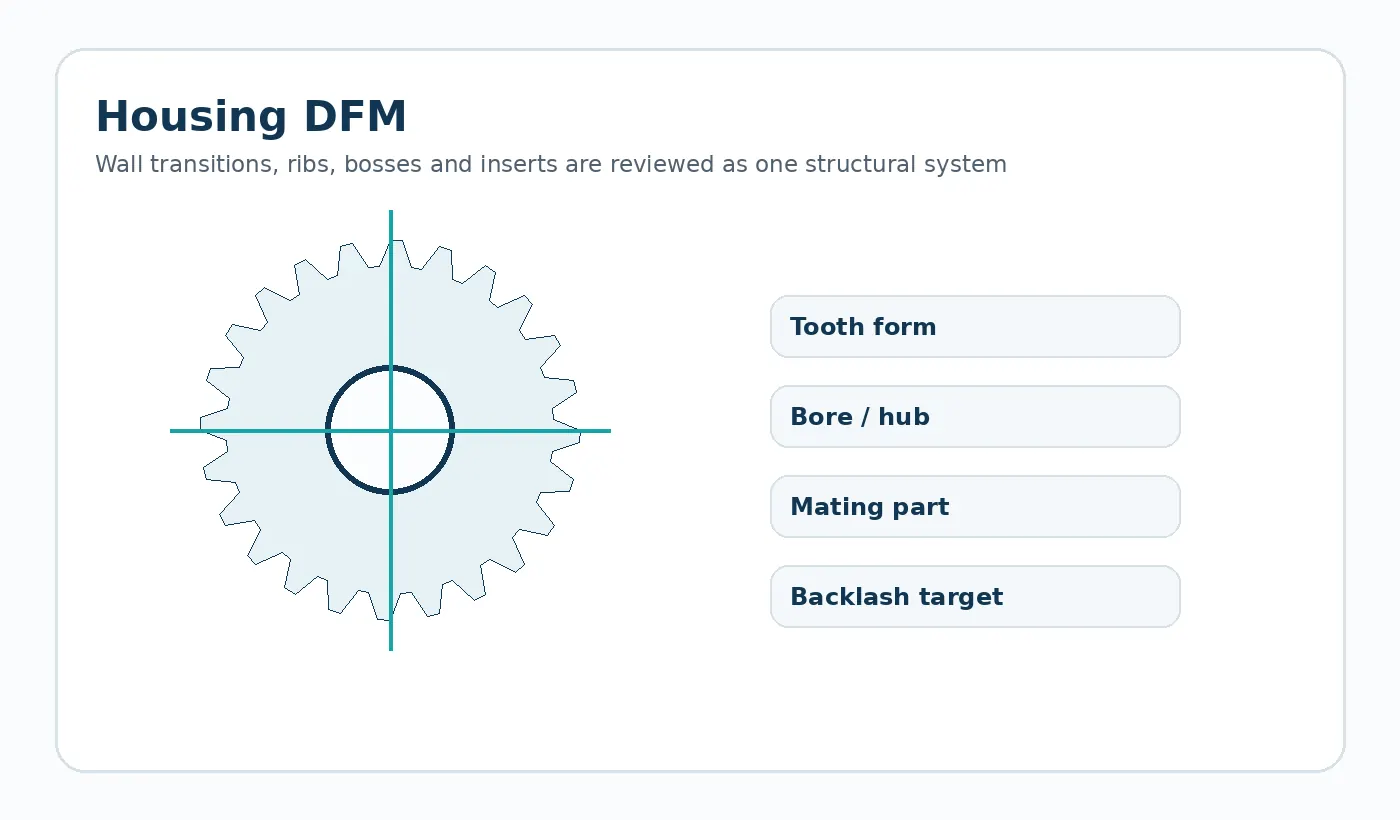
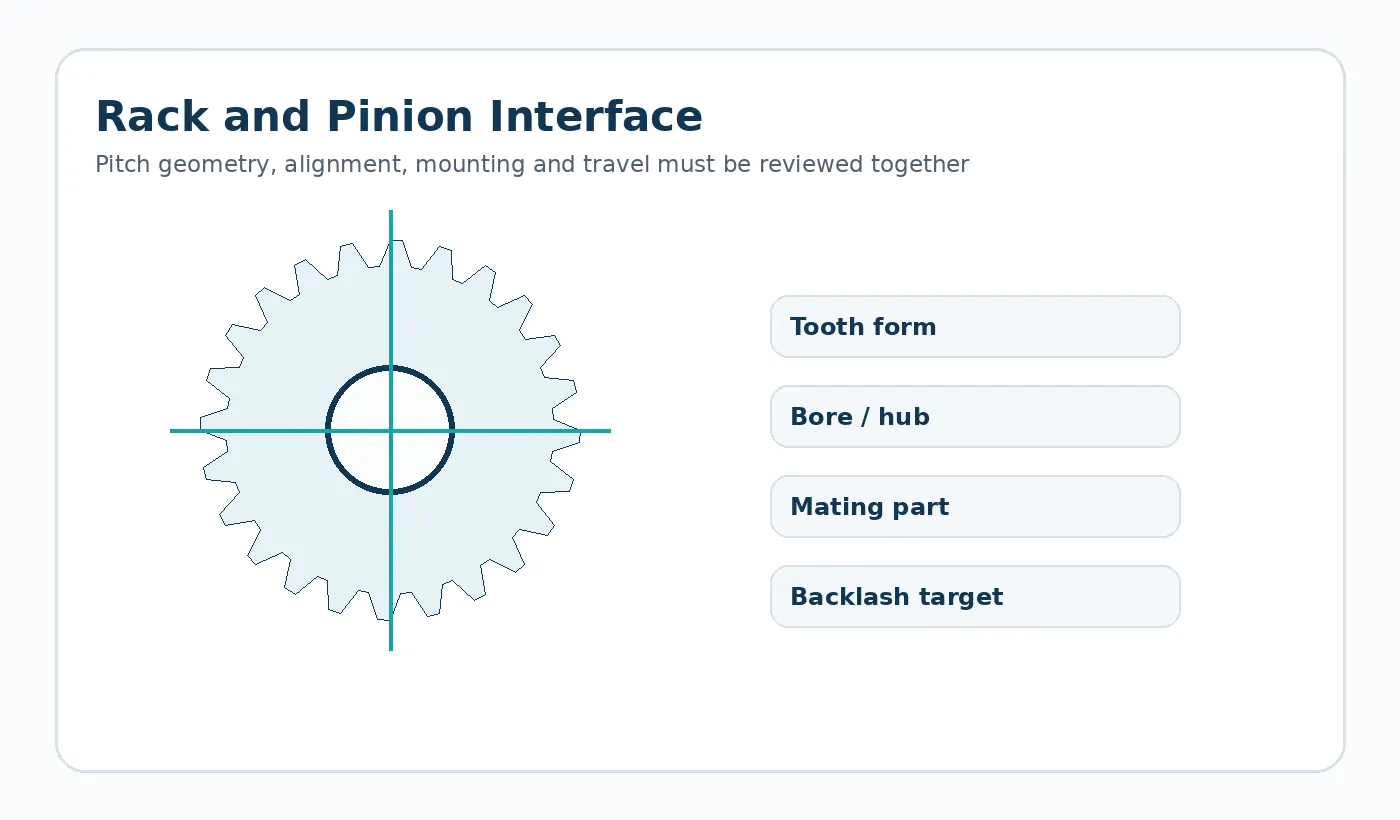
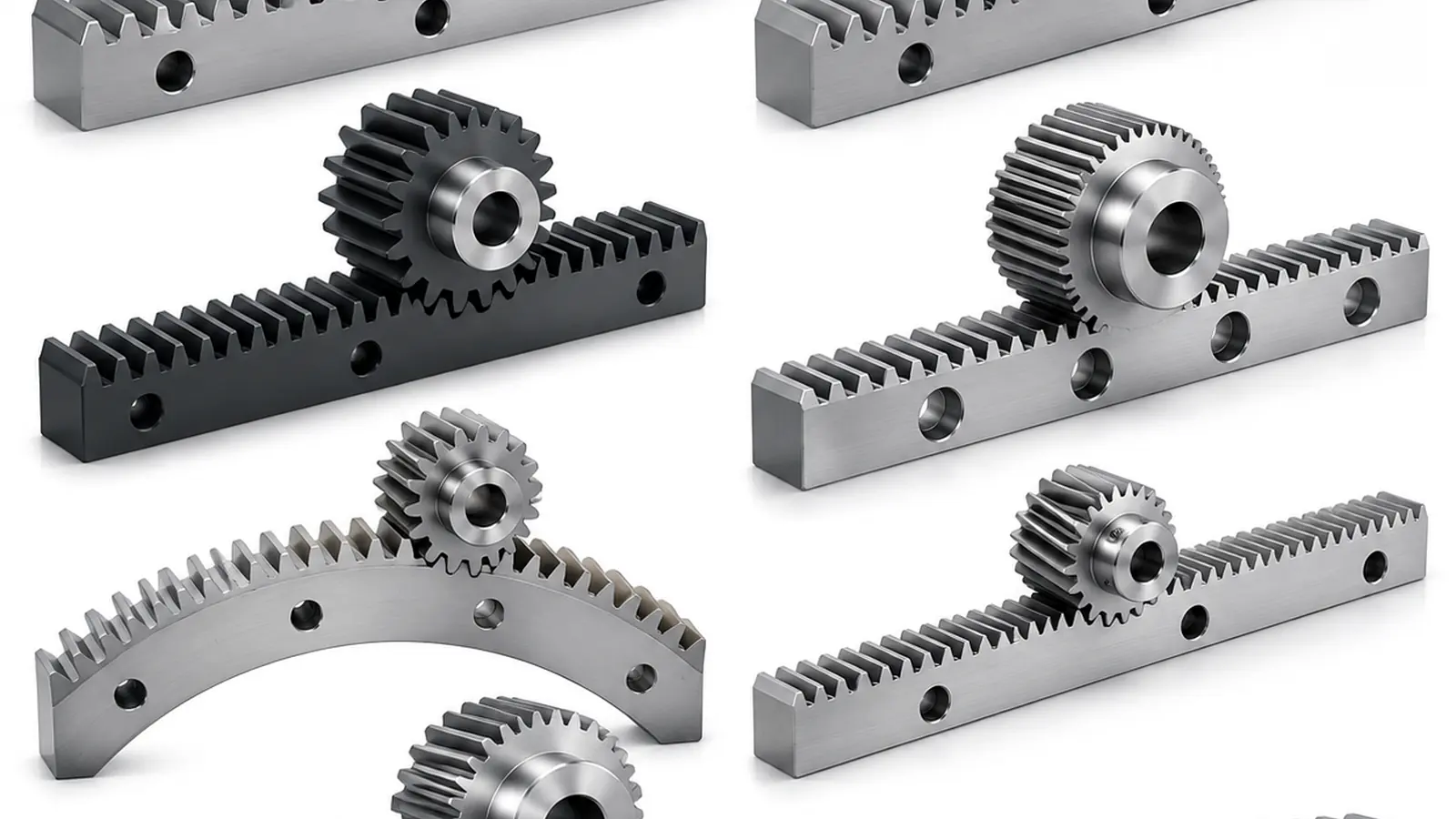
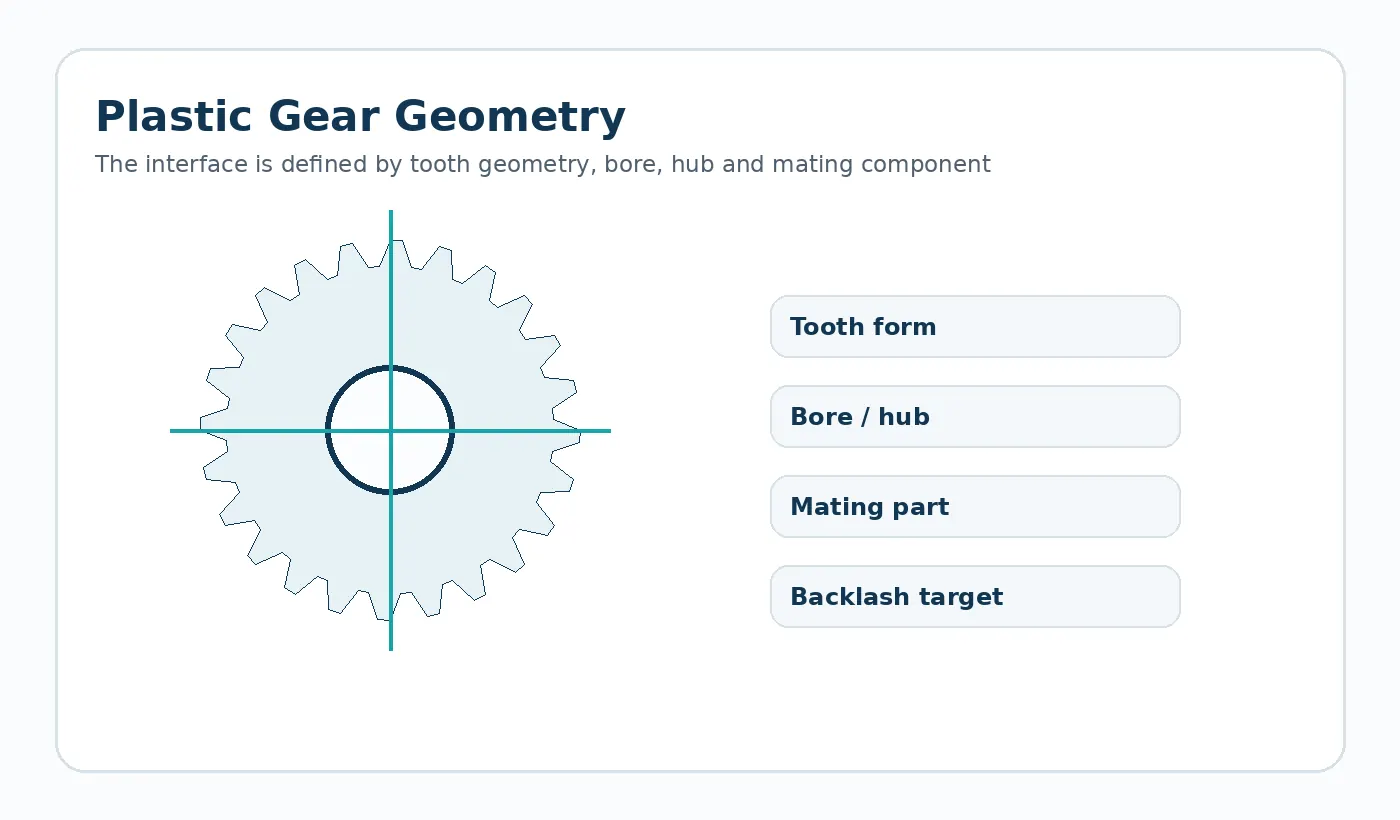
Treat the gear pair, center distance, bore, shaft support and backlash as a system.
Материалды таңдау
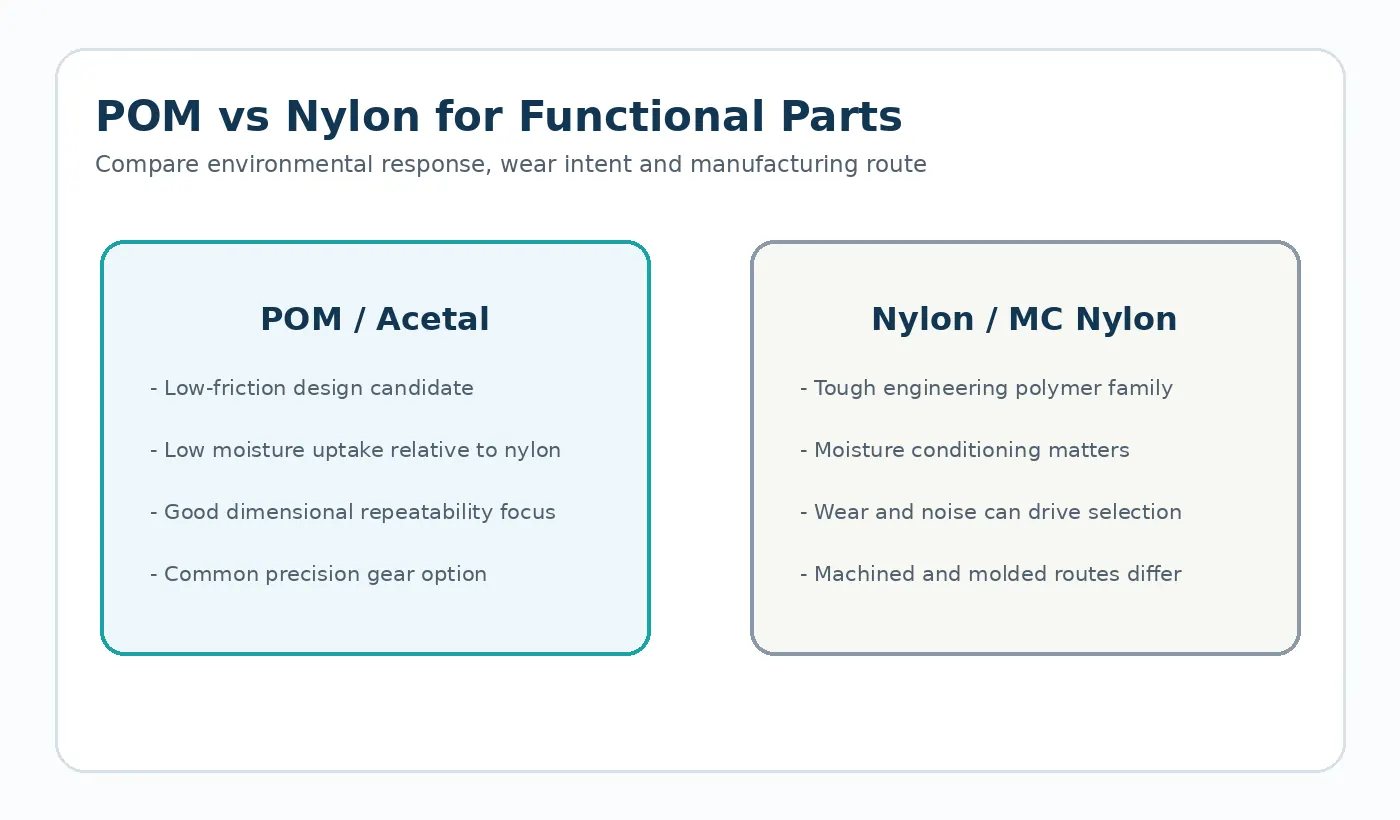
Compare the actual environment, wear pair, moisture and temperature conditions rather than selecting by a single datasheet property.
Engineering review in four layers
1. Interface
Define mating geometry, datums, load path, motion and the feature that establishes assembly position.
2. Material
Evaluate temperature, moisture, chemicals, wear pair, stiffness and the exact grade when it is mandatory.
3. Process
Review molding, machining and secondary operations against volume, geometry, repeatability and tooling risk.
4. Acceptance
Agree CTQs, inspection state, measuring method and the functional test used to approve the first sample.
Use tolerances as engineering controls, not decoration
A long tolerance list does not automatically create a more precise component. Put the tightest control on the dimensions that establish mesh, chain engagement, bore alignment, insert position or assembly datums. Define how those dimensions are measured and, for moisture-sensitive materials, the conditioning state used for inspection.
The engineering library below expands these decisions by topic. Use it to prepare drawings and RFQs, then confirm project-specific limits during supplier review rather than copying generic values into a production drawing.