Start from the mechanism
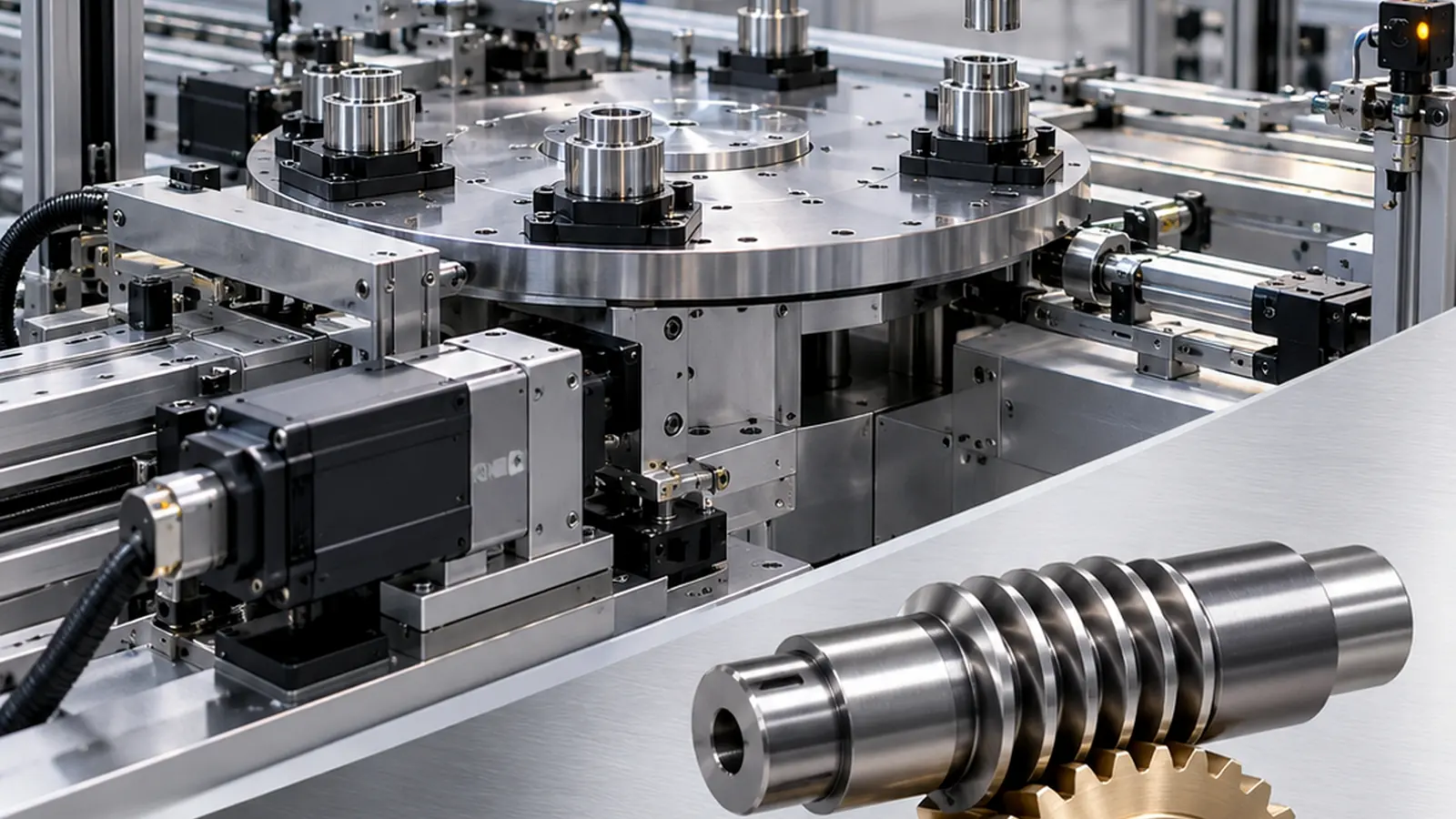
Automation gear trains need repeatable mesh across reversals, indexing and changing duty cycles.
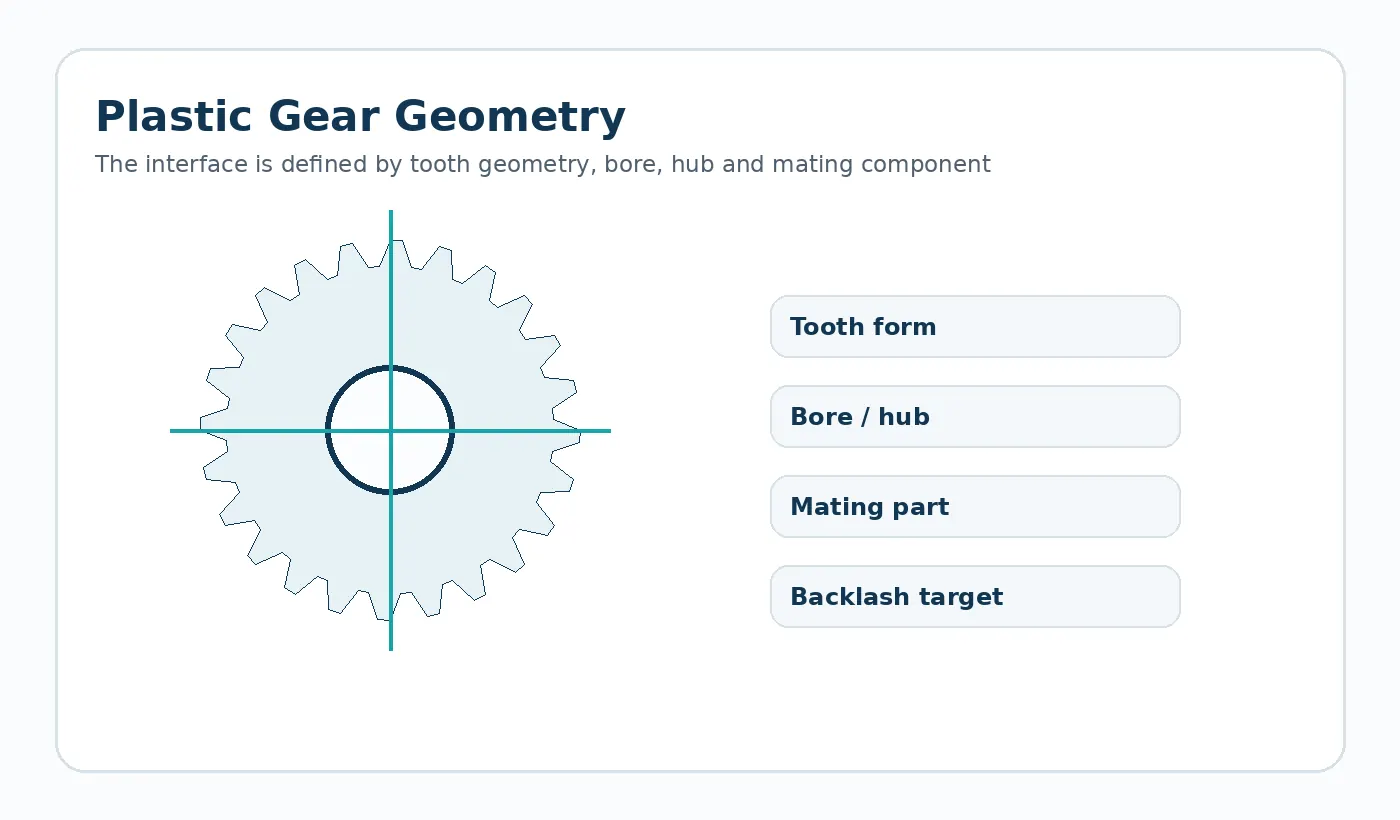
The gear pair, shafts, bearings and housing all contribute to backlash and positioning behavior. Plastic material compliance can be useful for noise, but it must be included in the accuracy budget.
In positioning equipment, a gear train can meet a tooth inspection target and still miss a repeatability target because shafts, bearings or housings move under load. Build the tolerance budget from motor shaft to output mechanism. Plastic gear compliance should be included in that stack, especially when the motion reverses and the driven inertia is high relative to the gear size.
Inputs to freeze before quotation
Provide torque, speed, reversals, duty cycle, positioning requirement, temperature and mating geometry.
Put these inputs on the controlled drawing, specification or RFQ attachment where possible. Keeping them out of informal message threads makes supplier comparisons and later revisions easier to manage.
What can invalidate the assumption
Focusing on one gear tolerance while the housing center distance is loose will not produce a repeatable motion system.
Verification strategy
Test the complete drivetrain and track backlash/noise after representative cycling.
For Plastic Gears for Industrial Automation, verify the component across the real travel or duty cycle. Local dimensional checks are useful, but the mechanism-level result should decide whether the design is ready for production.
Procurement checklist
Before requesting a price for plastic gears for industrial automation, identify the current drawing revision, production quantity, material constraint and the feature that most strongly affects function. Ask the supplier to flag any deviation from those inputs in the quotation so technical alternatives stay visible.