Engineering resources for design and sourcing decisions
These guides cover the practical decisions behind functional plastic components: material behavior, molding and machining routes, gear geometry, tolerance planning, inspection and RFQ preparation.
Use them to frame a design review or supplier discussion. Final dimensions, resin grades and acceptance criteria still belong on the project drawing and specification.
Where to begin
Design for molding
Review walls, draft, ribs, bosses, gates, parting and shrinkage-sensitive features before tooling.
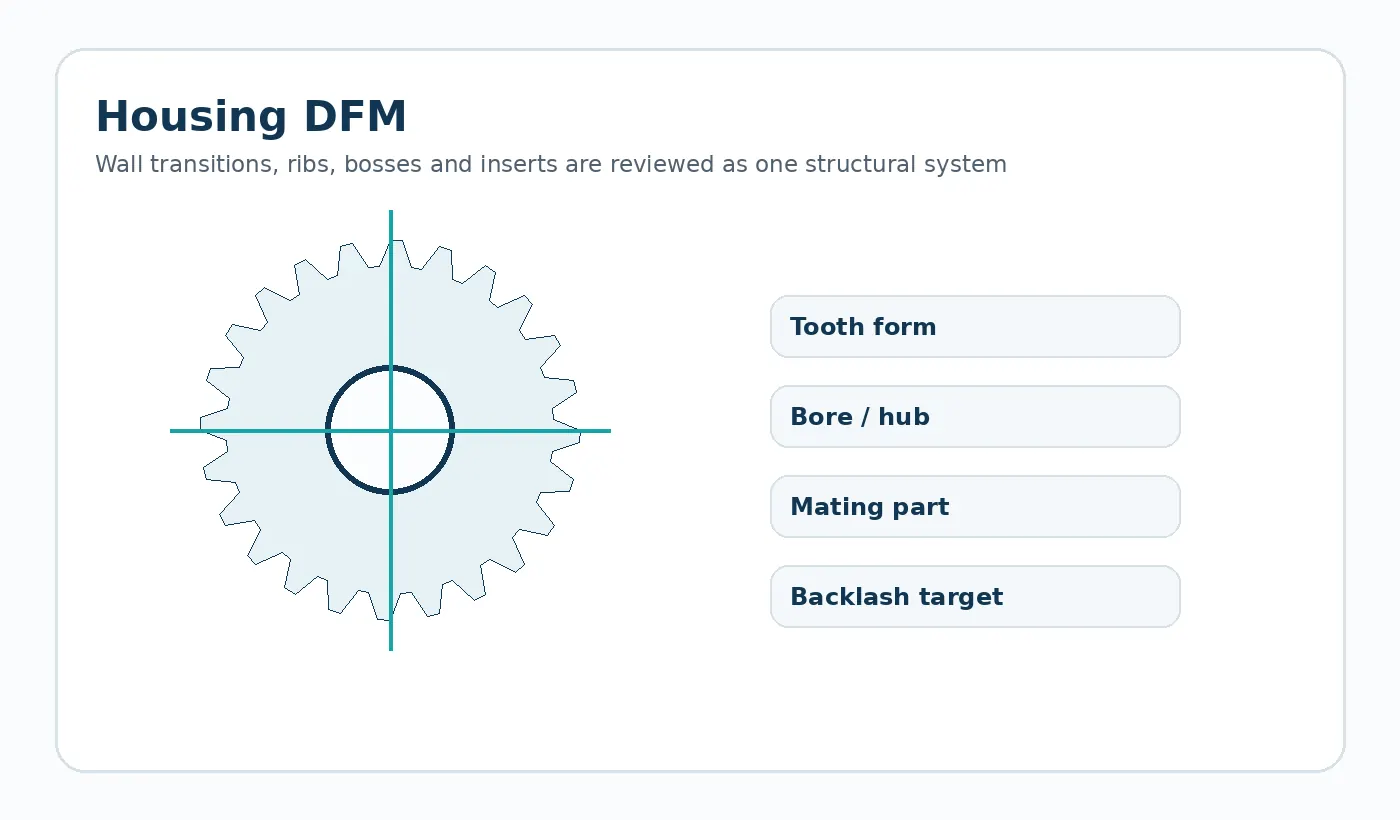
Plastic gearing
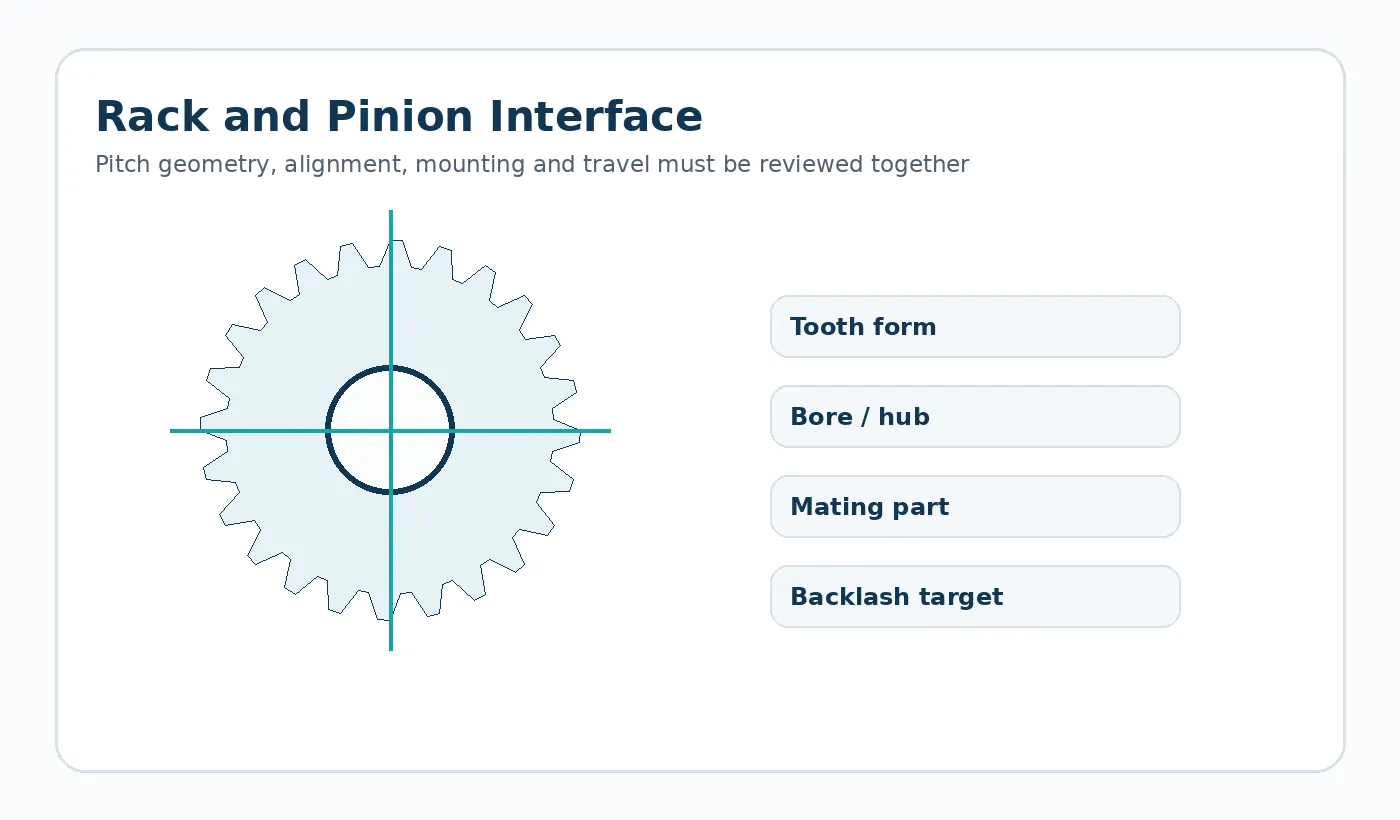
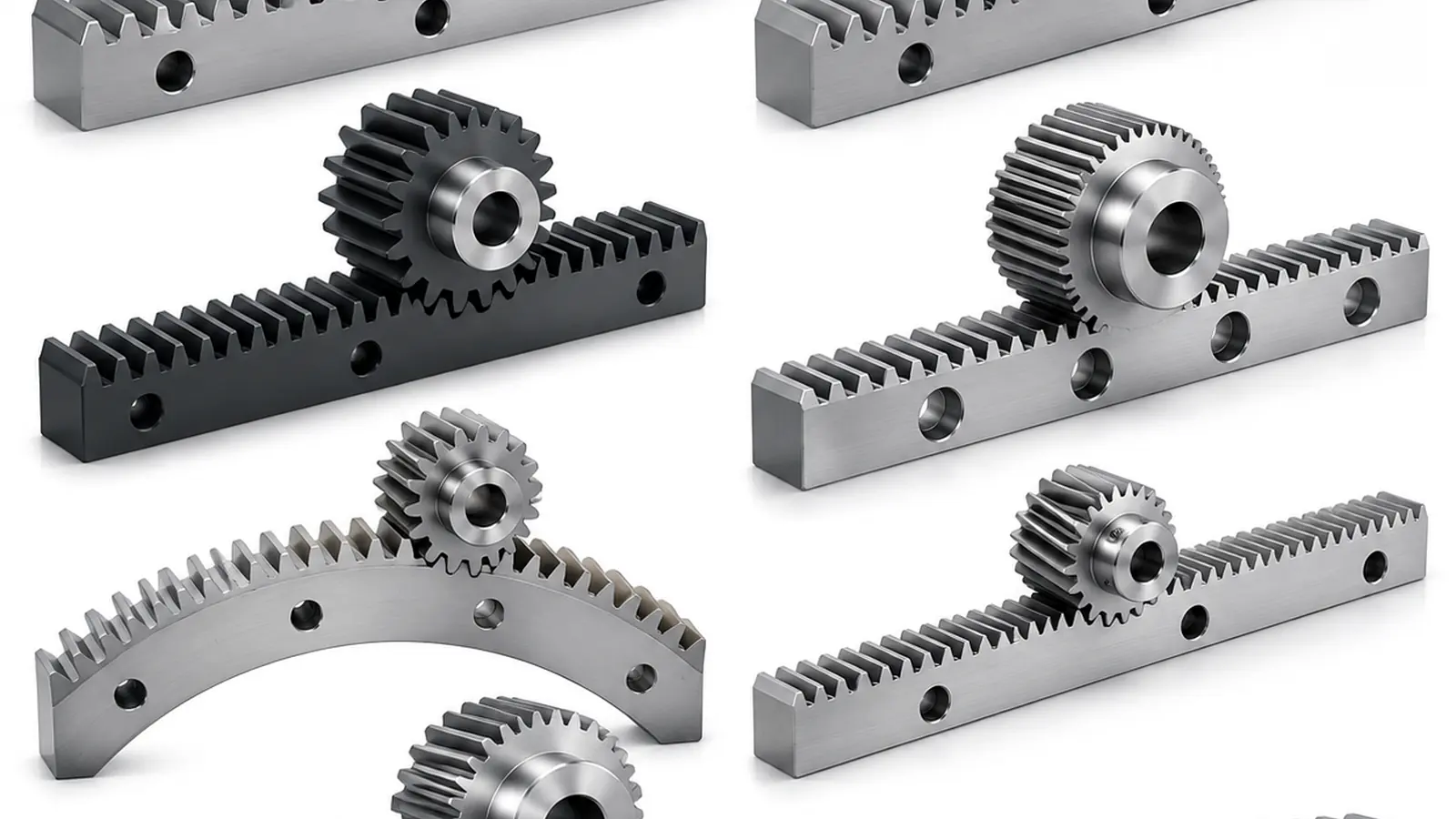
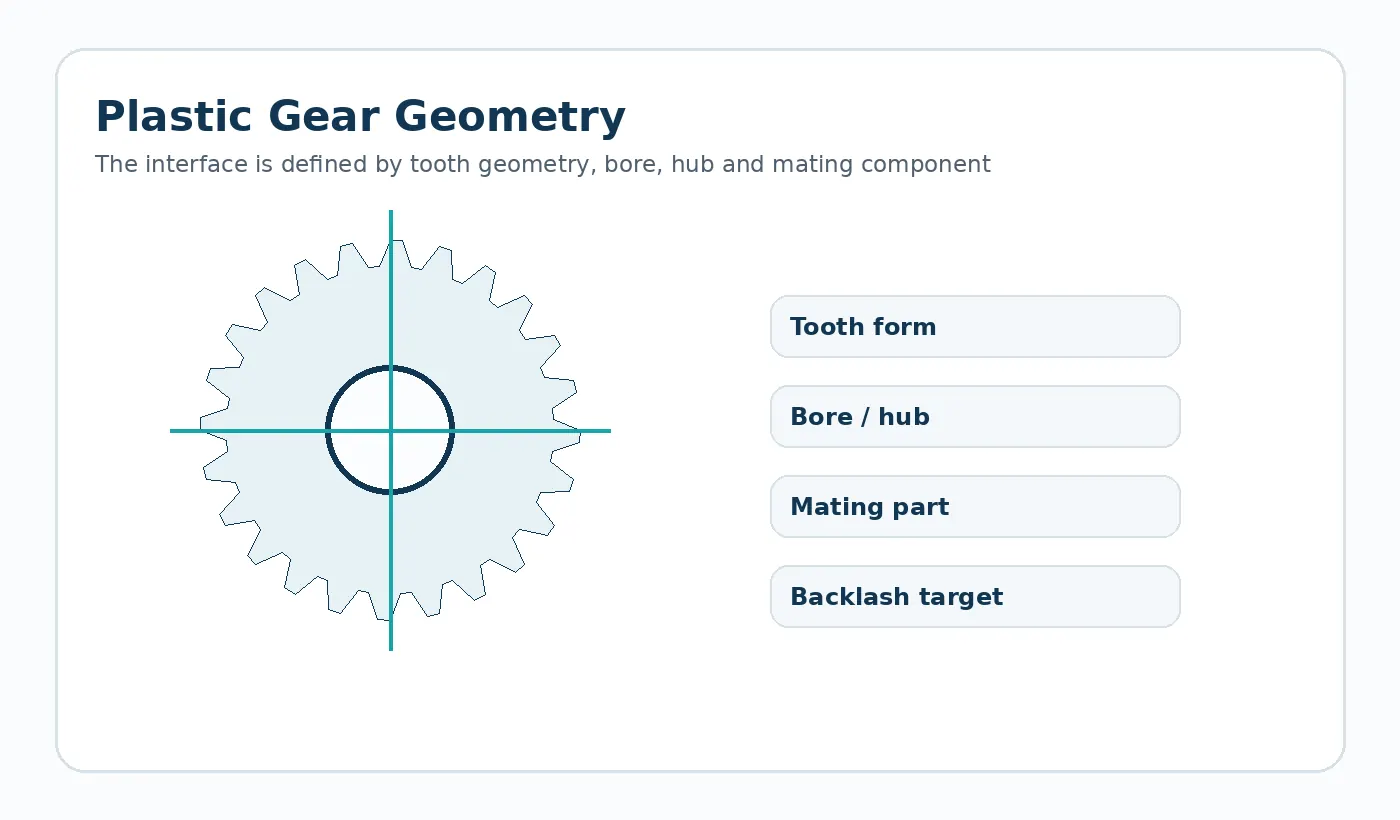
Treat the gear pair, center distance, bore, shaft support and backlash as a system.
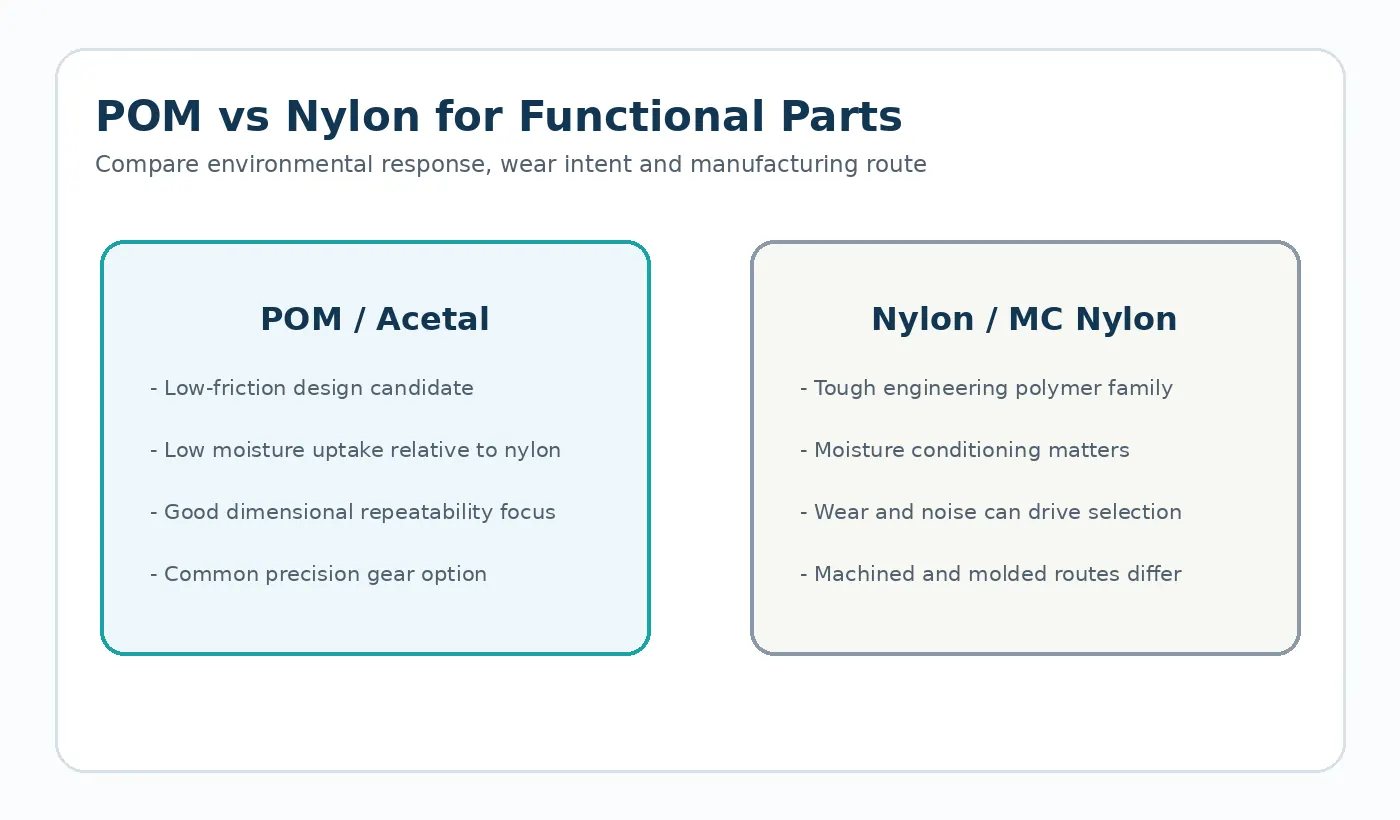
Selección de materiales
Compare the actual environment, wear pair, moisture and temperature conditions rather than selecting by a single datasheet property.
Engineering review in four layers
1. Interface
Define mating geometry, datums, load path, motion and the feature that establishes assembly position.
2. Material
Evaluate temperature, moisture, chemicals, wear pair, stiffness and the exact grade when it is mandatory.
3. Process
Review molding, machining and secondary operations against volume, geometry, repeatability and tooling risk.
4. Acceptance
Agree CTQs, inspection state, measuring method and the functional test used to approve the first sample.
Use tolerances as engineering controls, not decoration
A long tolerance list does not automatically create a more precise component. Put the tightest control on the dimensions that establish mesh, chain engagement, bore alignment, insert position or assembly datums. Define how those dimensions are measured and, for moisture-sensitive materials, the conditioning state used for inspection.
The engineering library below expands these decisions by topic. Use it to prepare drawings and RFQs, then confirm project-specific limits during supplier review rather than copying generic values into a production drawing.
Engineering content is organized around decisions, not keywords
The resource library is intended to answer a sequence of practical questions: can the geometry be manufactured, which material family fits the service conditions, how should the motion interface be specified, and what evidence is needed to approve the first article? Use the design-for-molding material for walls, ribs, bosses, undercuts, gates and ejection. Use the gear and rack articles when the controlling risk is mesh geometry, backlash, support or environmental dimensional change.
For procurement, the most useful article is rarely the one with the broadest title. Start with the part feature or failure risk you need to control, then link the recommendation back to the drawing. When a value depends on resin grade, moisture condition, molding route or supplier capability, the page should explain the dependency instead of presenting a universal number.
Use a controlled engineering review, not a generic material checklist
Functional plastic components combine several systems at once: the geometry that transmits or locates load, the polymer response to temperature and moisture, the manufacturing process, and the inspection method. A useful review keeps those systems connected. For example, tightening a bore tolerance without defining conditioning state can create a number that looks precise but is difficult to reproduce in use.
Transmission geometry
Review mating members, pitch geometry, center distance or shaft angle, face width, runout, backlash and how the housing establishes those relationships.
Moldability
Review wall transitions, draft, ribs, bosses, gates, weld lines, ejector locations and undercuts before tool release. Thick transitions and poor ejection access should be addressed in CAD rather than accepted as production risk.
Measurement strategy
Choose datums and methods that reproduce the functional assembly. Dimensional inspection, composite gear checks and functional fixtures each answer different questions.
Where a project is still changing, keep tolerances tied to function and identify which dimensions are provisional. That allows prototyping, machining, molding and secondary operations to be compared on the same engineering basis instead of forcing an early process choice.