Quyết định trước
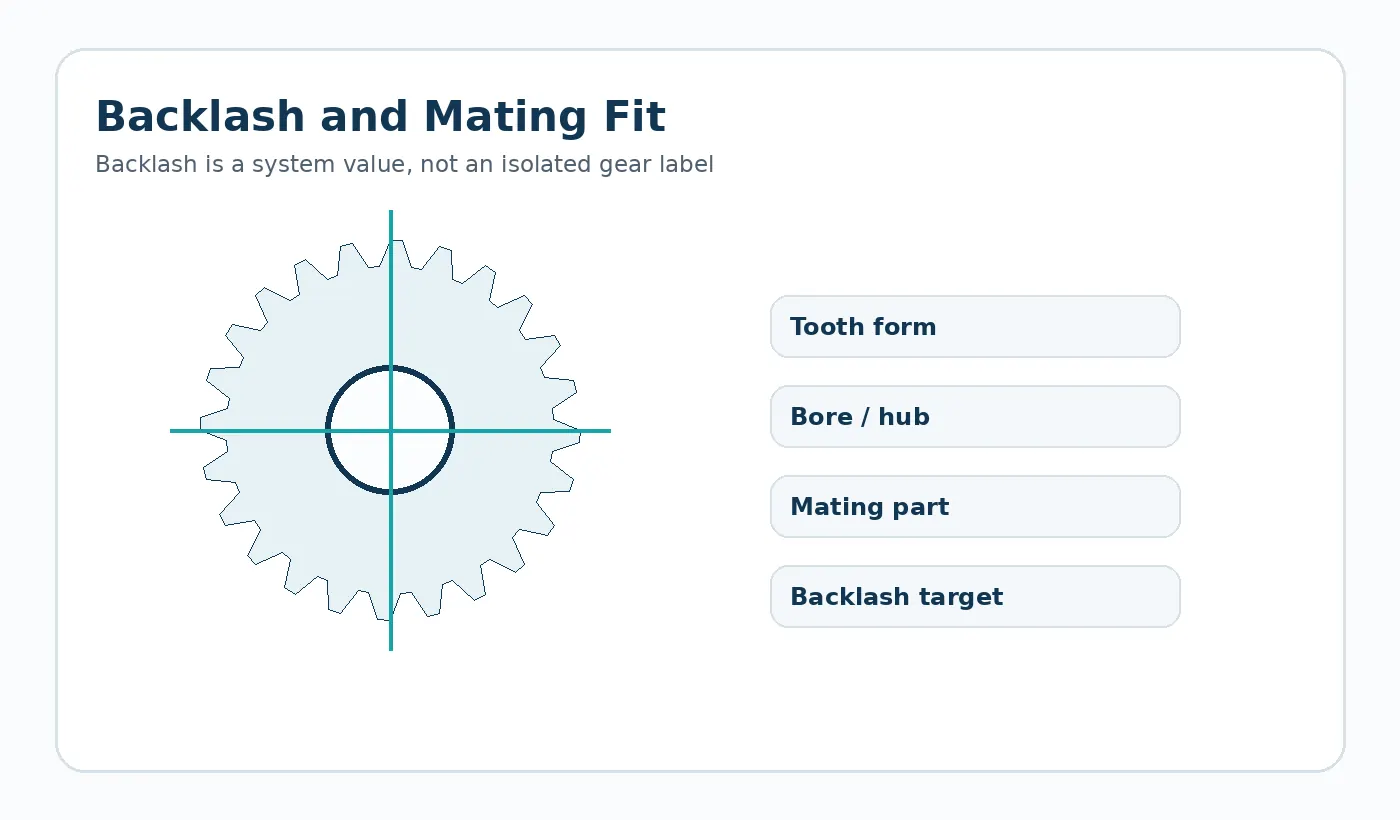
Backlash is a system clearance, not a standalone gear dimension. It changes with tooth geometry, center distance, bore/shaft location and material dimensions.
Plastic gears can experience dimensional shifts with temperature, moisture and load. The assembly therefore needs enough working clearance for its service range without creating unacceptable lost motion or noise.
Backlash can disappear as temperature rises, nylon conditions to higher moisture, a plastic housing expands differently from metal shafts, or a press-fit gear changes bore stress. Conversely, too much room can hurt positioning and create impact at reversals. The design target should include the worst credible combination of center distance, tooth size and material condition rather than a single nominal number.
Các yếu tố đầu vào thiết kế làm thay đổi câu trả lời
Document center distance tolerance, mating gear, material pair, operating temperature/humidity and the mechanism’s sensitivity to positioning error.
Hãy đưa những thông tin đầu vào này vào bản vẽ được kiểm soát, bản đặc tả kỹ thuật hoặc tài liệu đính kèm yêu cầu báo giá (RFQ) nếu có thể. Việc tách chúng ra khỏi các cuộc trao đổi không chính thức sẽ giúp việc so sánh nhà cung cấp và chỉnh sửa sau này dễ quản lý hơn.
Chế độ lỗi cần được sàng lọc
Setting backlash from a room-temperature nominal CAD assembly can leave too little clearance in service.
Kiểm tra xác thực trong quá trình lắp ráp thực tế
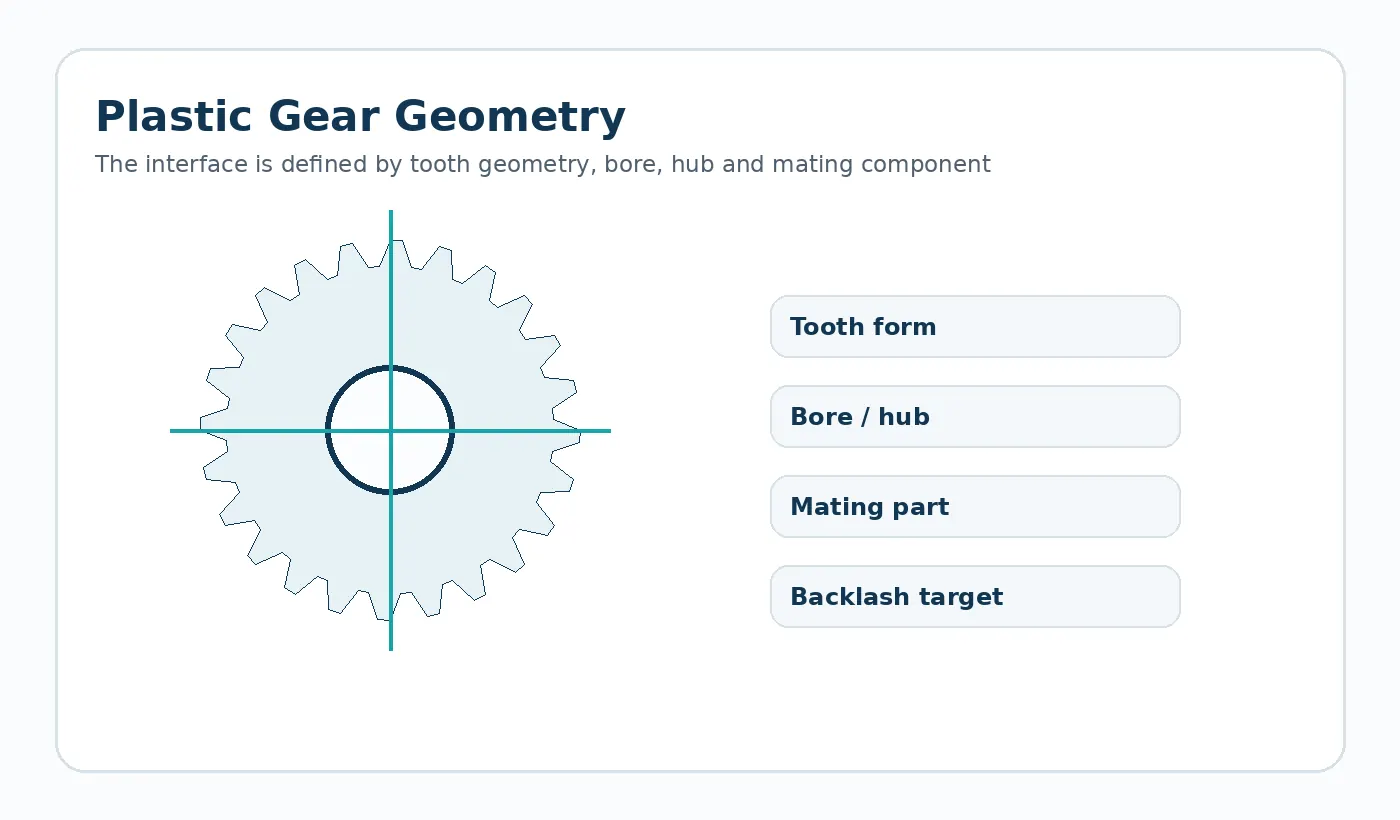
Check backlash in the real or representative housing and condition the parts as required by the material specification.
For Plastic Gear Backlash Guide, keep the mating geometry and assembly datums in the same review as the component drawing. That is the most reliable way to connect part measurements to working performance.
Chuyển giao yêu cầu báo giá
Before requesting a price for plastic gear backlash guide, identify the current drawing revision, production quantity, material constraint and the feature that most strongly affects function. Ask the supplier to flag any deviation from those inputs in the quotation so technical alternatives stay visible.
Practical design review for this decision
Tolerance should be allocated from the assembly backward. Start with required working backlash or position, then include center-distance variation, tooth-to-bore runout, shaft/bearing clearance, material movement and measurement uncertainty. Tightening every free-part dimension can increase cost without protecting the assembled condition.
Record the assumptions on the drawing or RFQ so the supplier can confirm them before quoting. When a value is unknown, identify it as an open engineering item rather than copying a generic catalogue number that may not match the assembly.
Verification worksheet
- Working rather than nominal clearance
- Bore-to-tooth or rack-to-mount datum relationship
- Mating-part tolerance
- Inspection temperature / conditioning
- Functional roll, mesh or position check
- Acceptance method agreed before sampling
Use the first sample to close these points with both dimensional evidence and the relevant functional check. Any accepted deviation should be captured in the controlled revision before repeat production.