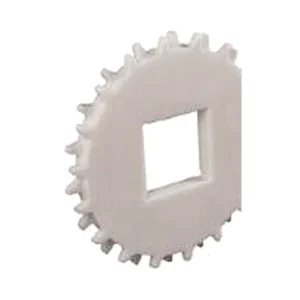
คำอธิบาย
Plastic chain sprocket family
Plastic sprocket selection begins with the chain interface. Chain series, tooth count, strand arrangement, bore and hub must be fixed before material or manufacturing route can be finalized.
Plastic sprockets frequently fail for reasons outside the tooth material: shaft misalignment, chain elongation, debris or incorrect tension. The RFQ should therefore include the actual chain and shaft arrangement. Split or special-hub designs can be discussed when the sprocket cannot slide off the shaft for installation.
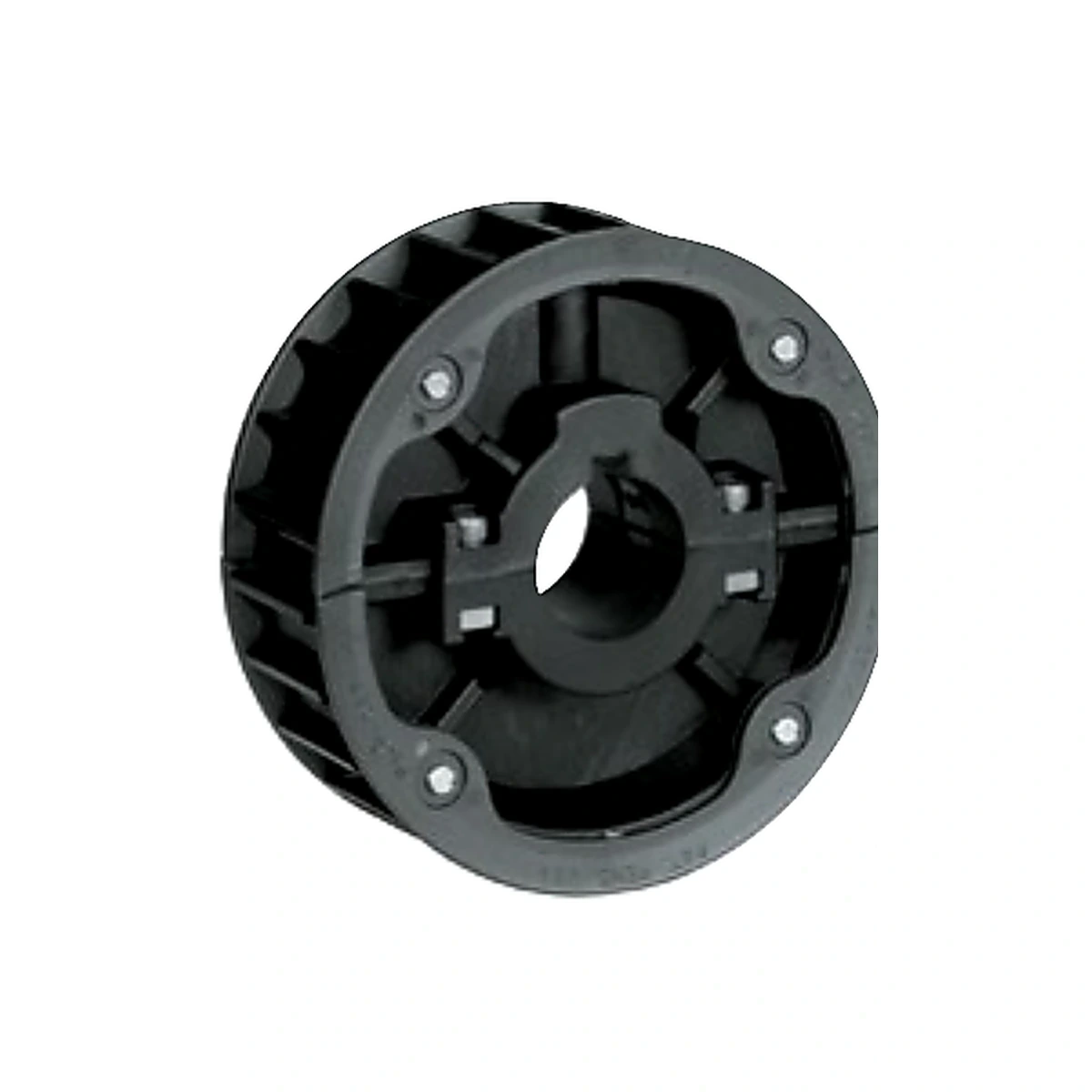
How to read the product photograph
The main image is a representative photograph of a thermoplastic split sprocket family. It demonstrates a real molded sprocket construction and shaft-interface arrangement, but it is not a dimensional definition for every chain series. Final chain standard and series, pitch, tooth count, bore type, keyway, setscrew or split-hub details, face width, material and shaft fit must come from the released drawing and mating-chain specification.
Geometry and interface inputs for Plastic Sprockets
- Chain series or full chain dimensions
- Tooth count and number of strands
- Bore, keyway, hub and shaft details
- Shaft spacing and alignment
- Load, speed, contamination and washdown
ข้อมูลอ้างอิงทางเรขาคณิต: Roller-chain sprocket, hub and idler configurations
การเลือกเส้นทางการผลิต
Sprockets may be molded or machined depending on size, quantity and material. Split designs or special hubs can be considered when installation constraints justify them.
เอกสารอ้างอิงกระบวนการบรรจุภัณฑ์: Machined plastic sprocket configurations; project-specific process confirmed at RFQ
ทิศทางของวัสดุ: Nylatron / nylon and UHMW families appear in existing product data
การตรวจสอบการออกแบบเฉพาะแอปพลิเคชัน
An incorrect chain fit or misaligned shaft can accelerate tooth wear. Chemical exposure or cleaning conditions may also narrow material choices.
การใช้งานทั่วไป: Conveyors, packaging equipment and material handling systems. The final material and tolerance plan should be checked against the load path, mating components and environment in that assembly.
ตัวอย่างแรกและการตรวจสอบเน้นที่การตรวจสอบ
Confirm tooth/chain fit, bore and hub geometry, runout and any multi-strand spacing. Replacement parts should be checked against the actual chain designation.
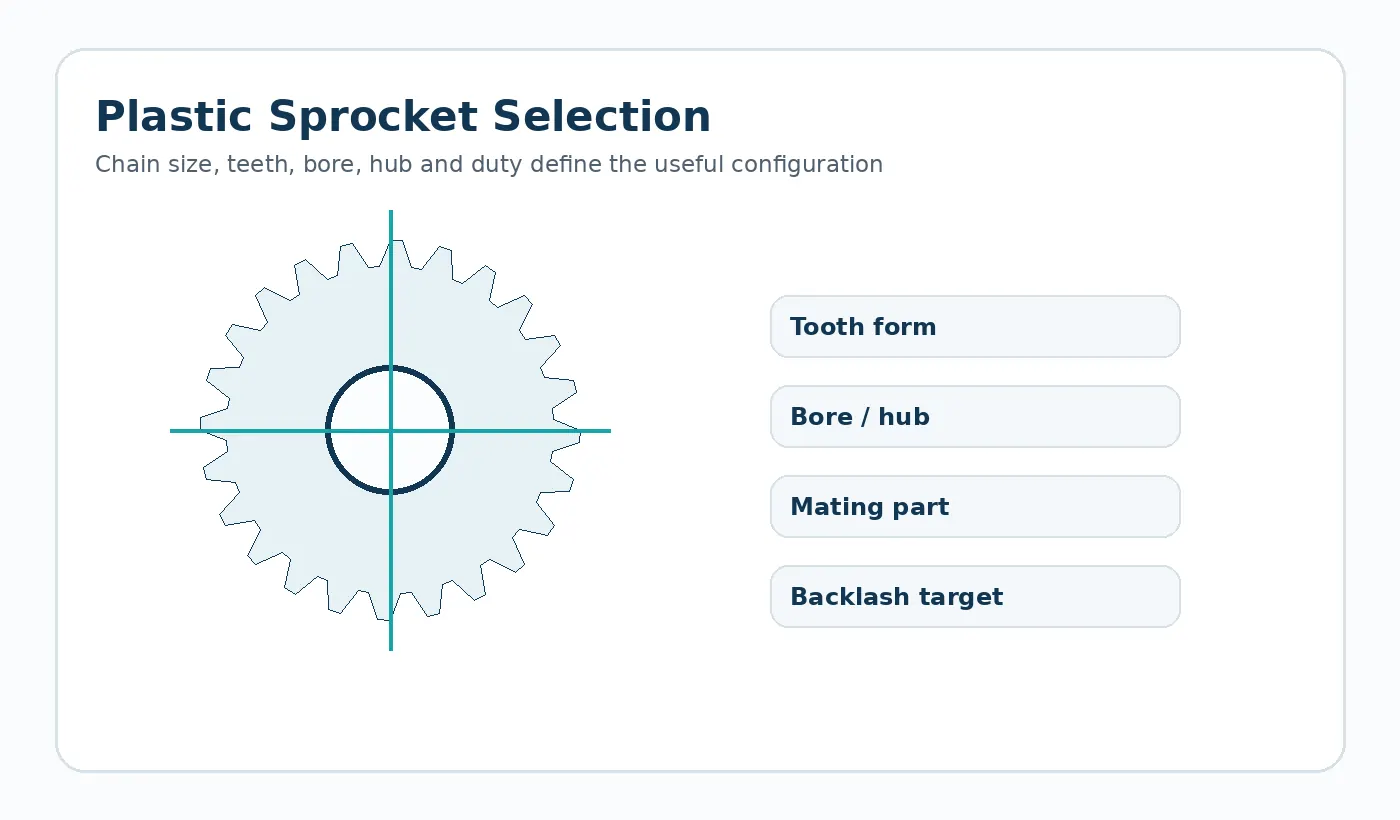
การตัดสินใจเกี่ยวกับใบเสนอราคา: Chain size, strand count, tooth count, bore, hub style, shaft retention, speed, load and contamination environment define selection.

What to send for a Plastic Sprockets quotation
ส่งแบบร่างหรือโมเดล CAD ล่าสุด พร้อมระบุปริมาณการผลิตและเงื่อนไขการใช้งานที่ส่งผลต่อความพอดี การสึกหรอ หรือความคงตัวของขนาด หากชิ้นส่วนใหม่นี้ใช้แทนชิ้นส่วนเดิม ให้ระบุคุณสมบัติที่ต้องสามารถใช้แทนกันได้ และปัญหาที่พบได้ทั่วไปที่ชิ้นส่วนใหม่นี้มีจุดประสงค์เพื่อแก้ไข
- การแก้ไขแบบร่างที่ควบคุมได้ และแบบจำลอง 3 มิติ (หากมี)
- รูปทรงของชิ้นส่วนที่ประกบกันหรือระบบส่งกำลัง
- ข้อกำหนดด้านวัสดุหรือสภาพแวดล้อมในการให้บริการ
- ปริมาณตัวอย่าง ชุดการผลิต และความต้องการที่คาดการณ์ไว้ต่อปี
- ขนาดวิกฤตและวิธีการยอมรับเชิงฟังก์ชัน
Engineering specification to freeze before manufacture
A production drawing should convert the application into measurable inputs. The table below is the minimum review set for this product family; add any assembly-specific datum, finish or acceptance requirement that changes function.
| Definition | What the supplier needs |
|---|---|
| Chain series / standard | Show the value, tolerance or functional requirement on the latest drawing. |
| Single or multi-strand | Show the value, tolerance or functional requirement on the latest drawing. |
| Tooth count | Show the value, tolerance or functional requirement on the latest drawing. |
| Bore / key / set-screw detail | Show the value, tolerance or functional requirement on the latest drawing. |
| Hub style and width | Show the value, tolerance or functional requirement on the latest drawing. |
| Shaft and chain alignment | Show the value, tolerance or functional requirement on the latest drawing. |
| Load, speed and duty | Show the value, tolerance or functional requirement on the latest drawing. |
| Cleaning / chemical / abrasive exposure | Show the value, tolerance or functional requirement on the latest drawing. |
Failure modes to prevent during design review
Common risks for this geometry include incorrect chain interface; bore or hub runout; shaft misalignment that drives the chain toward one tooth flank. These are best addressed before the first sample by reviewing the complete mating interface, not by tightening every drawing tolerance.
Use tolerances selectively. Dimensions that establish the tooth mesh, chain engagement, shaft fit or assembly datum deserve explicit measurement methods; non-critical molded surfaces can often use a more practical general tolerance.
First-article and production acceptance
Agree the inspection condition, datums and measuring method before sampling. The first-article report should cover the drawing CTQs and then be paired with a functional check in the real assembly or a representative fixture. For gears and sprockets, that can include mesh or chain engagement, runout and bore relationship; for custom molded parts it can include fit, fastening and loaded features.
Production control should follow the same CTQs rather than replacing them with a long list of easy-to-measure cosmetic dimensions. If a bore, tooth, insert or mounting surface is secondary-machined, make clear which operation establishes the final datum.
Engineering decision brief for Plastic Sprockets
Define the geometry
Roller-chain sprocket, hub and idler configurations The quotation should use the drawing revision and mating interface as the controlling definition rather than an image alone.
Choose material by duty
Nylatron / nylon and UHMW families appear in existing product data Material selection should be checked against load, speed, temperature, moisture or chemicals, lubrication and the required dimensional condition.
Freeze the production route
Machined plastic sprocket configurations; project-specific process confirmed at RFQ The route should be fixed only after quantity, tolerances, surface requirements and change risk are understood.
Agree acceptance
Chain size, strand count, tooth count, bore, hub style, shaft retention, speed, load and contamination environment define selection. First-article checks should therefore focus on the dimensions and functional interfaces that control the assembly.
Typical application context: Conveyors, packaging, washdown-sensitive handling, food equipment only where the material grade and compliance are explicitly confirmed, and general chain drives.
Plastic Sprockets FAQ
What should I send for quotation?
Send the latest 2D drawing and, where available, a 3D model. Add mating-part information, order quantity, service conditions and the features that control fit or motion. A sample is useful for replacement parts with uncertain legacy geometry.
How should the material be specified?
Material should be selected from service temperature, chemicals or moisture, stiffness, wear, dimensional requirements and production route. A preferred grade can be quoted, but the application requirements should be supplied with it.
How is the first sample approved?
Define the CTQs, inspection state and functional test before the sample is produced. Approval should confirm both measurable geometry and the behavior of the part in its intended interface.