การฉีดขึ้นรูปสำหรับชิ้นส่วนใช้งานที่มีความแม่นยำซ้ำได้
การฉีดขึ้นรูปสามารถรวมรูปทรงเรขาคณิตที่ซับซ้อนและการผลิตซ้ำเข้าไว้ในกระบวนการเดียวได้ แต่ชิ้นส่วนสำเร็จรูปนั้นถูกขึ้นรูปด้วยปัจจัยมากกว่าแค่แบบจำลอง CAD การเปลี่ยนผ่านของผนัง ความลาดเอียง ตำแหน่งของประตูฉีด การแยกชิ้นงาน การหดตัวของเรซิน และการระบายความร้อน ล้วนส่งผลต่อความสามารถในการผลิตและพฤติกรรมด้านมิติของชิ้นงาน
เอกสารขอใบเสนอราคา (RFQ) ที่พร้อมสำหรับการผลิต ควรแยกแยะพื้นผิวที่เน้นความสวยงามออกจากพื้นผิวที่เน้นการใช้งาน และระบุขนาดที่ต้องมีการวัดอย่างแม่นยำหลังจากการขึ้นรูป
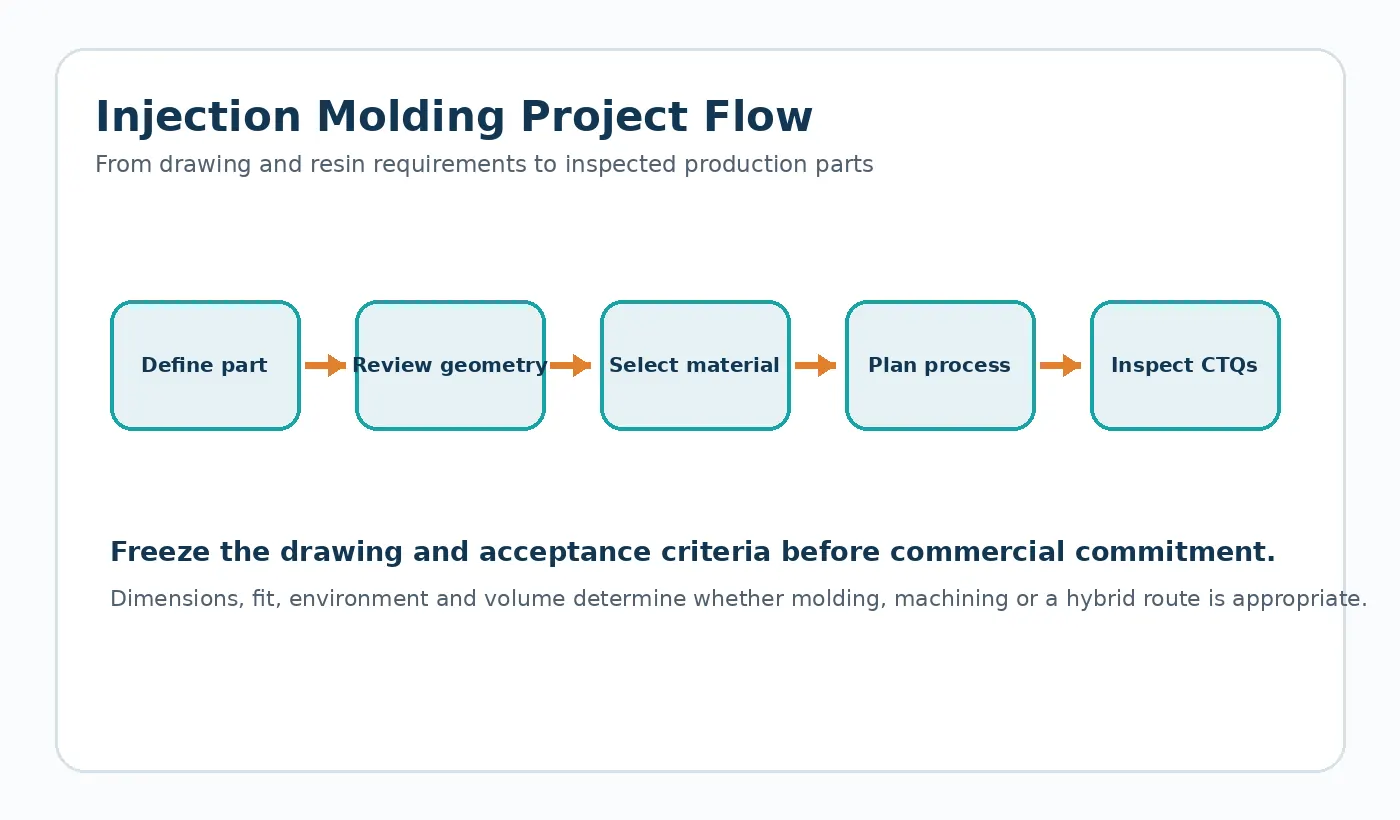
ลำดับโครงการเชิงปฏิบัติ
| เวที | คำถามหลักทางวิศวกรรม | ข้อมูลที่เป็นประโยชน์ |
|---|---|---|
| การตรวจสอบภาพวาด | รูปทรงเรขาคณิตสามารถเติมเต็ม บรรจุ ระบายความร้อน และดีดออกได้โดยปราศจากความเสี่ยงที่หลีกเลี่ยงได้หรือไม่? | แบบ CAD, ภาพตัดขวางผนัง, แบบร่าง, ส่วนเว้า, ส่วนแทรก, ข้อกำหนดพื้นผิว |
| การตรวจสอบเนื้อหา | เรซินชนิดนี้เหมาะสมกับสภาพแวดล้อมและกระบวนการผลิตหรือไม่? | อุณหภูมิ ความชื้น การสัมผัสสารเคมี น้ำหนักบรรทุก การสึกหรอของคู่ |
| เครื่องมือและการสุ่มตัวอย่าง | คุณลักษณะที่สำคัญจะถูกสร้างและตรวจสอบได้อย่างไร? | แนวคิดเกี่ยวกับประตู/ทางแยก จุดอ้างอิง แผนผังตัวอย่าง วิธีการวัด |
| การเผยแพร่ผลิตภัณฑ์ | อะไรคือเกณฑ์ที่บ่งชี้ว่าชิ้นส่วนที่นำมาใช้ซ้ำนั้นเป็นที่ยอมรับได้? | ตัวอย่างที่ได้รับการอนุมัติ แผนการตรวจสอบ บรรจุภัณฑ์ และระดับการแก้ไข |
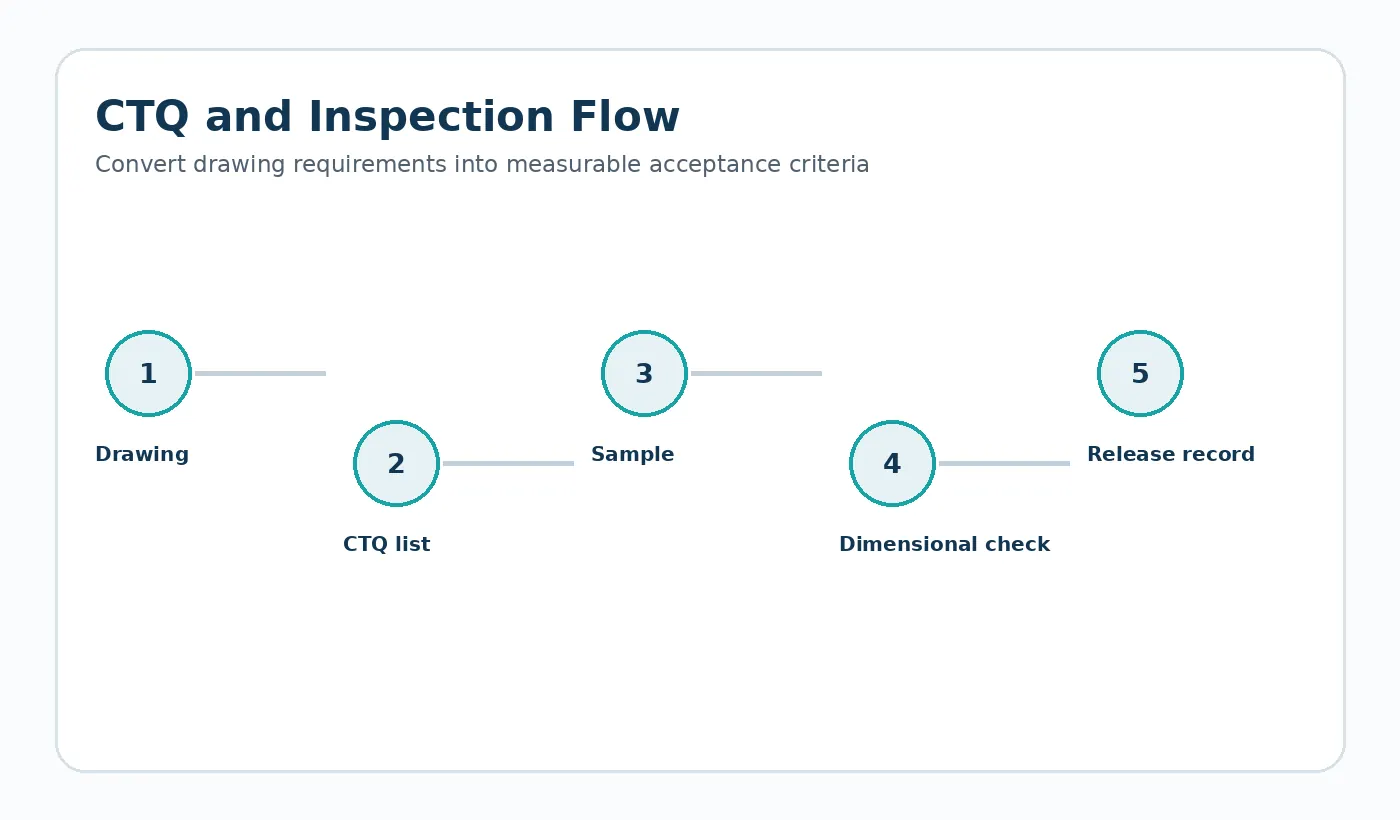
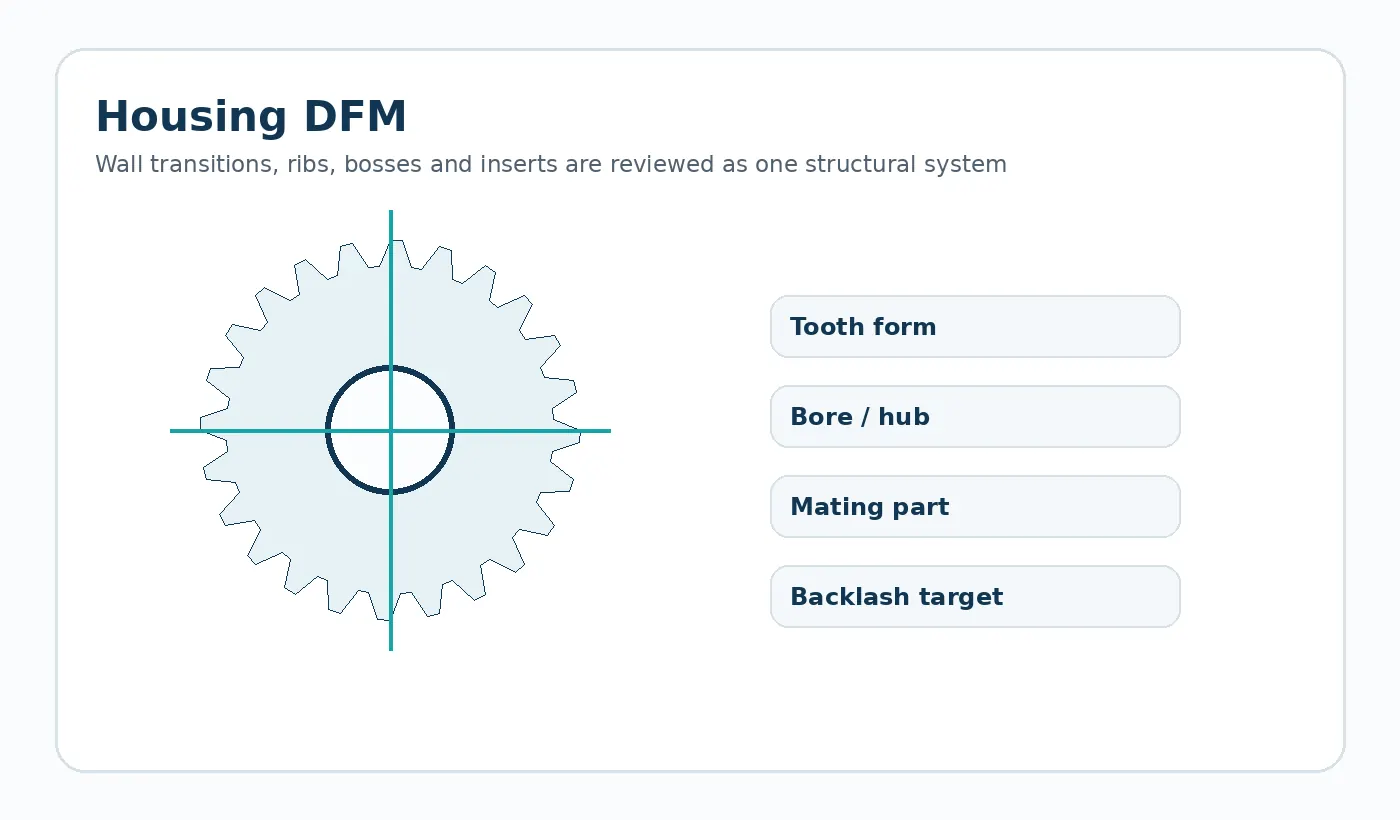
รูปทรงเรขาคณิตที่สมควรได้รับความสนใจจาก DFM
ชิ้นส่วนขึ้นรูปที่มีฟังก์ชันการใช้งานนั้น แทบจะไม่เกิดความเสียหายเพราะชื่อของพอลิเมอร์หายไปจากแบบ CAD ส่วนใหญ่แล้ว ความเสี่ยงจะอยู่ที่วิธีการที่ผนัง ปุ่ม รู แทรก และพื้นผิวตกแต่งต่างๆ ทำปฏิกิริยากับแม่พิมพ์ การตรวจสอบ DFM ที่มีประโยชน์จะช่วยระบุส่วนเปลี่ยนผ่านที่หนา ส่วนเว้า ส่วนปิด พื้นผิวการดีดออก และคุณลักษณะต่างๆ ที่จำกัดตัวเลือกของทางเข้าหรือการระบายความร้อน
เมื่อมิติใดมีความสำคัญต่อการประกอบ ให้แสดงความสัมพันธ์ของจุดอ้างอิงที่ทำให้มิตินั้นมีความสำคัญ วิธีนี้จะช่วยให้แนวคิดของแม่พิมพ์ปกป้องส่วนเชื่อมต่อที่ถูกต้อง แทนที่จะใช้ความพยายามเท่ากันในทุกมิติ
การสุ่มตัวอย่างควรตอบคำถามเกี่ยวกับการผลิต
ตัวอย่างชิ้นแรกควรตรวจสอบมากกว่าแค่ว่าช่องว่างนั้นเต็มหรือไม่ ควรทบทวนคุณลักษณะที่จะต้องตรวจสอบในการผลิตซ้ำ เช่น ขนาดที่สำคัญ ตำแหน่งของวัสดุที่ใส่ ความเรียบ บริเวณที่มองเห็นได้ และความพอดีในการใช้งาน หากเรซินต้องการการปรับสภาพก่อนที่ขนาดจะคงที่ ควรบันทึกเงื่อนไขนั้นไว้ในบันทึกการอนุมัติด้วย
การเปลี่ยนแปลงหลังจากสุ่มตัวอย่างควรเชื่อมโยงกับการแก้ไขแบบร่าง เพื่อหลีกเลี่ยงปัญหาทั่วไปที่ตัวอย่างจริง ไฟล์ CAD และรายงานการตรวจสอบอ้างอิงถึงสถานะการออกแบบที่แตกต่างกัน
ข้อมูล RFQ สำหรับโครงการขึ้นรูป
- ภาพวาด 2 มิติ และแบบ CAD 3 มิติ พร้อมการแก้ไขที่ตรงกัน
- หากกำหนดเกรดเรซินไว้ตายตัว ให้พิจารณาตามสภาพการใช้งาน หรือหากสามารถเลือกวัสดุได้อิสระ ให้พิจารณาตามสภาพการใช้งาน
- ส่วนต่างๆ เช่น สี พื้นผิว และบริเวณที่มองเห็นได้/เพื่อความสวยงาม
- การใส่ชิ้นส่วน การกลึงขั้นที่สอง การพิมพ์ หรือการประกอบ
- ปริมาณต้นแบบ/ตัวอย่าง, ชุดการผลิต และความต้องการรายปี
- มิติที่สำคัญต่อคุณภาพและหลักฐานการตรวจสอบที่คาดหวัง
Tool-ready design means the functional definition is already stable
Before tool release, freeze the material family or its required properties, the assembly datums, critical dimensions, expected annual demand and any surfaces that constrain gate, parting line or ejector placement. Tool design can then support the product definition rather than compensate for an incomplete one.
Uniform wall intent, gradual transitions, appropriate draft and carefully proportioned ribs or bosses are useful DFM principles, but the final geometry still needs to reflect resin flow, tool access and the load path in the assembly. Thick local masses should be challenged because they can increase cooling variation and sink/void risk.
Sampling should close the loop between process and function
Measure the agreed CTQs under a defined conditioning state, record the molding condition used for the accepted sample, and then perform the functional fit or motion check. If a dimension is adjusted during sampling, update the controlled drawing or tool-correction record so production does not rely on undocumented trial history.
DFM checkpoints before a mold is released
Injection molding repeats geometry efficiently, so early design choices are repeated just as efficiently. Wall thickness should be deliberately managed instead of allowed to change abruptly around bosses or structural masses. Draft needs to be considered on surfaces that move against the tool during ejection. Ribs and gussets can add stiffness without turning the part into a thick solid section, while gate and ejector locations should be kept away from sealing, bearing or customer-facing surfaces where their witness can matter.
| DFM checkpoint | Review question | Release evidence |
|---|---|---|
| Wall strategy | Are thick-to-thin transitions, cores and local masses controlled for the chosen resin? | Section review on the current CAD model. |
| Draft and ejection | Can the part release without excessive drag, and are ejector witnesses placed on acceptable surfaces? | Tooling-direction review and marked cosmetic/functional zones. |
| Ribs and bosses | Do reinforcing features support the load without creating avoidable sink or difficult cooling? | Feature-by-feature DFM review. |
| Gate and weld lines | Will flow direction or weld-line location affect a loaded, cosmetic or sealing region? | Gate concept and, where justified, filling analysis. |
| CTQs | Which dimensions determine assembly, motion, sealing or insert position? | Ballooned drawing and agreed first-article plan. |
Tool release should therefore be a controlled engineering milestone. The latest CAD revision, resin, anticipated quantity, cosmetic zones, inserts, critical dimensions and first-sample acceptance method should all be identifiable before steel is cut. Changes after this point need to be evaluated for both part function and tooling impact.