Decision first
Ribs and bosses should add function without creating unnecessarily thick local sections.
In molded housings, abrupt thickness changes can affect cooling, sink and warpage. Bosses also need support for fastening loads while remaining compatible with ejection and tool access.
Ribs work best when they carry load into the main walls without creating a local mass of plastic. Bosses around screws or inserts need enough support to resist assembly load, but isolated thick cylinders can sink or cool slowly. Connect bosses to walls with thoughtful ribbing and leave tool access for the fastener. Cosmetic requirements on the opposite surface should be marked early because they can restrict what reinforcement is acceptable.
Design inputs that change the answer
Review nominal wall, rib/boss proportions, screw or insert loads, draft, parting line and cosmetic surfaces.
Put these inputs on the controlled drawing, specification or RFQ attachment where possible. Keeping them out of informal message threads makes supplier comparisons and later revisions easier to manage.
Failure mode worth screening
Adding material to “make it stronger” can sometimes increase molding distortion instead of improving the functional load path.
Validation in the real assembly
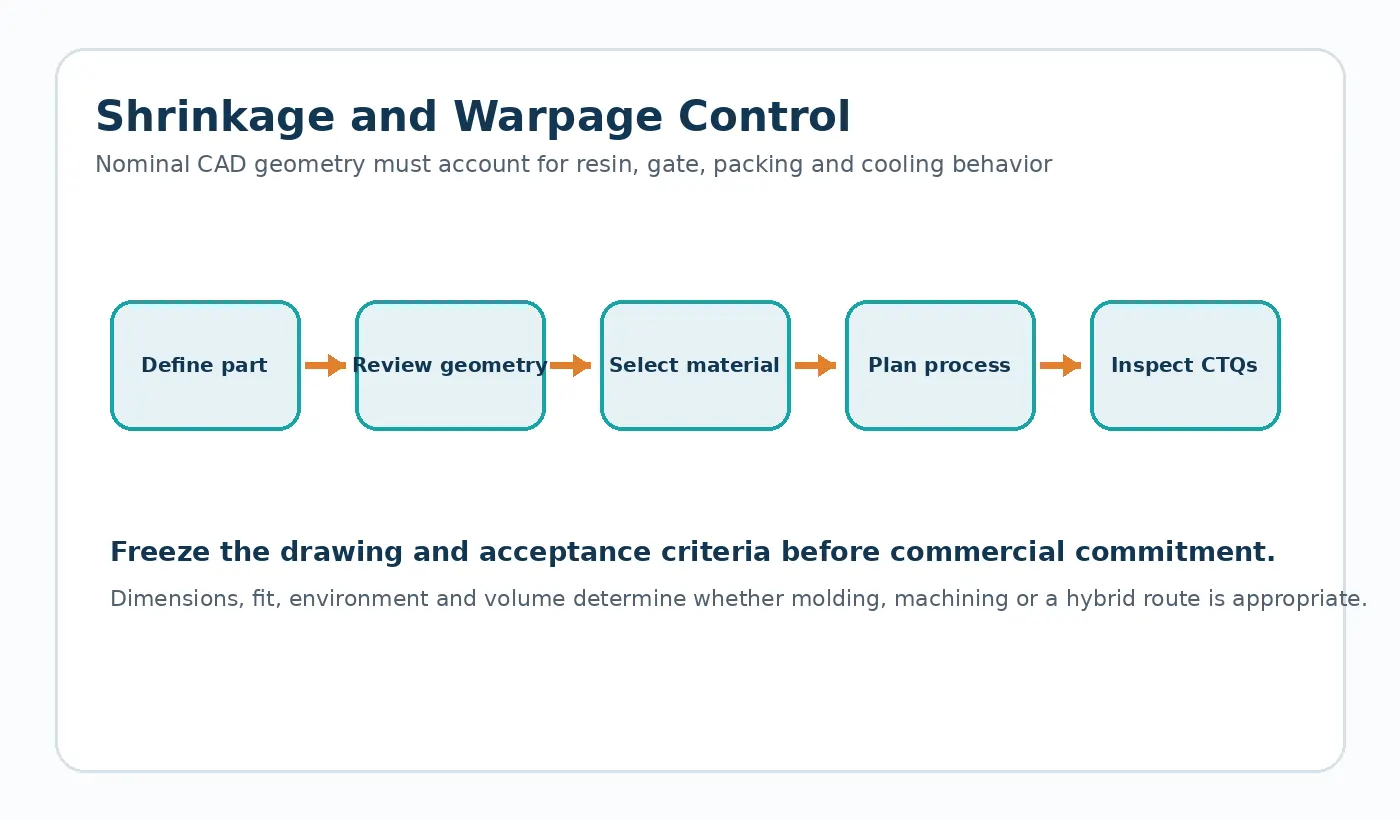
Use samples to check mounting surfaces, insert/boss position and any cosmetic zones adjacent to thick features.
For Plastic Housing Ribs, Bosses and Wall Thickness, close the DFM loop by updating the controlled CAD/drawing and sample plan. A recommendation that never reaches the released revision cannot be inspected consistently in production.
RFQ handoff
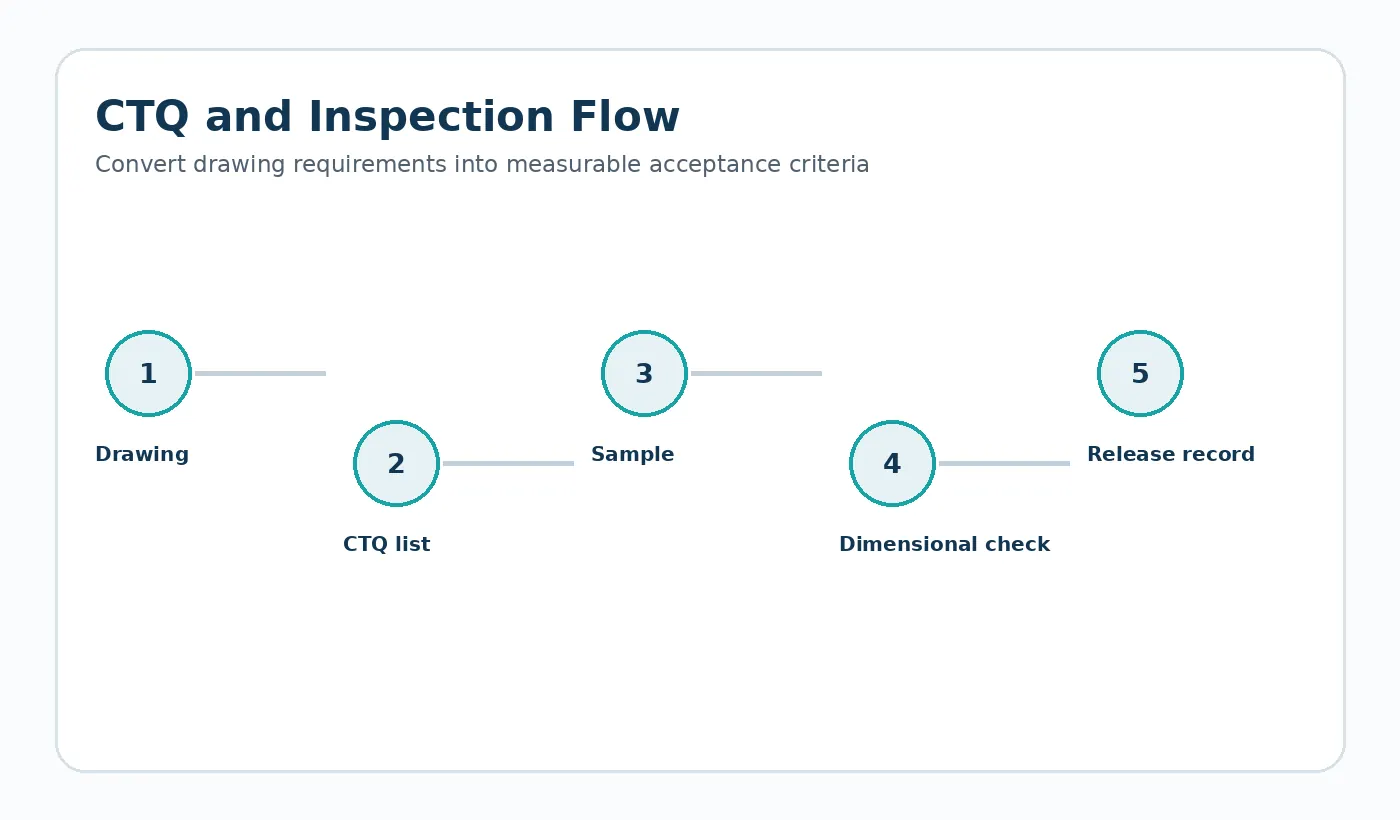
Before requesting a price for plastic housing ribs, bosses and wall thickness, identify the current drawing revision, production quantity, material constraint and the feature that most strongly affects function. Ask the supplier to flag any deviation from those inputs in the quotation so technical alternatives stay visible.
Practical design review for this decision
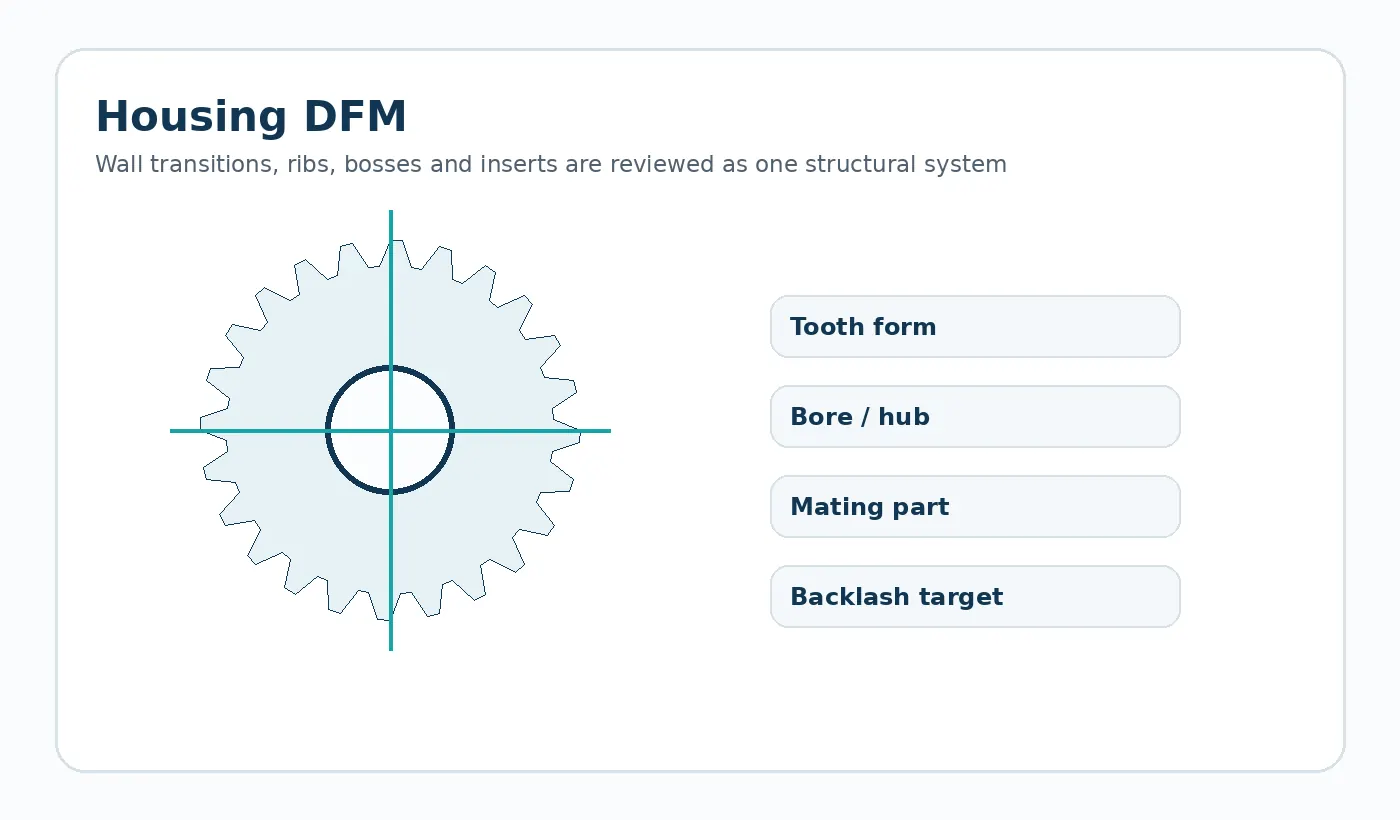
Housing DFM starts with a functional wall map. Keep wall transitions deliberate, use ribs and bosses to carry defined loads, provide draft where the tool needs release, and consider how gate and ejection locations interact with cosmetic and dimensional surfaces. The supplier should review these decisions against the selected resin and tool layout.
Record the assumptions on the drawing or RFQ so the supplier can confirm them before quoting. When a value is unknown, identify it as an open engineering item rather than copying a generic catalogue number that may not match the assembly.
Verification worksheet
- Nominal wall and transitions
- Rib/boss load path
- Draft and undercuts
- Insert / fastener loads
- Gate / parting / ejector restrictions
- Flatness and critical datums
Use the first sample to close these points with both dimensional evidence and the relevant functional check. Any accepted deviation should be captured in the controlled revision before repeat production.