Avgjørelse først
Choosing molding or machining is an economic and engineering decision, not a rule based only on quantity.
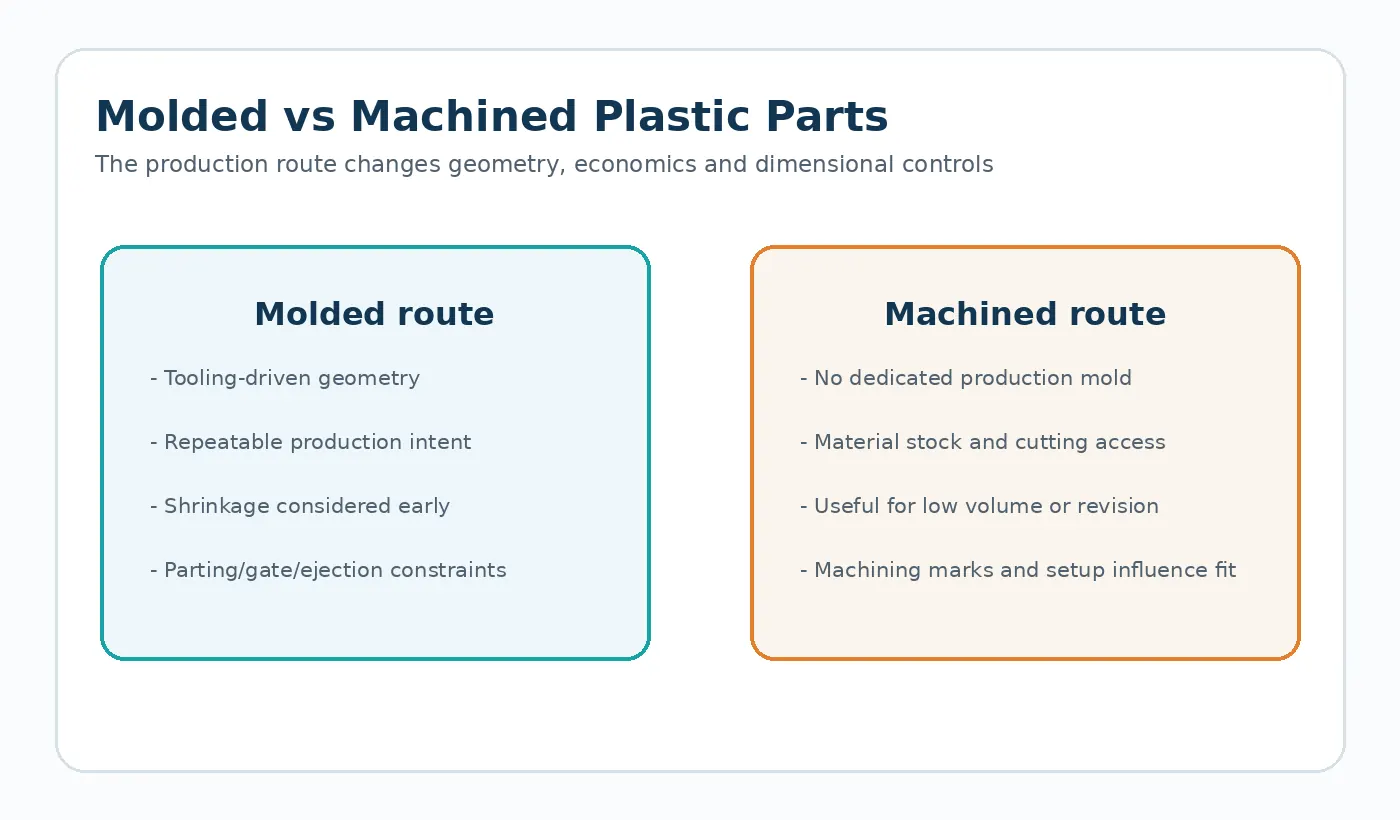
Molding concentrates cost and risk in tooling but can repeat complex geometry efficiently once the design is stable. Machining avoids dedicated cavity tooling and is useful for prototypes, lower volumes, large stock shapes or materials that are readily available as plate/rod.
A practical comparison often starts with the first 50–500 parts but should not stop there. Ask what those parts are intended to prove. If they are checking enclosure fit, a machined or printed prototype may be enough. If they are validating snap behavior, shrinkage-sensitive interfaces or a molded surface, the learning objective may require the production resin and process. Also consider future revisions: cutting a tool before interfaces are stable can turn a small CAD edit into a tooling change.
Designinndata som endrer svaret
Compare design maturity, annual volume, part envelope, wall geometry, tolerance scheme, material form and expected revision frequency. A machined prototype can answer assembly questions, but it will not reproduce every feature of the final molded process.
Legg disse inndataene på den kontrollerte tegningen, spesifikasjonen eller vedlegget til tilbudsspørsmålet der det er mulig. Å holde dem unna uformelle meldingstråder gjør det enklere å håndtere leverandørsammenligninger og senere revisjoner.
Feilmodus verdt å sjekke
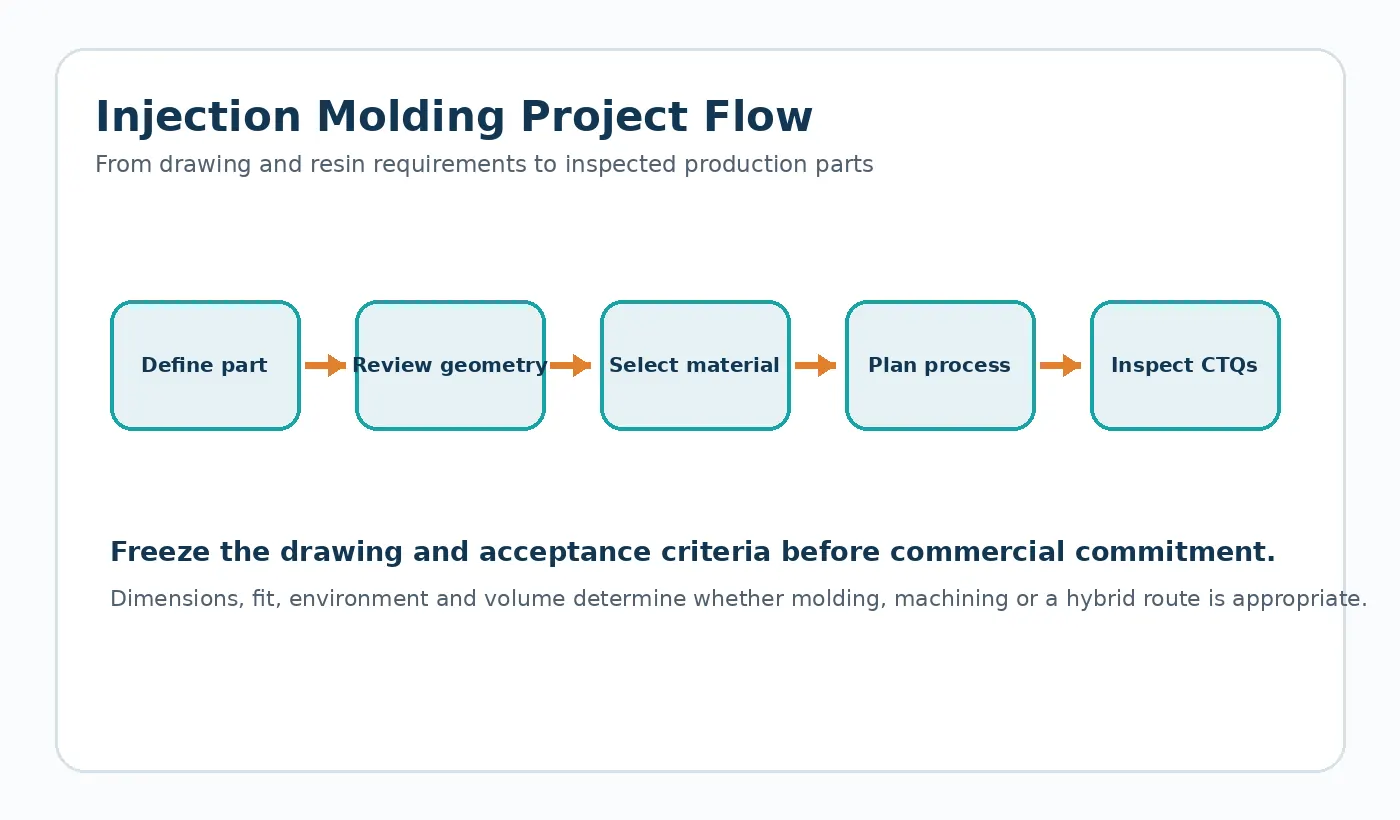
The wrong route is often selected when a prototype material/process is treated as proof of final production behavior.
Validering i den virkelige monteringen
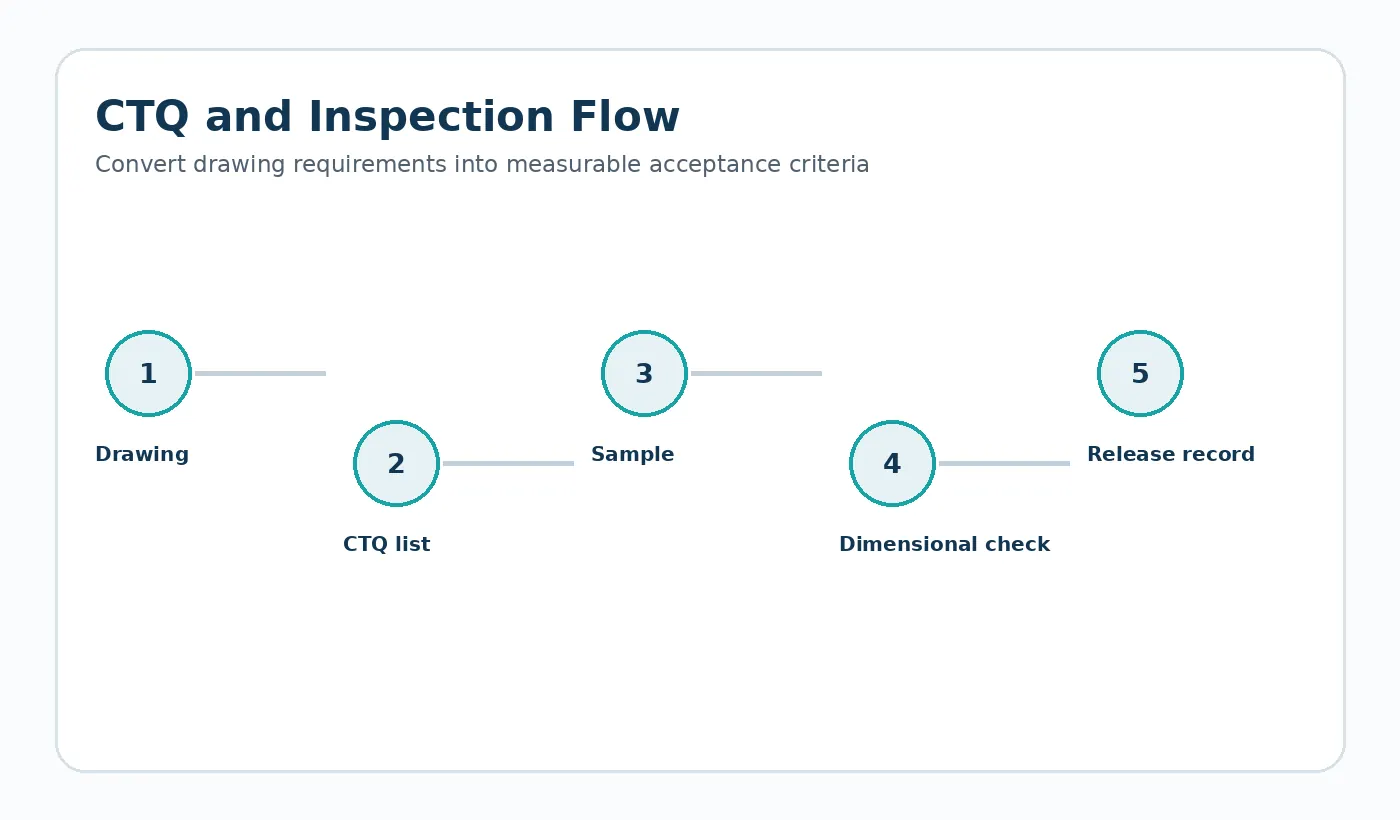
Use separate acceptance plans for prototype learning and final-process validation.
For Injection Molded vs Machined Plastic Parts, close the DFM loop by updating the controlled CAD/drawing and sample plan. A recommendation that never reaches the released revision cannot be inspected consistently in production.
Overlevering av tilbudstekst
Before requesting a price for injection molded vs machined plastic parts, identify the current drawing revision, production quantity, material constraint and the feature that most strongly affects function. Ask the supplier to flag any deviation from those inputs in the quotation so technical alternatives stay visible.
Praktisk designgjennomgang for denne avgjørelsen
Compare annual quantity, revision maturity, feature access, surface/finish requirements and tolerance strategy before choosing the process. Molding can integrate features and repeat high volumes, while machining can be faster to change and practical for larger stock shapes or lower volumes. Secondary machining can also be used on a molded datum when the economics and tolerance stack justify it.
Registrer forutsetningene på tegningen eller i tilbudsforespørselen slik at leverandøren kan bekrefte dem før tilbudet gis. Når en verdi er ukjent, identifiser den som en åpen konstruksjonsvare i stedet for å kopiere et generisk katalognummer som kanskje ikke samsvarer med monteringen.
Verifiseringsark
- Annual demand and batch size
- Expected design changes
- Features that require tool access or slides
- Datums that may need secondary machining
- Material form / exact grade constraints
- First-article and change-control plan
Bruk den første prøven til å lukke disse punktene med både dimensjonsdokumentasjon og relevant funksjonskontroll. Eventuelle aksepterte avvik bør fanges opp i den kontrollerte revisjonen før gjentatt produksjon.