What changes the engineering choice
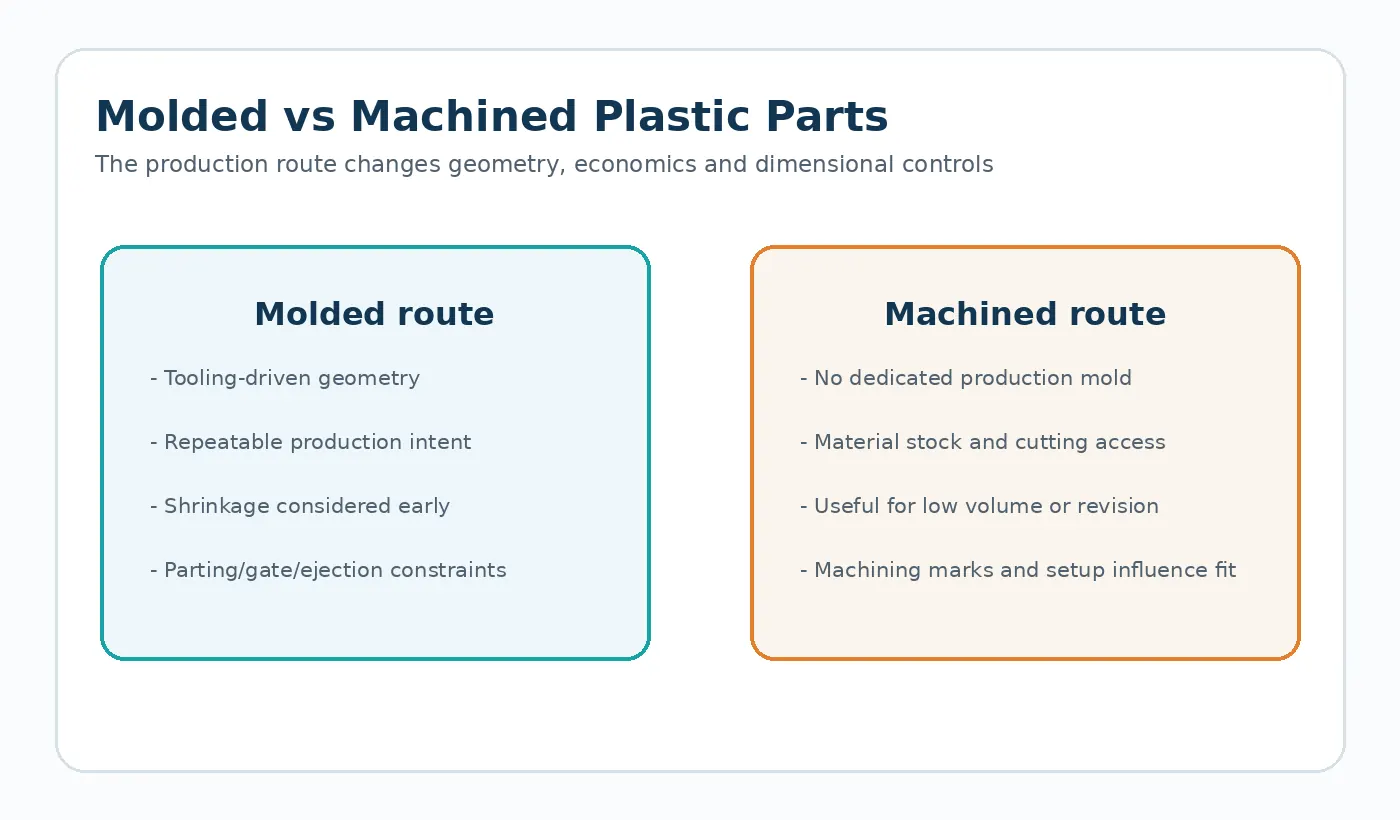
Plastic gears can be molded or machined, but the route changes how tooth geometry, hubs, shrinkage and finishing are controlled.
Molding suits repeat geometries and can integrate hubs or features. Machining is flexible for lower quantities, larger sizes and stock-form polymers, and it allows direct cutting of tooth forms without mold shrinkage.
Machined gears are especially useful when tooth geometry is still changing or when the selected polymer is available as stable stock. Molded gears become attractive when the design can be optimized around repeat production and integrated features. The two routes can also be combined: a gear body may be molded and a bore or face finished afterward. That hybrid route only helps when the secondary datum is defined relative to the tooth form.
Drawing and application data
Review module/DP, tooth count, face width, bore, hub/web thickness, material grade, quantity and the inspection class required by the mechanism.
Put these inputs on the controlled drawing, specification or RFQ attachment where possible. Keeping them out of informal message threads makes supplier comparisons and later revisions easier to manage.
A common source of error
A molded gear copied directly from a machined design can inherit wall and hub transitions that are poor for filling or cooling.
How to prove the design
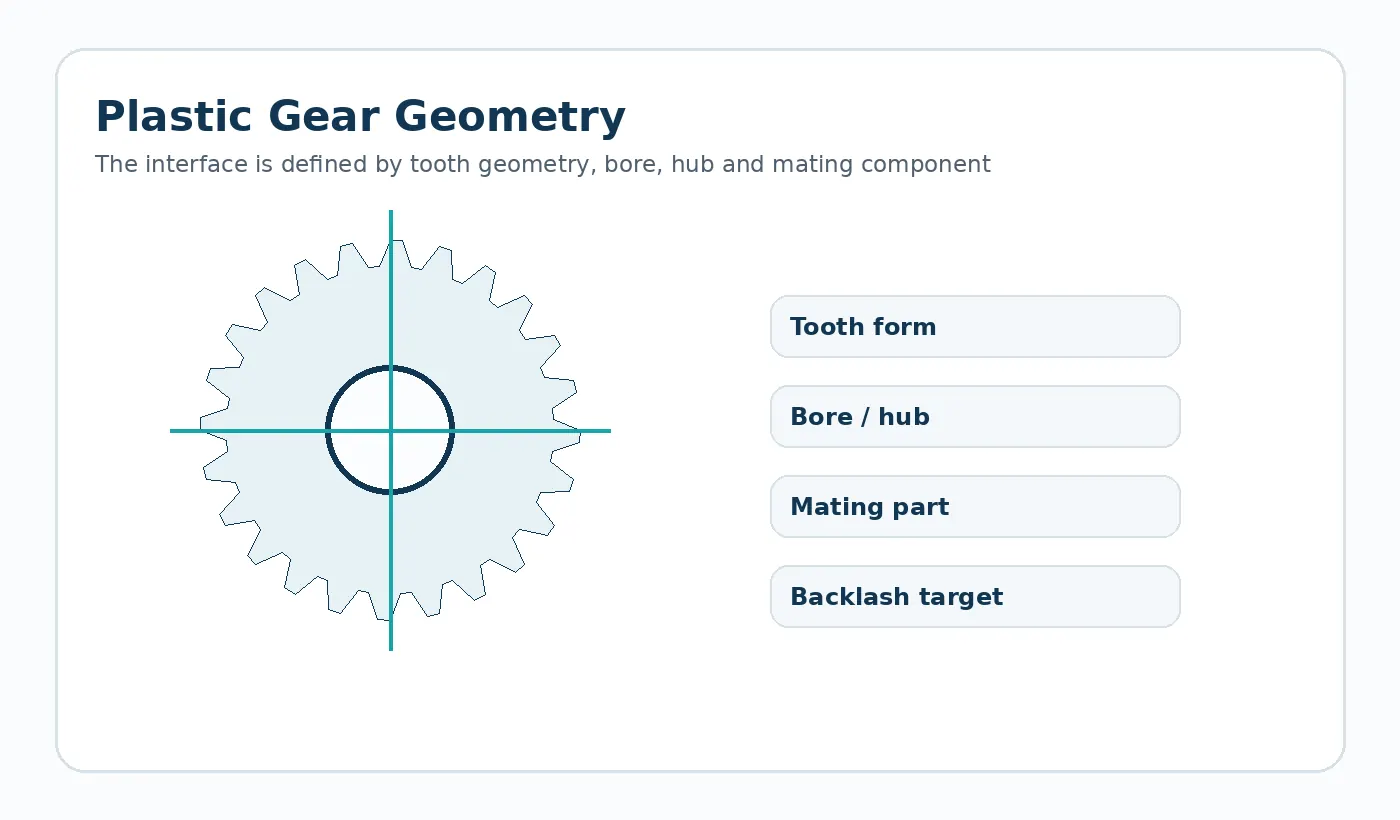
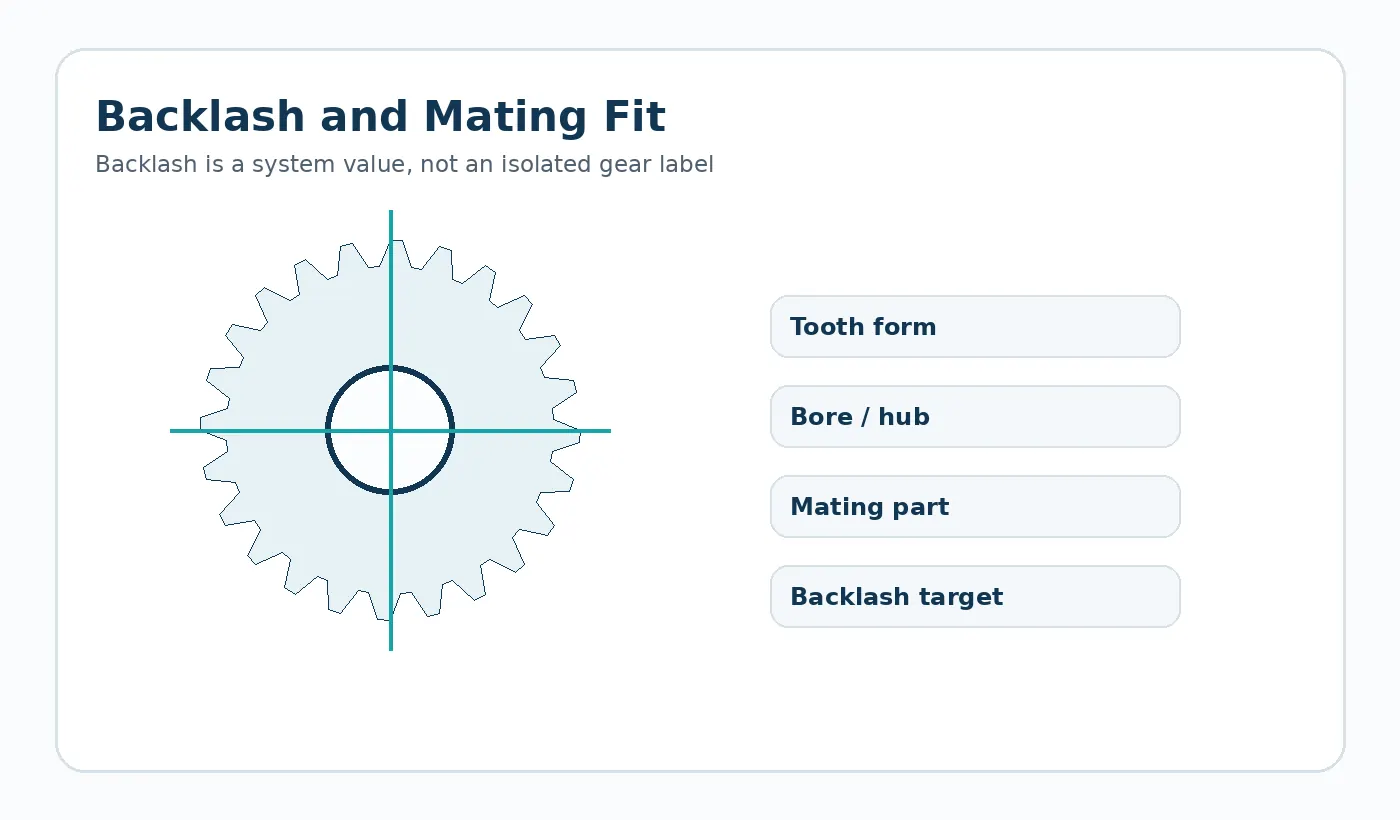
Validate the final production route with the mating gear and the intended center distance.
For Injection Molded vs Machined Plastic Gears, close the DFM loop by updating the controlled CAD/drawing and sample plan. A recommendation that never reaches the released revision cannot be inspected consistently in production.
Supplier brief
Before requesting a price for injection molded vs machined plastic gears, identify the current drawing revision, production quantity, material constraint and the feature that most strongly affects function. Ask the supplier to flag any deviation from those inputs in the quotation so technical alternatives stay visible.