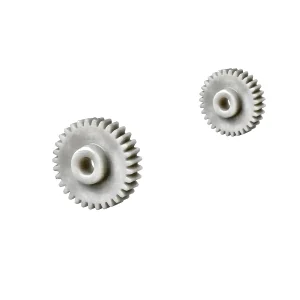
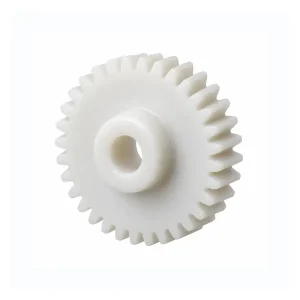
Engrenages droits en plastique
Parallel-shaft spur gearsSpur gears are geometrically straightforward, but bore location, center distance, material response and the mating gear still control working mesh quality.Spur gears are often the simplest plastic gear geometry to source, which makes it tempting to under-specify them. Tooth count and outside diameter are not enough to reproduce an existing mesh; pitch system, pressure angle and center distance also matter.What to define before opening an RFQTooth count and module/DPPressure angle and face widthCenter distance and mating gearBore, hub, key or press fitBacklash, noise and wear requirementsIf noise or life is the reason for changing from metal to plastic, include the mating gear material and the expected lubricant condition. Those details affect the wear pair and the backlash needed over the service range.How to use this categoryThe product cards below are linked to the live WooCommerce catalogue for Plastic Spur Gears. Open the closest geometry first, then compare its RFQ guidance against your drawing. If no listed product matches the interface, use the custom component route rather than forcing the part into the wrong family.Selection data that separates a usable quote from a generic quoteInputRequired definitionModule or DPDefine on the drawing or project brief before supplier review.Pressure angleDefine on the drawing or project brief before supplier review.Tooth countDefine on the drawing or project brief before supplier review.Face widthDefine on the drawing or project brief before supplier review.Bore / key / D-flatDefine on the drawing or project brief before supplier review.Hub diameter and lengthDefine on the drawing or project brief before supplier review.Mating center distanceDefine on the drawing or project brief before supplier review.Torque, speed and backlashDefine on the drawing or project brief before supplier review.Spur gears are straightforward only after the pitch system, mating gear and center distance are known. Bore fit and shaft runout can be just as important as tooth dimensions.Engineering review before releaseFor molded parts, consider hub-to-rim wall transitions and conditioning. For machined gears, define the material stock form and datum strategy used to relate bore and teeth.Where a material family is not yet fixed, provide the operating temperature, moisture or chemical exposure, mating material, lubrication condition and expected production volume. Those inputs let the process and resin be reviewed together instead of treating the polymer name as the complete design.RFQ and first-sample pathStart with the closest product below, then send the controlled drawing, mating-part information and the dimensions that are critical to function. For a replacement component, include a sample or measured interface data if the original tooth or chain standard is uncertain.Compare materialsCustom engineeringSend an RFQ
2 résultats affichés