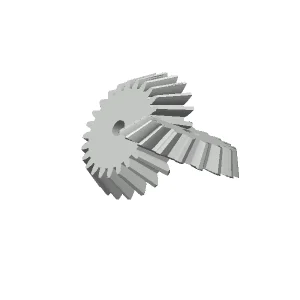
Engrenages coniques en plastique
Intersecting-shaft plastic gearsBevel gear geometry is defined by the pair. Ratio, shaft angle, mounting distance and mating geometry are therefore essential RFQ inputs.Bevel gears work on pitch cones rather than parallel pitch cylinders, so mounting distance and shaft angle are part of the tooth-contact problem. A pair can have the correct ratio yet still run poorly when the axes or axial positions are wrong.What to define before opening an RFQShaft angle and ratioTooth counts, module/DP and pressure angleMounting distance and face geometryBore, hub and retentionMating gear material and backlash targetFor replacement work, identify both members of the pair whenever possible. For new designs, include the gearbox or housing layout so the supplier can confirm how the gear is located from its bore, hub and mounting face.How to use this categoryThe product cards below are linked to the live WooCommerce catalogue for Plastic Bevel Gears. Open the closest geometry first, then compare its RFQ guidance against your drawing. If no listed product matches the interface, use the custom component route rather than forcing the part into the wrong family.Selection data that separates a usable quote from a generic quoteInputRequired definitionShaft angleDefine on the drawing or project brief before supplier review.Ratio and tooth countsDefine on the drawing or project brief before supplier review.Module or DPDefine on the drawing or project brief before supplier review.Pressure angleDefine on the drawing or project brief before supplier review.Mounting distanceDefine on the drawing or project brief before supplier review.Bore / hub and retentionDefine on the drawing or project brief before supplier review.Mating bevel gear dataDefine on the drawing or project brief before supplier review.Backlash and alignment targetDefine on the drawing or project brief before supplier review.Bevel gears transfer motion between intersecting shafts, so assembly location is as important as the tooth geometry. A nominal outside diameter cannot identify a replacement gear by itself.Engineering review before releaseProvide the mating gear and housing geometry whenever possible. Mounting-distance error or shaft-angle error can move contact toward the tooth edge even when an individual gear measures correctly.Where a material family is not yet fixed, provide the operating temperature, moisture or chemical exposure, mating material, lubrication condition and expected production volume. Those inputs let the process and resin be reviewed together instead of treating the polymer name as the complete design.RFQ and first-sample pathStart with the closest product below, then send the controlled drawing, mating-part information and the dimensions that are critical to function. For a replacement component, include a sample or measured interface data if the original tooth or chain standard is uncertain.Compare materialsCustom engineeringSend an RFQ
Affichage du résultat unique