Frame the problem correctly
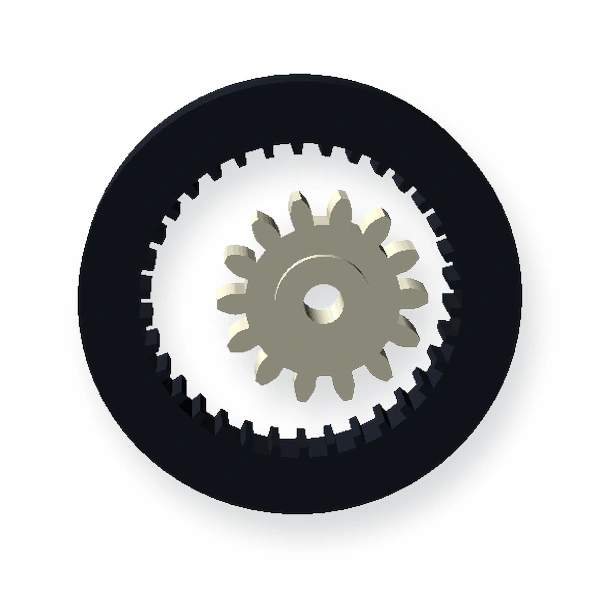
Internal ring gears are sensitive to concentricity, wall stiffness and the geometry of the mating pinions or planets.
The internal teeth share a common body with outer mounting features, so distortion or datum choice can translate directly into mesh variation.
Internal ring gears used in planetary sets are especially dependent on the carrier and planet-pin circle. If the ring is molded as part of a housing, mounting features can pull it out of round after fastening. Evaluate the installed ring, not only the free component. If the ring is machined separately, agree how it will be supported during tooth inspection to avoid fixture-induced distortion.
Geometry, material and duty
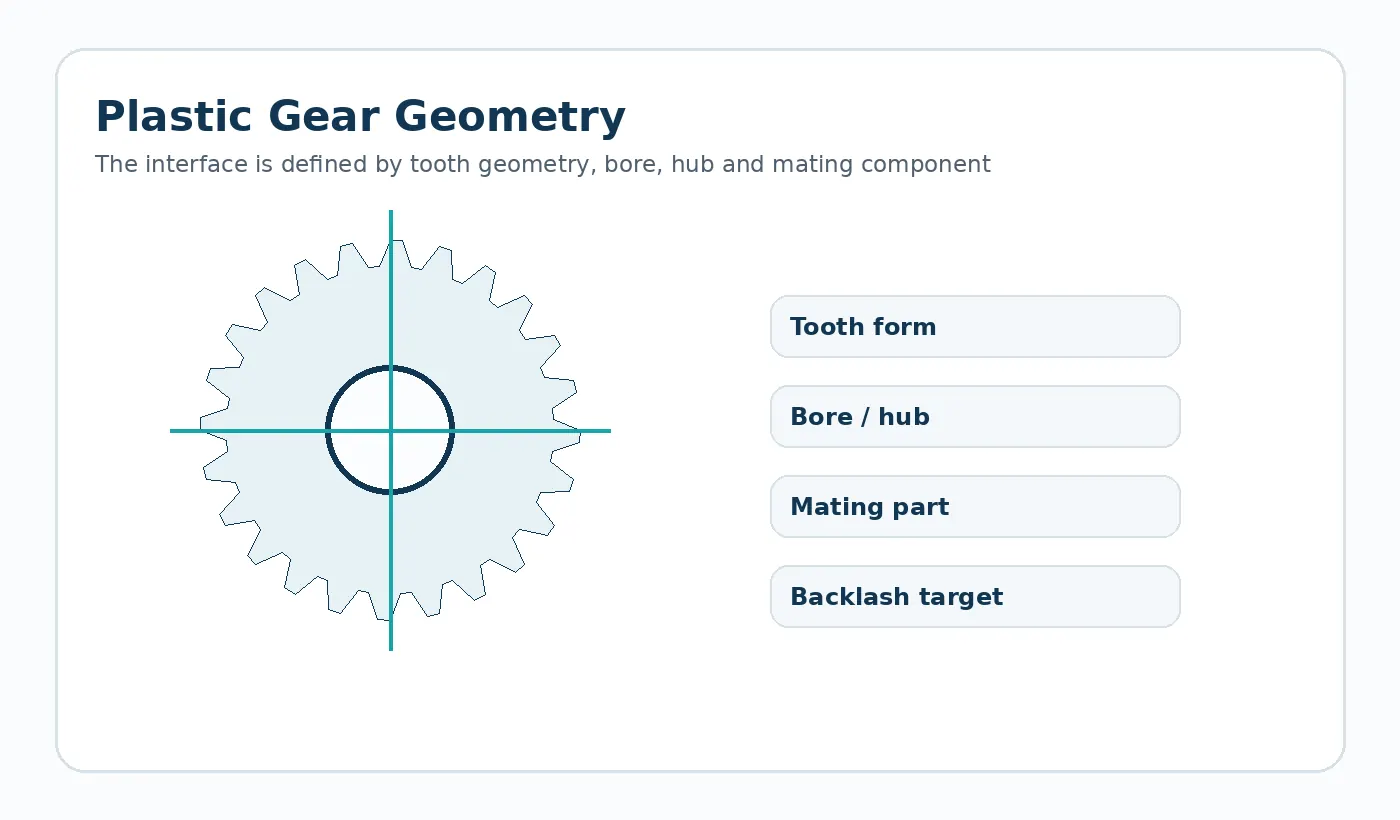
Define tooth count, module/DP, pressure angle, ring thickness, mounting datum, mating gear and runout/backlash requirements.
Put these inputs on the controlled drawing, specification or RFQ attachment where possible. Keeping them out of informal message threads makes supplier comparisons and later revisions easier to manage.
Where the risk appears
A thin ring can change shape under machining or clamping and appear different when installed in its housing.
First-sample evidence
Inspect in a controlled support condition and validate the ring with the mating gear set.
For Plastic Internal Ring Gear Design, keep the mating geometry and assembly datums in the same review as the component drawing. That is the most reliable way to connect part measurements to working performance.
Production-release notes
Before requesting a price for plastic internal ring gear design, identify the current drawing revision, production quantity, material constraint and the feature that most strongly affects function. Ask the supplier to flag any deviation from those inputs in the quotation so technical alternatives stay visible.
Practical design review for this decision
Internal and planetary gearing is sensitive to concentricity and carrier geometry. Review the ring mounting datum, sun/planet/ring tooth relationship and carrier pin positions as one system so load sharing is not left to the flexibility of plastic parts.
Record the assumptions on the drawing or RFQ so the supplier can confirm them before quoting. When a value is unknown, identify it as an open engineering item rather than copying a generic catalogue number that may not match the assembly.
Verification worksheet
- Sun/planet/ring tooth relationship
- Module/pressure angle
- Carrier pin positions
- Ring mounting datum
- Runout/concentricity
- Backlash and load-sharing check
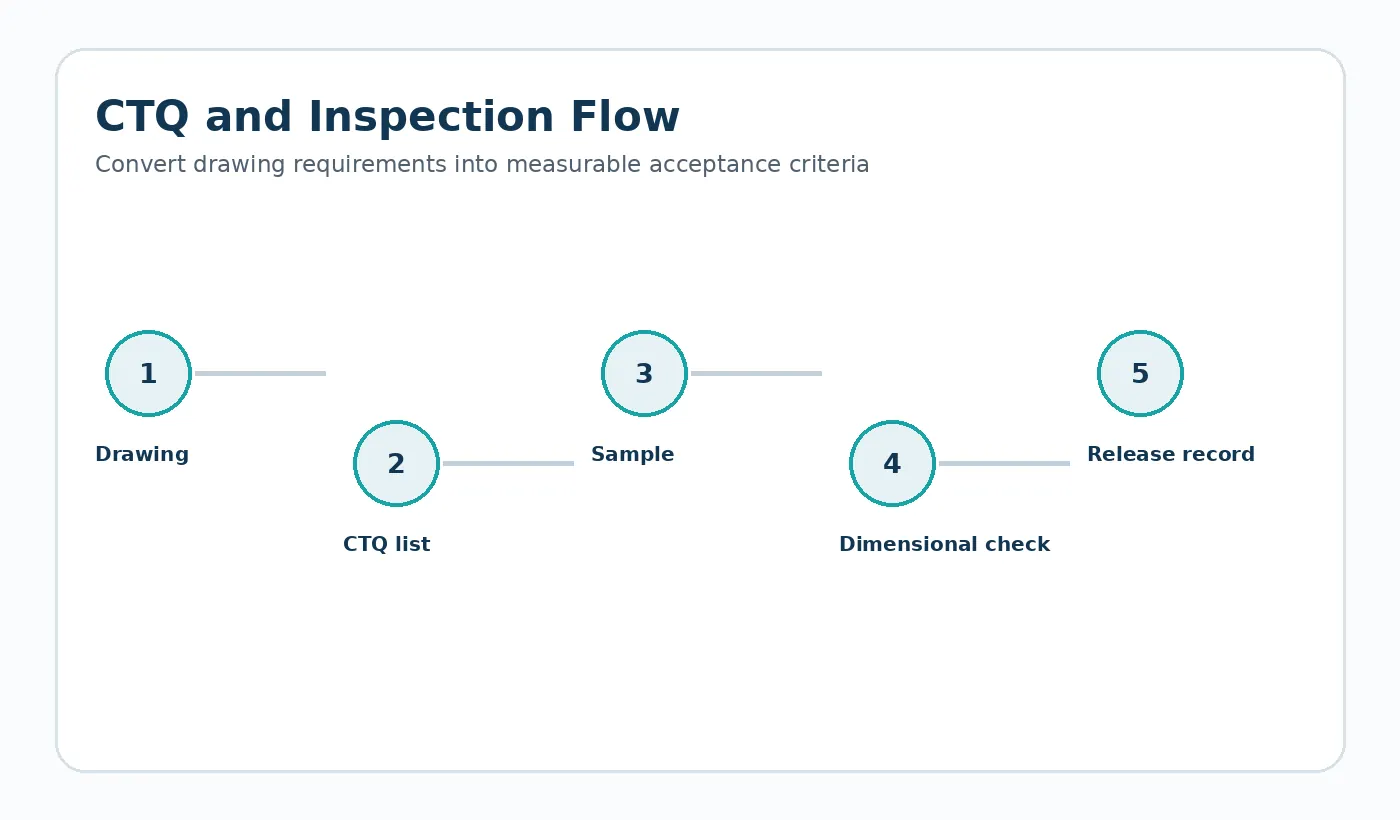
Use the first sample to close these points with both dimensional evidence and the relevant functional check. Any accepted deviation should be captured in the controlled revision before repeat production.