Reference point: ANSI RS40 roller chain uses a 0.500 in (1/2 in) pitch. Tooth count, strand arrangement, bore, hub and duty still need to be defined for the sprocket.
What changes the engineering choice
#40 identifies a chain family, but a usable sprocket specification still needs tooth count and hub/bore details.
The chain interface controls tooth geometry; the shaft interface and strand arrangement control the rest of the part.
A #40 designation narrows the chain family but not the installation. Tooth count determines the basic sprocket diameter, while bore, keyway, hub projection and strand spacing determine compatibility with the shaft. If guards or side plates sit close to the sprocket, include the available axial envelope. A drawing that captures these constraints is more reliable than ordering from a text description.
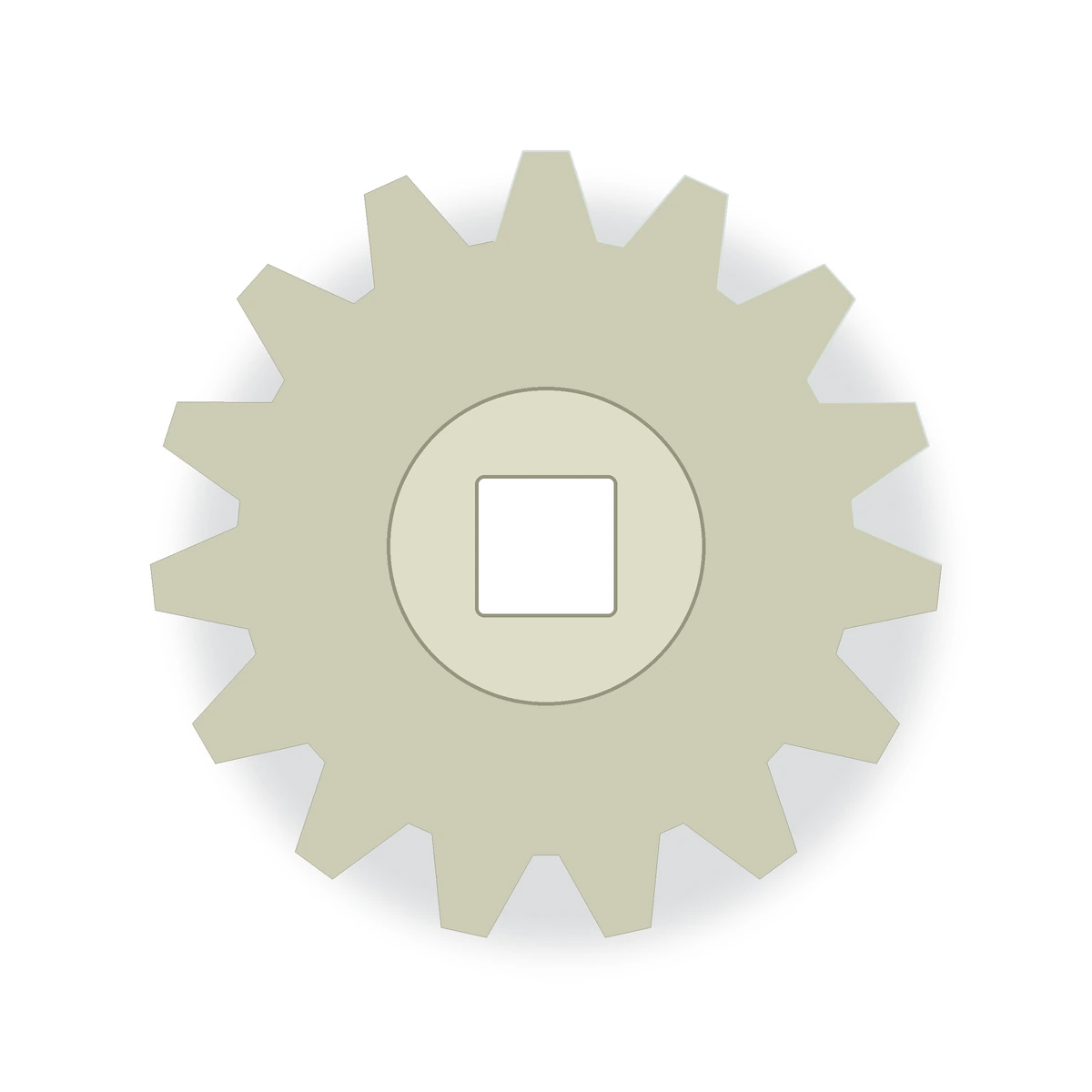
Drawing and application data
State exact #40 chain type, tooth count, strand count, bore, key/set-screw details, hub width and service conditions.
Put these inputs on the controlled drawing, specification or RFQ attachment where possible. Keeping them out of informal message threads makes supplier comparisons and later revisions easier to manage.
A common source of error
Ordering by “#40 sprocket” without bore/hub information can produce a mechanically incompatible part.
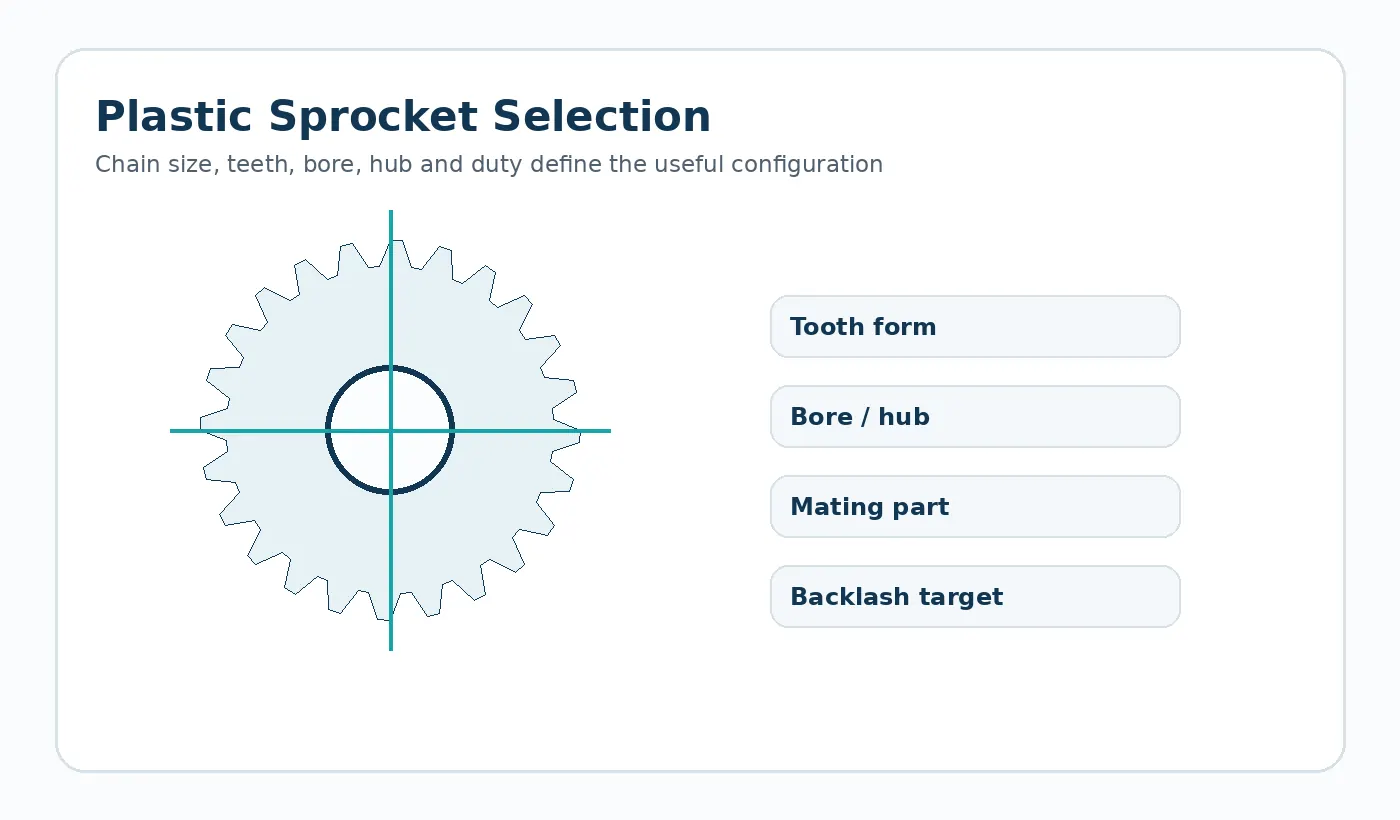
How to prove the design
Check engagement with the actual chain and verify bore/runout before installation.
For #40 Plastic Sprocket Specification Guide, include the actual chain or drive-path information in the supplier package. A chain-drive component should be approved in alignment with its shaft and mating chain, not as an isolated disc.

Supplier brief
Before requesting a price for #40 plastic sprocket specification guide, identify the current drawing revision, production quantity, material constraint and the feature that most strongly affects function. Ask the supplier to flag any deviation from those inputs in the quotation so technical alternatives stay visible.
Practical design review for this decision
A sprocket starts with the chain interface: chain series, strand arrangement, tooth count, bore and hub. Then evaluate shaft alignment, chain wrap, load, speed and environment. Material cannot compensate for a mismatched chain profile or misaligned shaft.
Record the assumptions on the drawing or RFQ so the supplier can confirm them before quoting. When a value is unknown, identify it as an open engineering item rather than copying a generic catalogue number that may not match the assembly.
Verification worksheet
- Chain series / strand count
- Tooth count
- Bore/key/set-screw
- Hub width/style
- Shaft alignment / chain wrap
- Load, speed and cleaning environment
Use the first sample to close these points with both dimensional evidence and the relevant functional check. Any accepted deviation should be captured in the controlled revision before repeat production.