What changes the engineering choice
Temperature changes both the dimensions and mechanical response of polymer gears.
As temperature shifts, stiffness, creep tendency and thermal expansion can alter tooth deflection, bore fit and working backlash. The magnitude depends on the specific resin grade and reinforcement.
The most important temperature may not be ambient. A motor, bearing or sliding worm mesh can warm the local housing while the surrounding machine remains cooler. That local gradient can change both gear stiffness and center distance. During validation, place temperature measurement near the gear train and run a duty cycle that resembles actual acceleration, dwell and load rather than a short no-load spin.
Drawing and application data
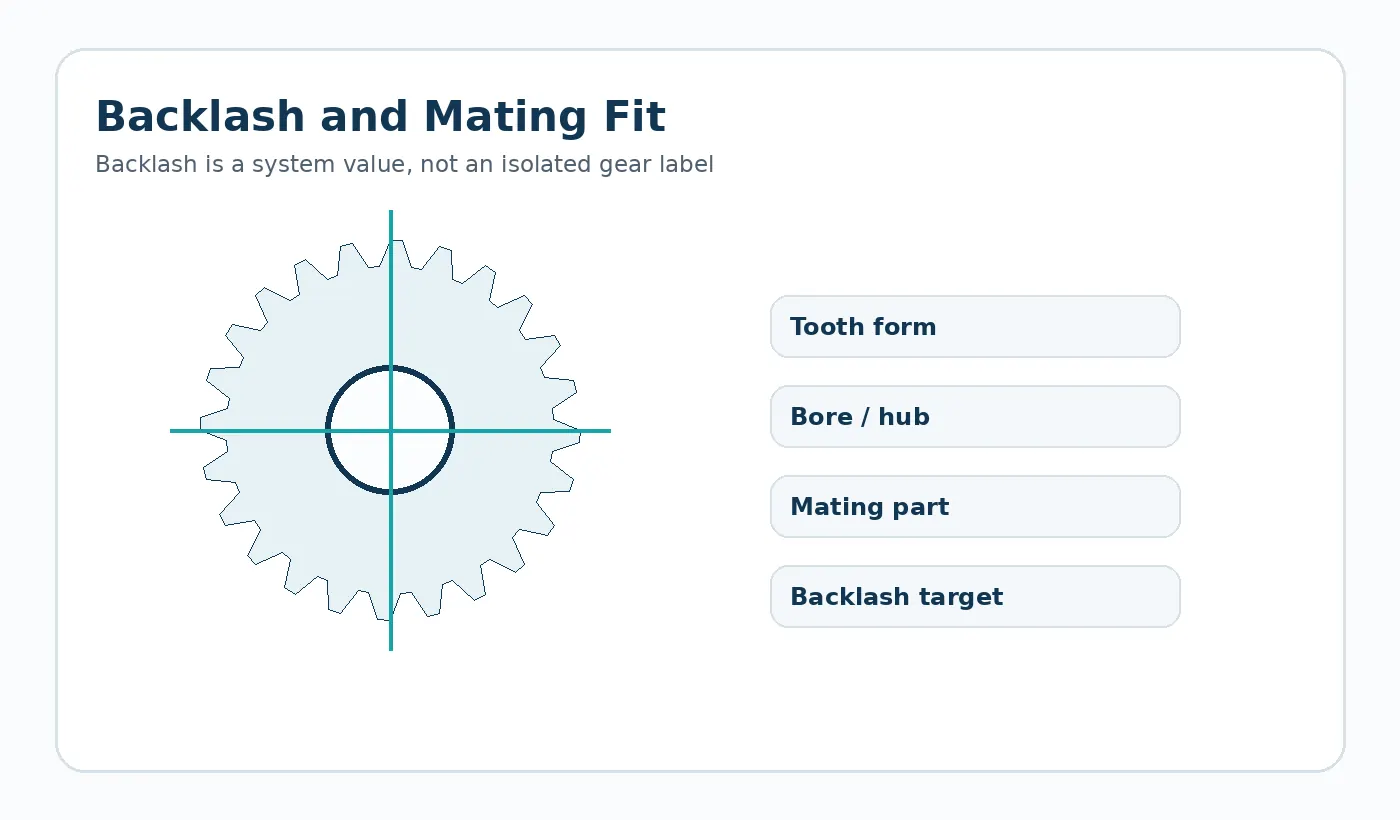
Define continuous and short-duration temperatures, heat sources near the gear train, duty cycle and whether the housing/shaft materials expand differently.
Put these inputs on the controlled drawing, specification or RFQ attachment where possible. Keeping them out of informal message threads makes supplier comparisons and later revisions easier to manage.
A common source of error
Ignoring the housing and shafts can be as misleading as ignoring the gear material because center distance is also temperature-dependent.
How to prove the design
Validate critical fits and mesh clearance across the realistic temperature window, not only at laboratory ambient.
For Temperature Effects on Plastic Gears, record the exact material grade and conditioning/environment used during validation. Material names alone are too broad for a repeat-production acceptance record.
Supplier brief
Before requesting a price for temperature effects on plastic gears, identify the current drawing revision, production quantity, material constraint and the feature that most strongly affects function. Ask the supplier to flag any deviation from those inputs in the quotation so technical alternatives stay visible.
Practical design review for this decision
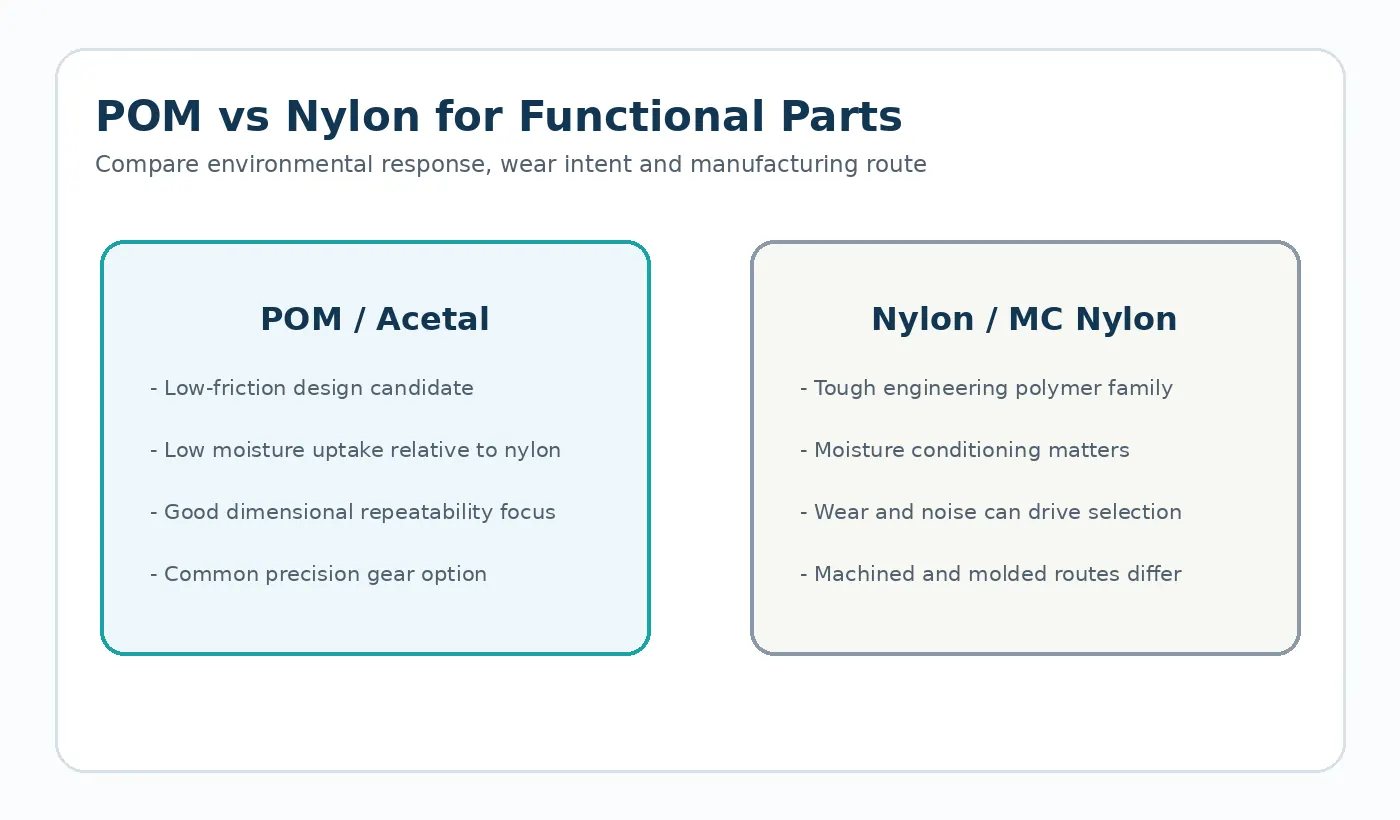
Engineering plastics can change dimensions and stiffness with environment. Thermal expansion is generally more significant than for metals, and nylon families can also absorb moisture. Define the service range and the inspection condition so the drawing does not approve a part in one state and reject it in another.
Record the assumptions on the drawing or RFQ so the supplier can confirm them before quoting. When a value is unknown, identify it as an open engineering item rather than copying a generic catalogue number that may not match the assembly.
Verification worksheet
- Minimum / maximum operating temperature
- Humidity, water or washdown exposure
- Conditioning state for inspection
- Mating material and clearance
- Bore or press-fit sensitivity
- Validation after representative conditioning
Use the first sample to close these points with both dimensional evidence and the relevant functional check. Any accepted deviation should be captured in the controlled revision before repeat production.